
From Hue’s four-bulb starter bundle to under-cabinet bars and recessed downlights, the right choice depends on the home’s wiring, fixtures and intended use.
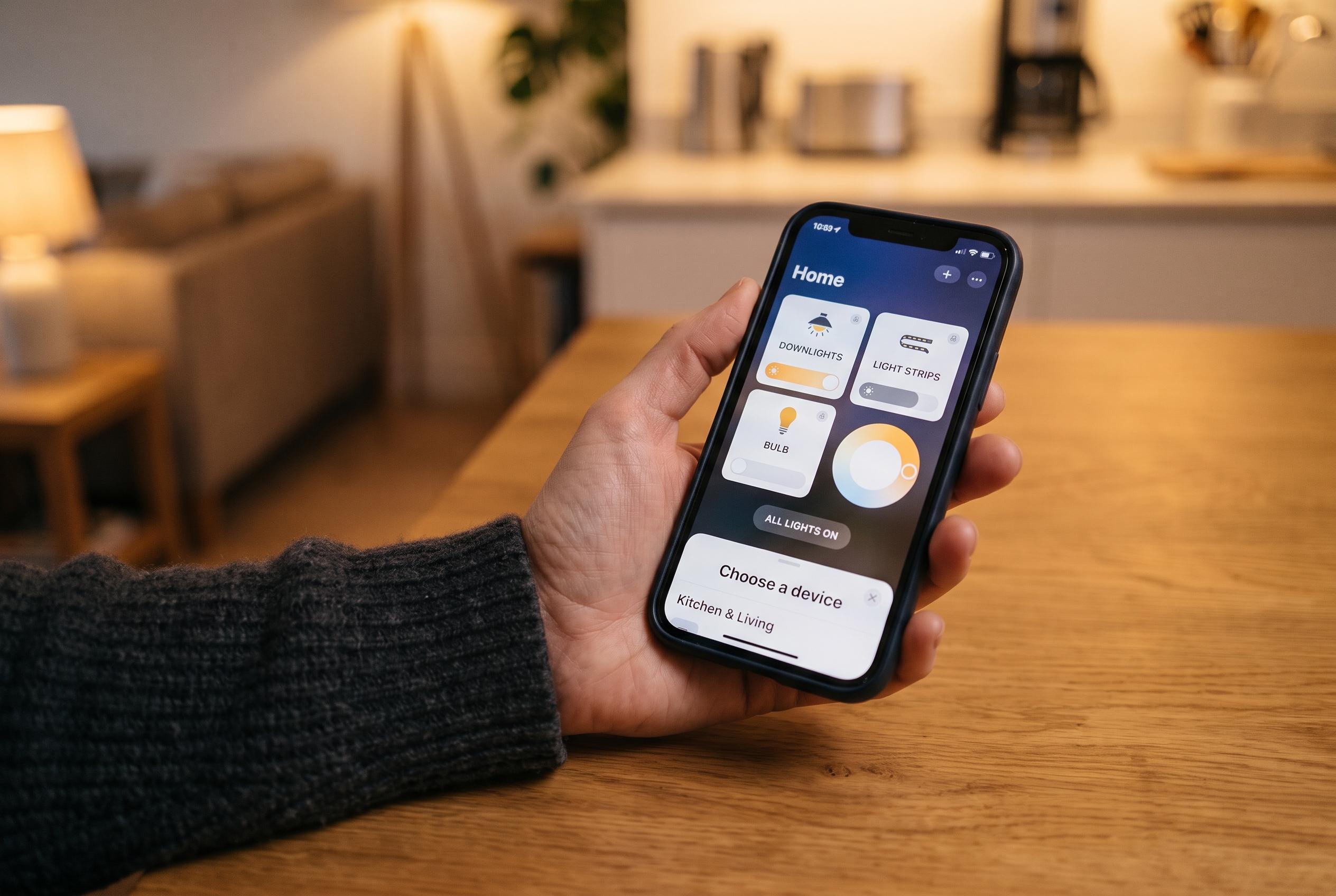
Philips Hue’s colour starter bundle remains the most versatile option in this field because it combines four full-size bulbs with a Bridge, giving buyers room to build a coordinated lighting system rather than a single-room novelty. Philips Hue’s own starter-kit range shows how the company splits its offers by scale and capability, including smaller E26 bundles and Essential kits that top out at 800 lumens and dim to 2 per cent, which helps explain why the four-bulb package sits above them for reach and flexibility.
That said, the best kit depends less on headline compatibility than on the part of the home it is meant to serve. Lutron’s Caseta system is designed to work through existing fixtures at the wall switch, without requiring a neutral wire in many installations, and its dimmers are rated for compatible dimmable LED loads up to 150 watts. For households that already have suitable ceiling or wall lights installed, that approach can be more practical than replacing bulbs, especially where physical control is still important.
The specialist kits are even more clearly tied to location. PureOptics’ Matter-certified under-cabinet system is built around six 12-inch light bars, making it a targeted answer for kitchen worktops rather than general room lighting. The company describes the kit as a wiring-led system with a smart control box and power options, which underlines the point that this is a dedicated task-lighting product. It is useful where countertop illumination matters more than colour effects across an entire room.
Ceiling projects call for a different calculation again. Govee’s six-inch recessed lights are intended for flush installation and combine tunable white light with RGBWW effects, making them more suited to a planned refurbishment than a simple bulb swap. SikSog’s four-inch recessed downlights go further on quantity, with a 12-pack that can cover a room evenly and, according to the company’s help material, fit cut-outs from 3.1 to 4.7 inches while offering Bluetooth Mesh control and Alexa support. Both are better understood as fixture systems, not drop-in replacements for screw-in bulbs.
For buyers leaning towards the Hue ecosystem, the choice among the company’s bundles is mainly about scale. Philips Hue says its Bridge Pro can support more than 150 lights and 50 accessories, which gives it a clear advantage for homes that may grow over time. By contrast, the standard Bridge-based starter kits are easier entry points for smaller setups, with either two or four bulbs depending on how much coverage is needed at the outset. The two-bulb kit is the lightest way in, while the four-bulb version is better suited to households that want immediate room-wide flexibility.
The broader lesson is that smart-lighting compatibility does not guarantee a good fit. Buyers need to check whether they are controlling existing fixtures, replacing bulbs, or installing a new lighting layout altogether, and they should also confirm hub requirements, load limits, fixture sizes and ceiling clearance before ordering. In practical terms, the most capable kit is often not the one with the most features, but the one that matches the room’s wiring, layout and everyday use most closely.
Disclaimer: This content is intended for informational purposes only. Readers are advised to exercise their own judgement, conduct due diligence, or consult a qualified expert before acting on any information provided.