

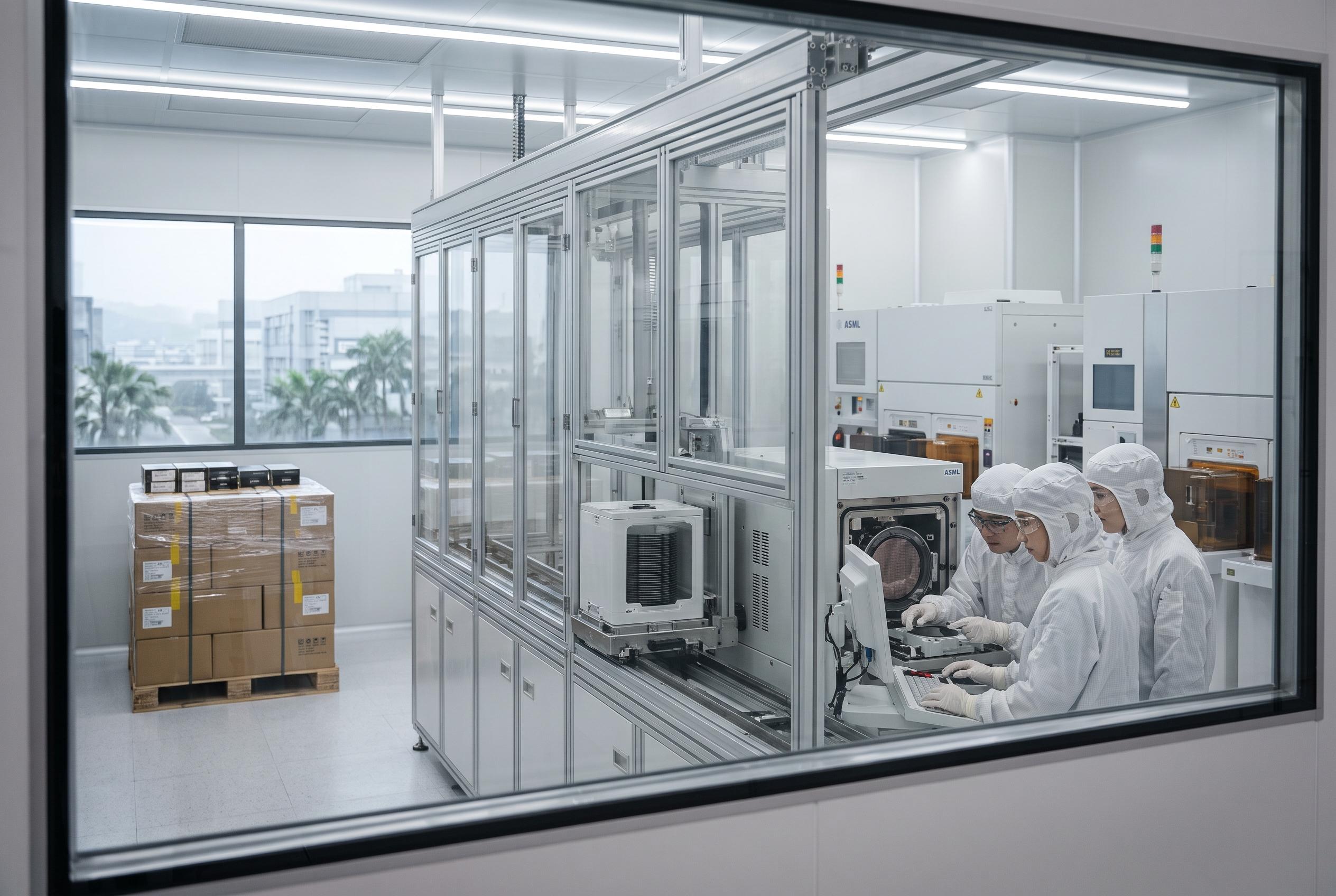

AI spending is supporting Taiwan’s technology sector, but shortages and long equipment lead times are shifting investor attention to production, customer approval and cash flow as consumer electronics demand remains subdued.
Taiwan’s stock market remains in a holding pattern after the volatility that followed recent international holidays, with the benchmark index oscillating near its upper range as investors weigh mixed signals from overseas technology shares, foreign fund flows and the Taiwan dollar. The tone is cautious rather than bearish. Short-term support from lower oil prices and continued technology interest is still visible, but trading conviction is limited by uneven turnover and the wait for key economic data.
Artificial intelligence remains the dominant force behind the market’s direction. According to the supplied report, global technology groups have not slowed their spending on AI computing, and they continue to raise capital, lease equipment and plan new listings to fund the next phase of expansion. That spending is feeding directly into Taiwan’s supply chain, supporting demand for advanced packaging, high-speed printed circuit board materials, liquid-cooling systems and high-power electrical equipment. Industry commentary also points to a broader constraint: as AI server demand rises, suppliers are diverting advanced memory capacity towards data-centre products, leaving less room for conventional DRAM and pushing prices higher.
That strength, however, is becoming more selective. The market is no longer rewarding AI exposure simply on the basis of order announcements. Investors are increasingly focused on whether companies can physically deliver systems, pass customer verification and convert bookings into revenue and cash flow. Supply bottlenecks in advanced glass fibre cloth, copper foil, substrates and equipment are already stretching production schedules, and some industry estimates point to long lead times for critical machinery and possible material shortages further ahead. In practical terms, that means delivery timing, yield performance and the ability to absorb higher input costs are becoming more important than headline order growth.
Outside the AI segment, the recovery in consumer electronics remains muted. Notebook, PC and display demand is still restrained, and the cost base for panels is rising even as seasonal demand softens. This is creating a clear split within the technology sector: businesses with meaningful AI exposure are seeing stronger order momentum, while those tied to traditional consumer devices face a flatter outlook. For investors, that distinction matters. A stronger AI theme does not automatically mean a broad-based rebound across the entire electronics industry.
The external macro backdrop is now a major test for the market. The US Federal Reserve has kept its policy range at 3.75% to 4.00%, while the latest readings showed headline personal consumption expenditures inflation at 3.6% year on year and core PCE at 3.1%, according to official and associated reports. At the same time, the US economy grew at an annualised 3.4% pace in the third quarter, slightly above expectations and the strongest pace in a year. Those figures give the Taiwan market a firm but complicated backdrop: growth remains solid, yet inflation and interest-rate expectations are still high enough to affect global risk appetite.
For now, the most sensible approach is restraint. The combination of strong AI demand, tighter component supply and a heavier macro calendar means that the next round of corporate earnings, monthly revenue figures and margin data will matter more than market rumours or one-day price moves. Investors would do better to watch actual production progress, customer acceptance and cash conversion before assuming that today’s AI enthusiasm will translate evenly across the sector.
Disclaimer: This content is intended for informational purposes only. Readers are advised to exercise their own judgement, conduct due diligence, or consult a qualified expert before acting on any information provided.



