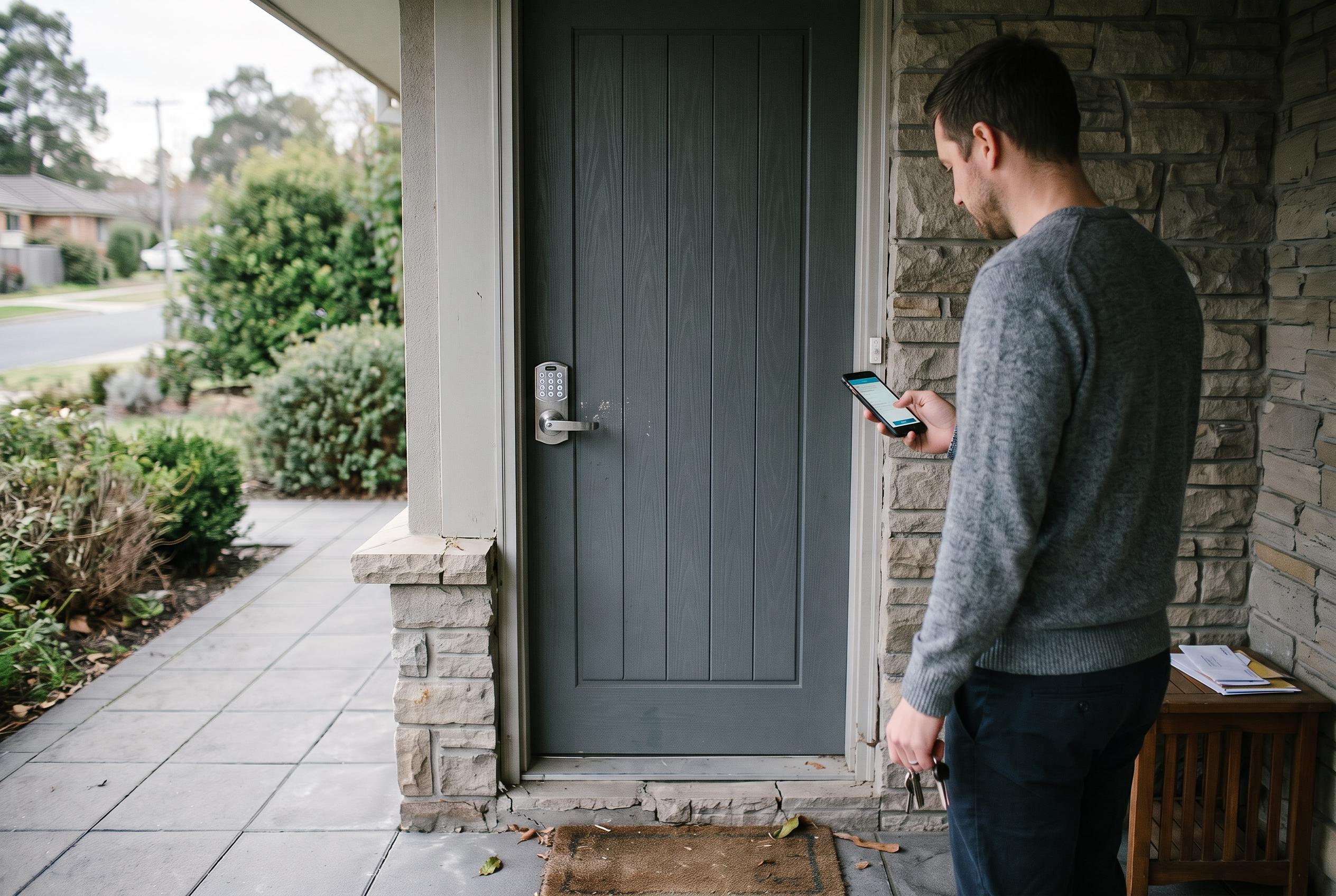

Research and consumer guidance point to weak accounts, outdated software and poor door hardware as key vulnerabilities. Smart locks can offer more control than keys, but only when the whole security system is maintained.
Smart locks can be attacked, but they are not automatically a weaker choice than a conventional deadbolt. The more accurate question is whether the device, the app, the network and the door itself have been set up to reduce risk. Fluent Home argues that a well-chosen smart lock, when paired with video, sensors and monitoring, can give owners better visibility and control than a mechanical lock on its own.
The security question begins with how these devices communicate. Smart locks typically rely on Wi-Fi, Bluetooth, Z-Wave or another encrypted link to talk to a phone app, keypad or control panel. That connection creates an attack surface, but it does not mean a burglar can simply approach a door and open it with a handset. The main weaknesses usually involve stolen credentials, old software, poor installation, weak door hardware or careless account management.
Academic research backs that distinction. A University of California, Berkeley study of commercial smart locks found that design and implementation flaws could allow unauthorised entry or, in some cases, persistent control of the device. A separate University of Kent paper on a Bluetooth padlock found that while the lock resisted several common attack types, weaknesses in its access-management system still created risk. More recent USENIX research on a Master Lock enterprise system showed that the wider ecosystem matters just as much as the lock itself, with findings that included replay-style attacks, access that continued after it should have expired and forged audit events.
That broader system is where many preventable problems arise. The Federal Trade Commission advises household users to replace default router credentials, use wireless encryption, keep firmware and companion apps updated, avoid password reuse and enable two-factor authentication where available. Those recommendations align closely with the main risks Fluent Home identifies: reused passwords, weak access codes, lost phones that remain signed in, outdated software and insecure home networks. In practice, the danger often lies less in the radio signal than in the account and network around it.
Physical security remains part of the equation as well. A smart lock still depends on the quality of the door, the strike plate and the frame. If the hardware is loose, the deadbolt is badly aligned or an entrance is easy to force, the extra intelligence in the lock cannot fully compensate. That is why layered protection matters. Door sensors, cameras, lighting and professional monitoring can provide context and alerting that a standalone lock cannot offer.
Access management is another area where smart locks can be either safer or riskier than keys, depending on how they are used. Fluent Home says individual codes are preferable to shared ones, because they make it easier to track entry and remove access when roles change. Temporary codes are useful for visitors, cleaners or contractors. The same logic applies in small businesses, where former employees or tenants should be removed from the access list immediately rather than left on the system out of convenience.
Compared with a traditional lock, a smart lock offers remote control, entry logs and the ability to grant or revoke access without changing hardware. It also removes some familiar weaknesses of physical keys, such as copying, loss or hidden spare keys. But the trade-off is that a connected lock must be maintained like any other networked device. That means updates, strong account protection, careful installation and periodic review of who can open the door.
For many homes and businesses, the strongest approach is not to choose between smart and traditional security, but to treat the lock as one component in a wider system. Fluent Home’s view is that professionally installed devices, combined with mobile management, cameras, alarms and monitoring, can reduce common mistakes and improve situational awareness. The evidence from consumer guidance and university research suggests the same conclusion: smart locks can be secure, but only when their digital and physical safeguards are managed as part of a single design.
Disclaimer: This content is intended for informational purposes only. Readers are advised to exercise their own judgement, conduct due diligence, or consult a qualified expert before acting on any information provided.