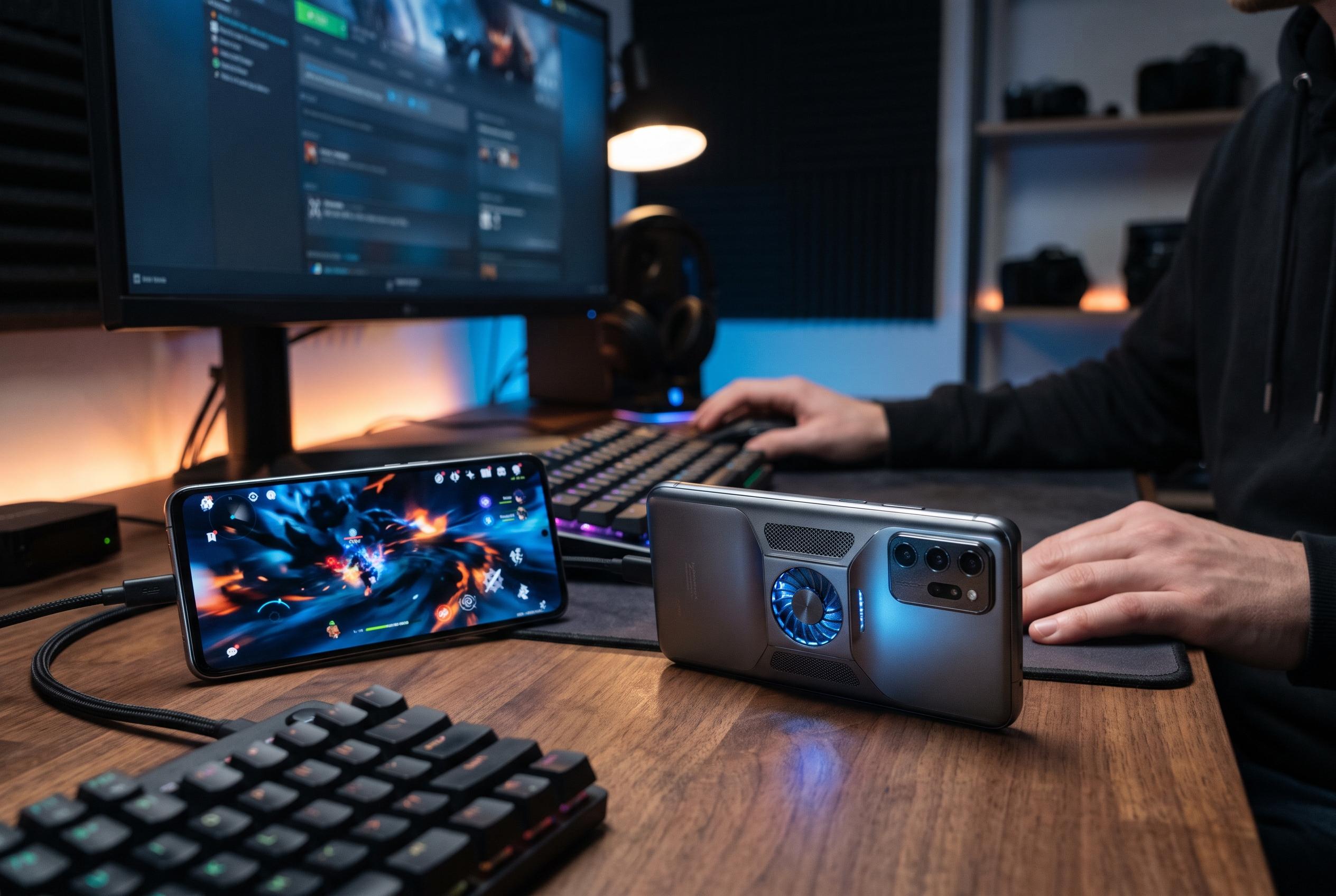

Despite sharing the same Snapdragon platform, the Neo 12 launched in China at a higher entry price than the OnePlus 15. Its fan, 185Hz display and 9,000mAh battery target sustained gaming, while OnePlus offers stronger cameras, wireless charging and wider availability.
The comparison between iQOO’s Neo 12 and the OnePlus 15 is unusual because the newer phone is not the cheaper one. According to iQOO’s launch information and OnePlus’s specifications, both devices use Qualcomm’s Snapdragon 8 Elite Gen 5 platform, yet the Neo 12 went on sale in China at a higher entry price than the OnePlus 15 did at its original launch. That is a reminder of how sharply component costs have moved this year, particularly for memory and storage, and why buyers now have to judge current street prices rather than rely on launch-day positioning.
On paper, the Neo 12 is built with gaming in mind. Vivo’s official product page says it uses LPDDR5X Ultra memory, UFS 4.1 storage, a 6.83-inch 2K display with a 185Hz maximum refresh rate and a stated 2,200-nit peak brightness. It also highlights the phone’s active cooling system and Q3 gaming chip, which is designed to support features such as frame enhancement and ray tracing in compatible titles. By contrast, OnePlus positions the 15 as a more rounded flagship, with a 6.78-inch display capped at 165Hz, a large 7,300mAh battery and a 50W wireless charging option.
The thermal design is where the Neo 12 most clearly separates itself. Chinese reporting on the launch says iQOO has paired the Snapdragon 8 Elite Gen 5 with a built-in fan, a 59-blade cooling assembly and an upgraded vapour chamber. In practical terms, that should help the handset maintain performance for longer gaming sessions, especially when sustained heat would normally force a phone to throttle. OnePlus instead relies on passive cooling, so while the OnePlus 15 should be quieter and less mechanically complex, it does not have the same dedicated hardware for prolonged gaming loads.
The display and battery trade-offs are more nuanced. iQOO’s panel is sharper and, at least on the published figures, brighter outdoors, which makes it the more obvious choice for gaming and fast scrolling. OnePlus counters with LTPO-style power management, which can lower the refresh rate when the screen is static to conserve energy, and with broader HDR support for video playback. Battery capacity favours the Neo 12, whose 9,000mAh cell is substantially larger than the OnePlus 15’s, but OnePlus offers faster wired charging and wireless charging, both of which matter in everyday use.
Camera hardware is the clearest reason the OnePlus 15 still feels like the more complete flagship. OnePlus lists three 50-megapixel rear cameras, including a 3.5x optical telephoto lens, plus a 32-megapixel front camera and 4K video at up to 120 frames per second. The Neo 12, by comparison, has a 50-megapixel main camera, an 8-megapixel ultrawide and a 16-megapixel selfie camera, with no dedicated zoom lens. That makes the OnePlus much more flexible for portraits, travel shots and video, while the iQOO is better seen as a performance-first device with a much simpler imaging system.
For most buyers, availability may matter as much as specifications. OnePlus has sold the 15 beyond China, while the Neo 12 is still presented as a China-only model in current coverage, which limits its appeal for importers who need local support, compatible network bands and reliable software access. That leaves the decision fairly clear: the Neo 12 is the more specialised gaming phone, especially for long sessions and high-refresh-rate use, but the OnePlus 15 is the better all-rounder thanks to its camera array, wireless charging and broader market reach.
Disclaimer: This content is intended for informational purposes only. Readers are advised to exercise their own judgement, conduct due diligence, or consult a qualified expert before acting on any information provided.