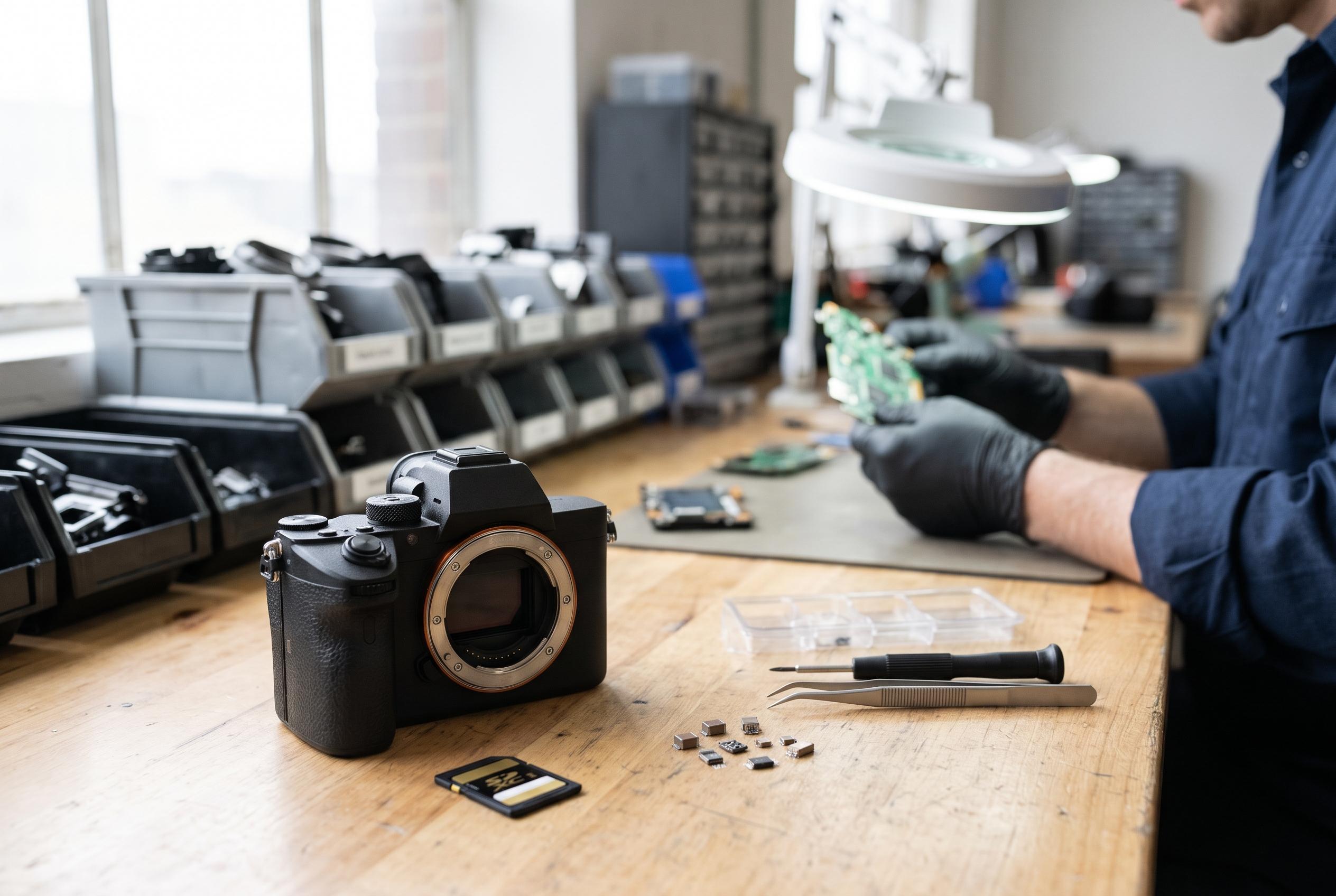

Canon says higher memory and component costs may feed through to camera prices from 2027, as AI demand tightens supplies across the imaging industry.
Canon’s warning that higher memory and component costs could filter through to camera prices from 2027 points to a broader squeeze on the imaging industry, as artificial intelligence continues to absorb more semiconductor capacity. In a report highlighted by PetaPixel, the Japanese group said it had not yet fully transferred its higher input costs to customers, but that future price increases remained an option if conditions do not improve.
The concern is not limited to Canon’s camera arm. In its third-quarter 2026 results presentation, the company said AI-driven demand is tightening supplies of printed circuit boards and other electronic parts, delaying a return to normal production conditions. Canon’s investor question-and-answer document added that it no longer expects memory or raw-material prices to fall next year, leaving those costs as a full-year burden.
That matters because memory is not a peripheral item in modern cameras. It is central to image processing, temporary data storage, fast burst shooting and high-resolution video recording. Even models that do not market AI functions directly still rely on the same memory and electronics ecosystem, which means they can be affected by the same supply and pricing shifts. TrendForce has separately said AI infrastructure, server growth and the diversion of capacity into high-bandwidth memory are likely to keep DRAM supply tight and prices on an upward path into 2027.
Canon is not alone in flagging the pressure. Nikon has said DRAM prices have risen sharply and that its imaging division is expected to bear much of the impact, while Sony has warned in its annual filing that higher component costs and shortages can damage profitability. Fujifilm has also previously raised concerns about rising materials costs, suggesting the problem is spreading across the sector rather than being confined to one manufacturer.
The wider effect may also reach accessories such as memory cards and storage devices, which could reinforce the cost pressure on camera buyers. Even so, higher production expenses do not automatically mean a uniform price rise across the market. Final decisions will depend on each manufacturer’s pricing strategy, demand conditions and ability to protect margins. Canon has not disclosed which products could be affected, by how much prices might rise, or when any adjustment would begin, but its latest guidance suggests the industry is preparing for a cost environment that may be harder to absorb than many had expected.
Disclaimer: This content is intended for informational purposes only. Readers are advised to exercise their own judgement, conduct due diligence, or consult a qualified expert before acting on any information provided.