


Turkey’s new age restrictions aim to shield children from online harms, but Nigeria’s reliance on mobile internet raises concerns about access to learning, skills and career opportunities.
Turkey’s move to block social media access for children under 15 has reopened a wider debate about how governments should protect young users in a digital environment that is both useful and risky. According to Hürriyet Daily News, the regulations were published on 10 October 2026 and are due to take effect on 1 November. They require age checks through a token generated by the state-run e-Devlet portal, while also imposing tighter limits on users aged 15 to 17, including private accounts, restrictions on livestreaming and personalised advertising, and parental controls. At one level, the policy is a direct response to the genuine dangers children face online. UNICEF says those risks include cyberbullying, hate, discrimination, manipulative commercial practices, misuse of personal data and exploitative digital marketing.
The case for intervention is not hard to understand. Children are often less able than adults to judge whether a source is trustworthy, recognise manipulation or grasp the consequences of sharing personal data. The World Health Organisation has said social media can contribute to problematic use and affect adolescent wellbeing, even as it also offers connection and support. That tension is central to the present debate. A blanket approach may reduce exposure to some harms, but it does not by itself build the judgement, discipline and digital habits that young people need if they are going to live and work online.
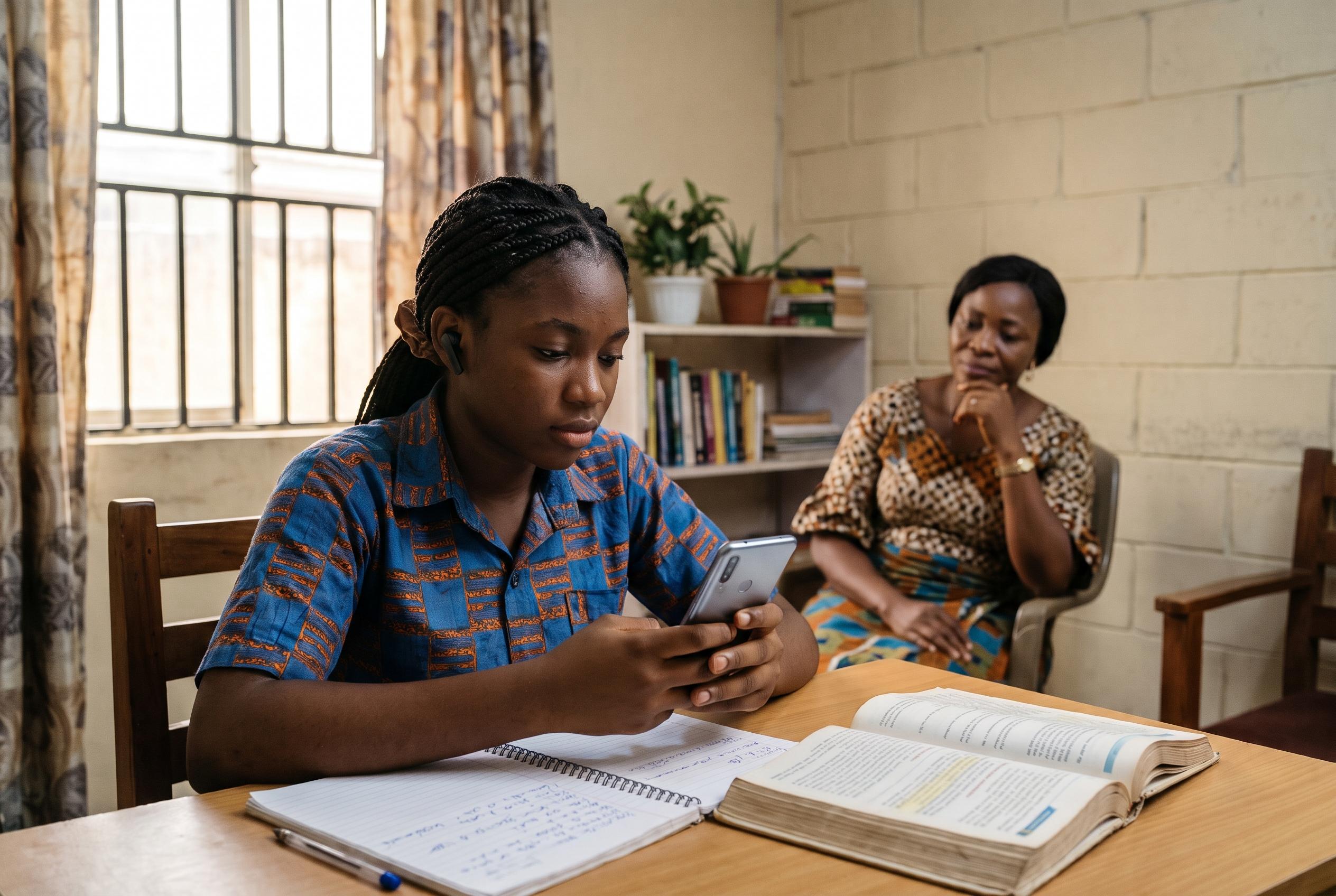
That question matters particularly in Nigeria, where mobile phones are often the main route to the internet. A report cited by Independent Nigeria found that 63.7 per cent of surveyed teenagers, mostly aged 14 to 18 in urban and peri-urban areas, owned their own mobile phones. The same reporting said many others used shared smartphones or feature phones, while access to laptops, tablets and desktop computers was far lower. For many young people, therefore, the phone is not simply a source of entertainment. It is the device through which they communicate, complete school work and look for information.
UNICEF’s situation analysis of children and adolescents in Nigeria adds further context. It says digital learning initiatives such as the Nigeria Learning Passport are designed to work on mobile devices and offline as well as online, precisely because access to internet-connected resources remains uneven. Household internet access is still limited, especially in rural areas, while electricity shortages and digital literacy gaps remain significant. In that setting, a broad social media ban could have consequences beyond entertainment. It could also affect the pathways through which children encounter educational content, technical communities and wider opportunities.
For students interested in fields such as computer science and cybersecurity, that distinction is important. Social platforms can expose children to scams and harmful content, but they can also introduce them to coding tutorials, professional communities, scholarship information and practical digital skills. A teenager who learns to programme from a video, or who discovers cybersecurity through an online group, is not merely being distracted. That student may be taking an early step towards a career. Restricting social media could also close off one of the most accessible routes to such discovery.
The issue is not whether online spaces are safe in their current form. They are not. The more difficult question is how to make them safer without cutting young people off from the benefits of digital participation. The European Commission’s research on age assurance notes that age estimation, age verification and self-declaration all have different strengths and weaknesses, and that privacy, security, accuracy, proportionality, accessibility, transparency and inclusion must all be considered. In other words, verifying age is technically possible, but not straightforward. Systems can fail if they collect too much data, exclude legitimate users or create new privacy risks.
That is why the design of age checks matters as much as the principle behind them. Hürriyet Daily News reported that Turkey’s token system is intended to show whether a user meets the relevant age threshold without handing platforms full identifying details. That is a more privacy-conscious model than direct identity disclosure, but its safety will depend on how securely it is built and supervised. Better parental controls, safer default settings, stronger reporting tools and limits on persuasive features can also reduce harm. Paired with online-safety education in schools and homes, such measures may offer a more balanced response than an outright prohibition alone.
The broader lesson is that children need protection, but they also need preparation. A ban may be attractive because it appears decisive, yet it does not teach a child how to recognise phishing, handle misinformation or protect personal data. Nigeria, like many countries, must weigh its educational needs, digital divide and the practical realities of how young people already use mobile internet. The aim should not simply be to keep children away from technology. It should be to help them use it safely, confidently and productively.
Disclaimer: This content is intended for informational purposes only. Readers are advised to exercise their own judgement, conduct due diligence, or consult a qualified expert before acting on any information provided.



