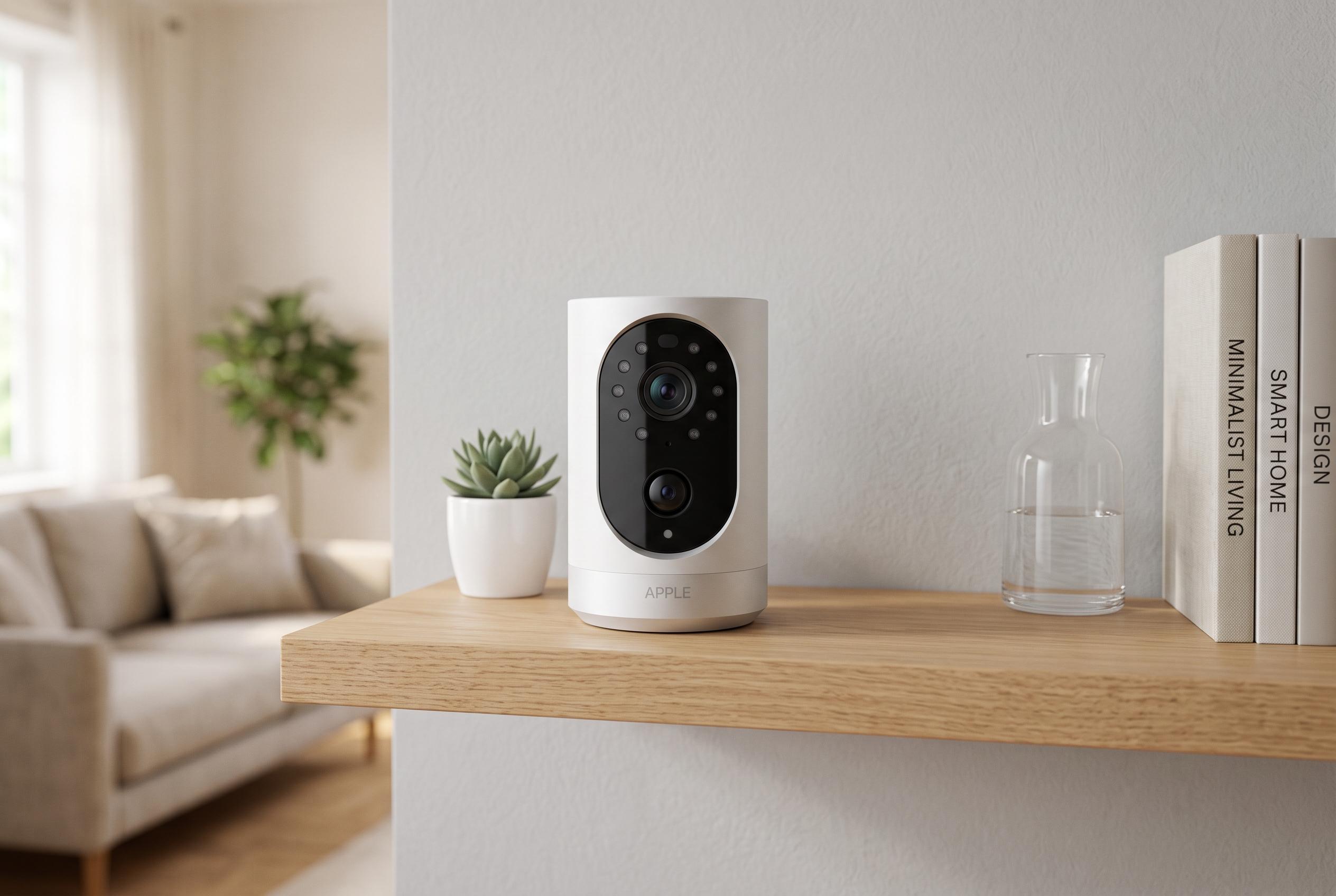

Leaked clues in iOS 27 suggest Apple is on the brink of launching a new home security camera that employs facial recognition and infrared sensors, marking a significant step in its connected-home ecosystem.
Apple’s latest software hints suggest the company is preparing more than another iPhone refresh this autumn. Alongside rumours of a new iPhone Ultra and a wider Home ecosystem revamp, iOS 27 appears to be laying the groundwork for Apple’s first in-house home security camera, a product that has been discussed for months and is now looking increasingly close to launch.
According to reporting from Mark Gurman, the camera is expected to use facial recognition and infrared sensors to work out who is in a room, with Apple envisioning a network of devices spread around the home to automate everyday tasks. That could include switching off lights when someone leaves a room or cueing up music based on the family member present. MacRumors said the camera is expected to arrive alongside or after a smart home hub in 2026, which would place it inside Apple’s broader push into the connected-home market.
The clearest software clue is the overhaul of HomeKit Secure Video. Apple introduced major Home app changes at WWDC 2026, including 4K recording and viewing support for compatible cameras, plus Apple Intelligence features that can generate video descriptions, search clips and surface notable moments. Macworld reported that some of those AI tools require a 2TB iCloud+ subscription, which would make the most advanced functions part of Apple’s paid cloud tier. Apple already supports third-party cameras such as Logitech’s Circle View, but it has not meaningfully upgraded the system since HomeKit Secure Video launched in 2019.
Taken together, the changes suggest Apple is preparing the software stack before revealing its own hardware. That matters because Apple has spent years framing the smart home as a core part of its future, even as it has lagged rivals in native home security gear. If the company does launch its own camera, it would arrive into a market already crowded by Ring, Google and other established players, but with Apple’s usual pitch of tighter privacy controls, deeper iPhone integration and a more automated home.
Disclaimer: This content is intended for informational purposes only. Readers are advised to exercise their own judgement, conduct due diligence, or consult a qualified expert before acting on any information provided.