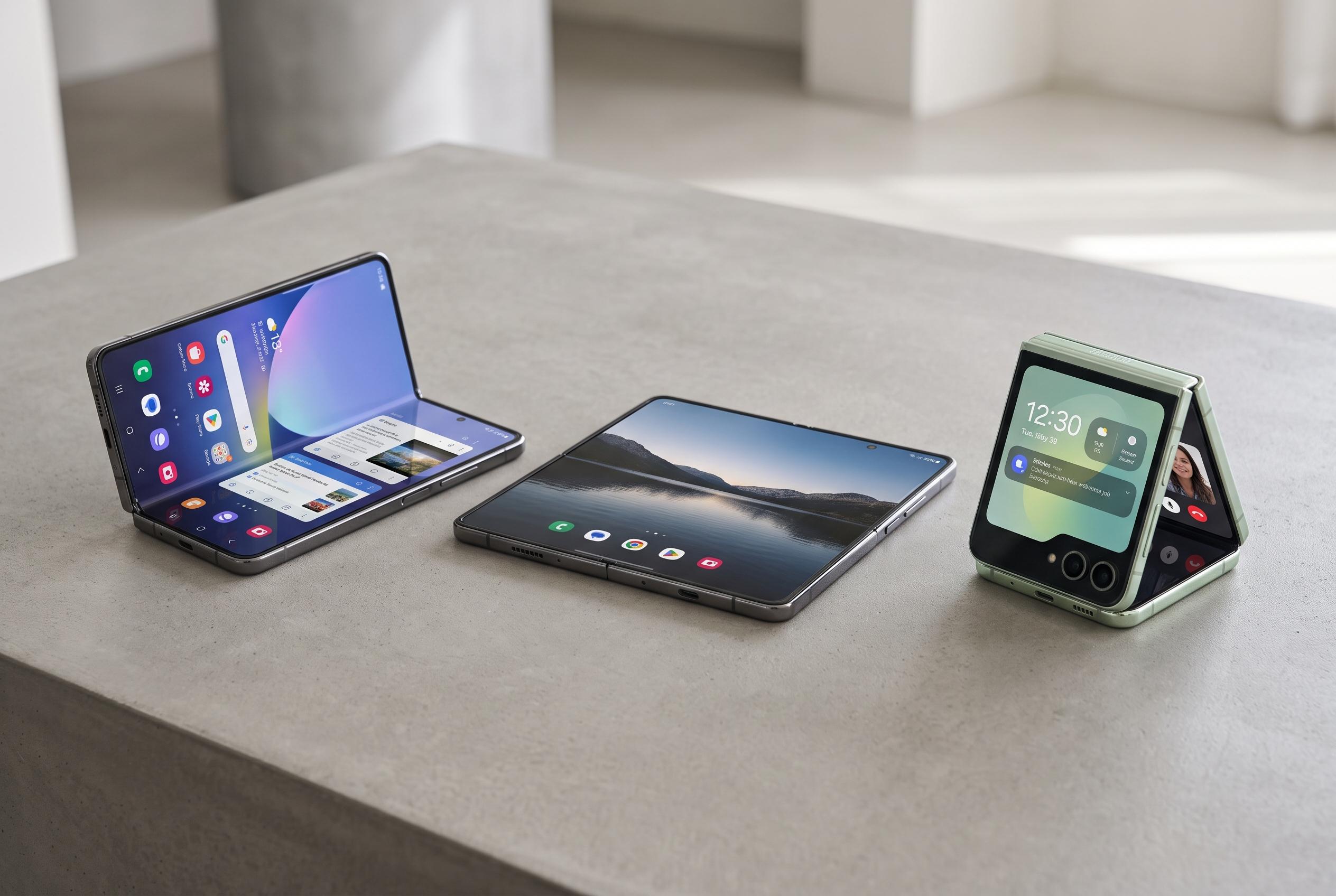

Samsung’s 2026 foldable range introduces a standard Galaxy Z Fold8 alongside Ultra and Flip8 versions, signalling a strategic shift to appeal to wider audiences with varied display and camera options.
Samsung’s latest foldables mark a notable shift in the company’s strategy, with the 2026 line-up moving beyond the familiar one-model-per-format approach. Instead of offering just a Fold and a Flip, the company has added a standard Galaxy Z Fold8 alongside a higher-end Galaxy Z Fold8 Ultra and the Galaxy Z Flip8, signalling an attempt to widen the appeal of large-screen foldables.
According to the hands-on review, all three new models use Qualcomm’s Snapdragon 8 Elite Gen 5 for Galaxy, so raw processing power is broadly similar across the range. The real separation comes from the displays and cameras. The Fold8 Ultra keeps the premium hardware, including an 8-inch main screen, a 200-megapixel main camera and a telephoto lens. The standard Fold8 drops to a 50-megapixel main camera and removes the telephoto unit, while the Flip8 keeps the clamshell form and a more compact cover screen.
That design choice makes the standard Fold8 the most interesting model for everyday use. Its 4:3 screen ratio is especially well suited to comics and other page-based content, because it allows a full page to be shown clearly in portrait orientation and a spread to fit neatly in landscape mode. For video, by contrast, the wider Fold8 Ultra is more versatile, since film and TV content still tends to leave black bars on foldable displays even when the panel is large.
The camera differences are less dramatic in ordinary shooting. The review suggests that, in day-to-day use, most people would struggle to notice much gap between 200-megapixel and 50-megapixel output unless they were shooting in the highest-resolution mode or working in low light. The bigger advantage of the Ultra is its telephoto camera, which gives it a clear edge for sports, wildlife and other scenes where optical zoom matters. The Fold8 and Flip8 rely on digital zoom and top out at 10x.
Performance testing, meanwhile, points to a modest but meaningful generation-on-generation gain over the Fold7. Benchmark results showed the new models clustering closely together, while outperforming last year’s device by a useful margin, particularly in graphics-heavy tests. That suggests a noticeable improvement for demanding games and other GPU-intensive tasks, even if general app use will feel broadly familiar to Fold7 owners.
For the reviewer, the standard Fold8 emerged as the most appealing option, largely because of its screen shape rather than its camera hardware. The final caveat was price. Samsung’s move to create a more mainstream foldable is welcome, the review argues, but the company may still need to go further if it wants the category to reach a truly wider audience.
Disclaimer: This content is intended for informational purposes only. Readers are advised to exercise their own judgement, conduct due diligence, or consult a qualified expert before acting on any information provided.