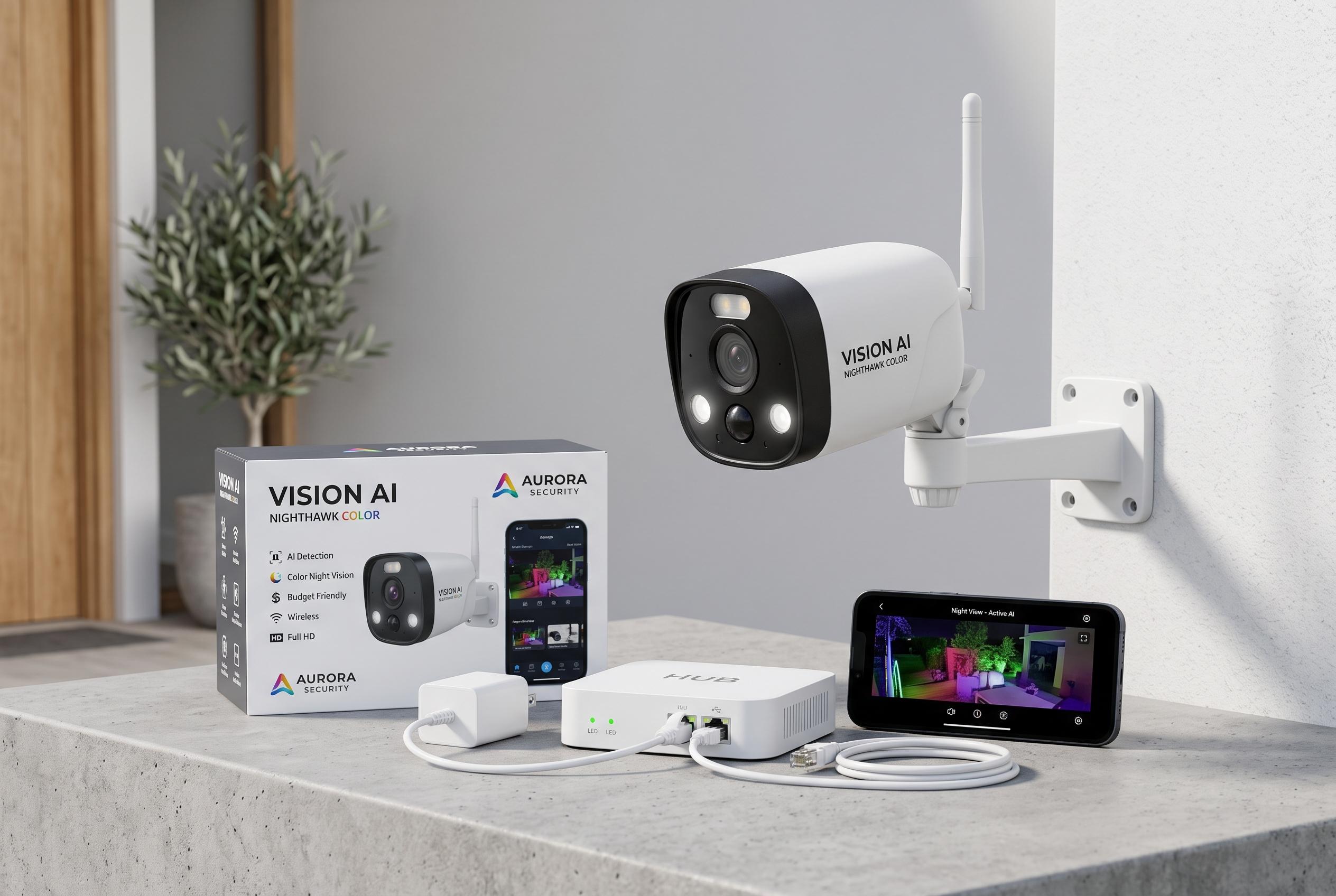

Innovative, budget-friendly wireless security cameras equipped with AI and colour night vision are transforming home surveillance across Nigeria, making advanced security more accessible for ordinary households and businesses.
Nigeria’s home security market is entering a new phase as cheaper hardware, wireless design and AI-assisted alerts make surveillance more accessible to ordinary households. For years, effective camera systems in the country tended to mean costly installations, wired infrastructure and ongoing dependence on technicians. That left businesses, affluent homes and institutions with proper coverage while many others went without.
Aile Power is now trying to close that gap with the Panora Smart Wireless Camera, which it has introduced to the Nigerian market. According to the company’s materials, the device is battery powered, can be set up with a magnetic mount in about five minutes and is built with IP67 weatherproofing, a rating that indicates protection against dust and water. Those features are aimed at the sort of outdoor spaces that matter most in Nigeria, including gates, compounds, driveways and shop fronts.
The bigger selling point is the camera’s AI system, which can distinguish between people, vehicles and packages. Industry reporting on smart cameras in Nigeria has pointed to the same problem Panora is trying to solve: too many false alerts from shadows, animals or shifting light can quickly make users ignore notifications altogether. By filtering events more intelligently, the technology is meant to keep people engaged rather than overwhelmed.
The camera also processes those alerts on the device itself rather than sending everything to the cloud. Tech coverage of AI security products in Nigeria has highlighted the importance of that approach in a market where internet service can be inconsistent and data costs matter. On-device processing reduces reliance on connectivity and can help the system respond faster, which may be especially useful for users outside major urban centres.
Panora’s other key feature is colour night vision, which the company says is designed to improve the quality of footage captured after dark. That matters in a market where security footage may be used not just as a deterrent but as evidence for insurance claims, police reports or property disputes. In low-light conditions, colour video can preserve details such as clothing, vehicles and registration plates that monochrome infrared footage often misses.
The product enters a market that several technology and business reports have described as underpenetrated but promising. CNBC has reported on Nigerian startups working on more affordable smart security tools, while Forbes has noted the risks that still hang over the sector, including privacy concerns and the need for dependable connectivity. Panora’s success will depend on how well it performs in daily use, how widely it is distributed and whether its ease-of-use promise translates into lasting adoption.
Disclaimer: This content is intended for informational purposes only. Readers are advised to exercise their own judgement, conduct due diligence, or consult a qualified expert before acting on any information provided.