
JLab launches the Daybreak series, offering enthusiast-grade gaming peripherals like magnetic switch keyboards, advanced mice, and multi-driver headsets at accessible prices, blending performance and value.
JLab’s Daybreak gaming line is a clear attempt to move beyond its budget-audio roots and into enthusiast hardware without chasing premium-brand pricing. The series sits at the top of a three-tier family that also includes Nightfall and Midnight, with JLab positioning Daybreak as the performance-first option for players who want advanced features at a more accessible cost. According to the company, the goal is to deliver precision mice, responsive keyboards and headsets tuned for competitive play.
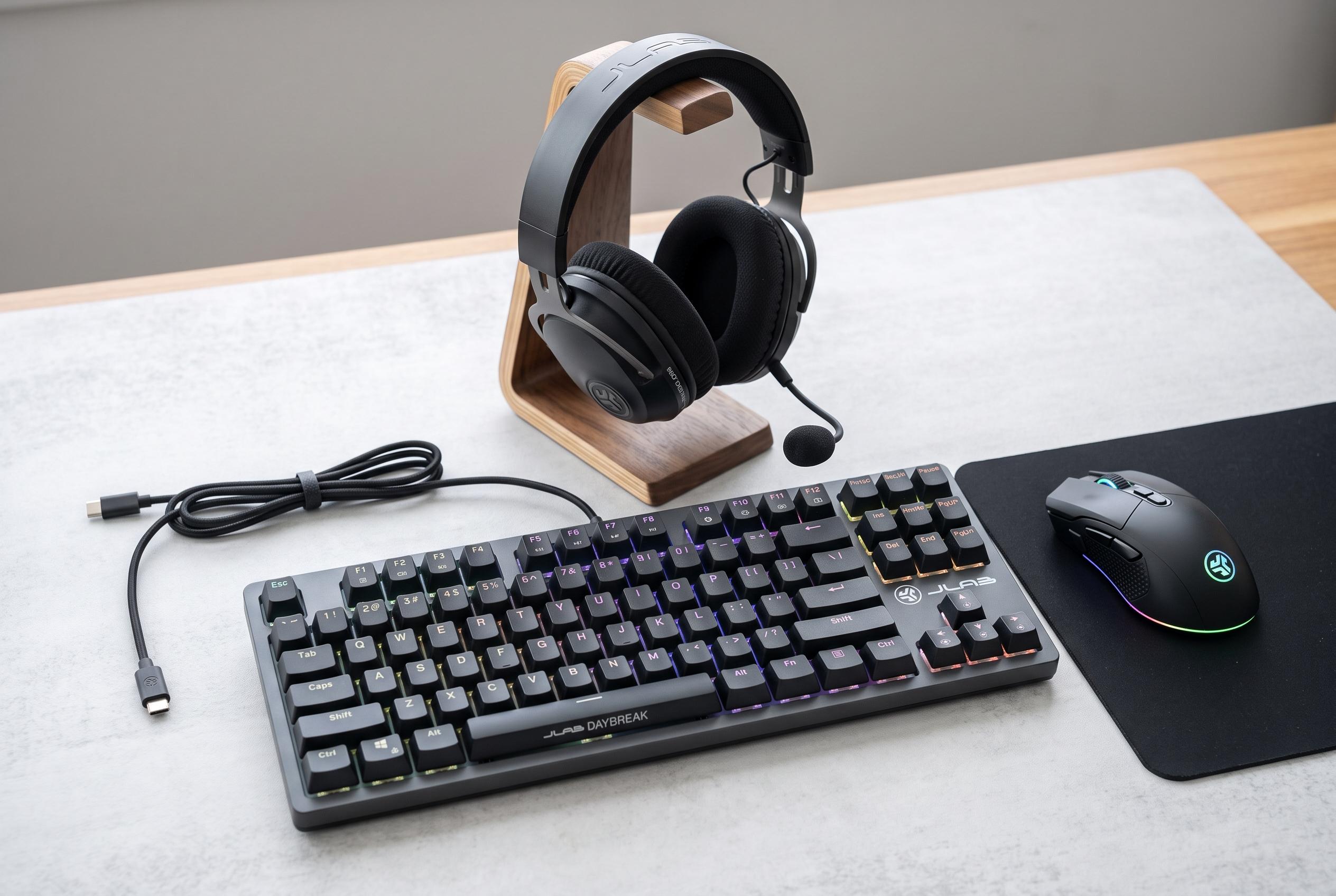
The most obvious example is the Daybreak TKL keyboard, a tenkeyless board built around magnetic analog switches with adjustable actuation. JLab says key travel can be tuned from 0.2 mm to 3.8 mm and that the board runs at an 8,000Hz polling rate for roughly 1ms response times. In practice, that means users can set sensitive gaming keys to fire with minimal pressure while giving other keys a deeper threshold to avoid accidental presses. The board also includes a detachable braided USB-C cable, per-key RGB lighting and a USB-C passthrough port.
The Daybreak wireless mouse aims at a different kind of player: one who values custom controls as much as raw sensor performance. JLab built it around PixArt’s PAW3395 sensor, which the company says offers true 1:1 tracking with DPI adjustable from 650 to 26,000. The mouse also features a 9-button layout with a four-way thumb D-pad, a design that should appeal most to MMO, MOBA and other keybind-heavy games. According to JLab, the mouse can run for more than 80 hours on a charge and supports both 2.4GHz wireless and Bluetooth.
The headset is the most ambitious product in the trio. JLab says it uses a dual-driver design pairing a 50mm driver for bass and mids with a 20mm driver for higher frequencies, alongside DTS Headphone:X spatial audio for directional cues. It also includes a detachable boom microphone with noise cancellation, Bluetooth 5.3, wired 3.5mm support and a LabSpeed 2.4GHz dongle with around 25ms latency. Battery life is another selling point, with JLab claiming more than 70 hours over the dongle and more than 100 hours over Bluetooth.
What ties the lineup together is not luxury materials but a consistent focus on gaming-specific features that usually cost more. The trade-off is clear: plastic construction keeps prices down, but it also means these devices do not feel as weighty or premium as higher-end aluminium rivals. Still, early reviews have been largely positive, with praise for the keyboard’s typing feel, the headset’s audio separation and the mouse’s precise tracking. JLab’s own product pages and review coverage suggest the Daybreak family is aimed squarely at players who want modern, competitive-grade hardware without spending flagship money.
For buyers comparing the three tiers, the Daybreak series appears to be the point where JLab stops merely competing on value and starts competing on specification. Nightfall serves the entry level, Midnight adds a few refinements, and Daybreak brings the headline features such as magnetic switches, advanced sensor hardware and dual-driver audio. In that sense, the line is less about flashy design than about making high-end gaming tools more widely available.
Disclaimer: This content is intended for informational purposes only. Readers are advised to exercise their own judgement, conduct due diligence, or consult a qualified expert before acting on any information provided.