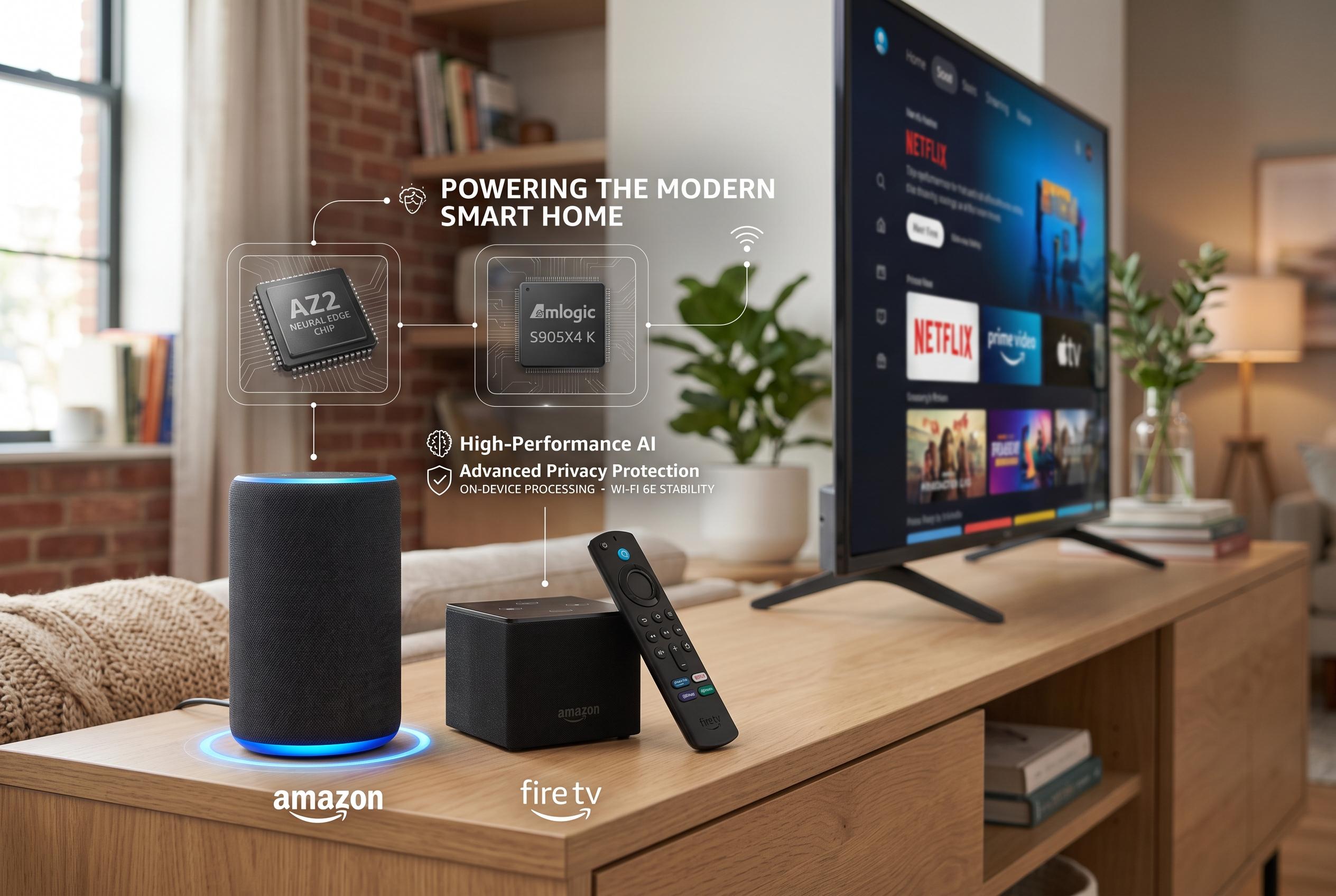

Amazon unveils its end-to-end silicon strategy, introducing custom chips aims to boost AI performance, privacy, and resilience in its Echo and Fire TV devices, disrupting the connected home landscape.
Amazon is tightening its grip on the technology that powers its Echo speakers, Fire TV devices and other home products, in a move that could reshape how artificial intelligence works inside the connected home. The company is shifting away from a model that leans heavily on cloud processing and towards custom chips that do more of the work inside the device itself, a change meant to improve speed, reliability and privacy while supporting the next generation of Alexa features.
Panos Panay, Amazon’s devices chief, has described the plan as an end-to-end silicon strategy, bringing hardware design, custom processors and AI software into a tighter stack across the company’s consumer products. According to TechTimes and Amazon’s own device announcements, the AZ3 chip is aimed at lighter tasks such as wake-word detection and audio processing, while the AZ3 Pro is built for more demanding on-device work, including large language model inference and vision transformer processing. Amazon says the new chips will help power products such as the Echo Dot Max, Echo Studio, Echo Show 8 and Echo Show 11.
The broader goal is to push more intelligence to the edge of the network, reducing dependence on distant servers for every response. That matters for latency, because local processing can make devices feel more immediate, and for resilience, because some functions can keep working even when internet connectivity is poor. It also fits with Amazon’s pitch that privacy improves when more data stays within the home, although some Alexa+ requests will still need cloud support for more complex conversations.
The strategy also reflects a wider pattern in the technology industry, where major platform companies are trying to control more of the stack from silicon to software. Amazon has long used custom chips in its cloud business, including Graviton and Trainium, and its custom chip efforts now generate a reported revenue run rate of more than $20 billion, according to the company. Extending that approach into consumer devices gives Amazon more control over performance and product differentiation, but it also increases the burden of maintaining multiple chip generations, device tiers and software updates across a large installed base.
Alexa+ appears to be a key driver of the shift. The assistant was extended beyond Echo hardware in January 2026 with the launch of Alexa.com, according to Amazon-related reporting, signalling a push towards more ambient, voice-first computing across browsers, devices and future wearable concepts now under discussion in the company’s labs. That ambition could make Amazon’s in-house silicon even more important as it tries to balance richer AI features with the privacy concerns that come with always-listening devices.
Disclaimer: This content is intended for informational purposes only. Readers are advised to exercise their own judgement, conduct due diligence, or consult a qualified expert before acting on any information provided.