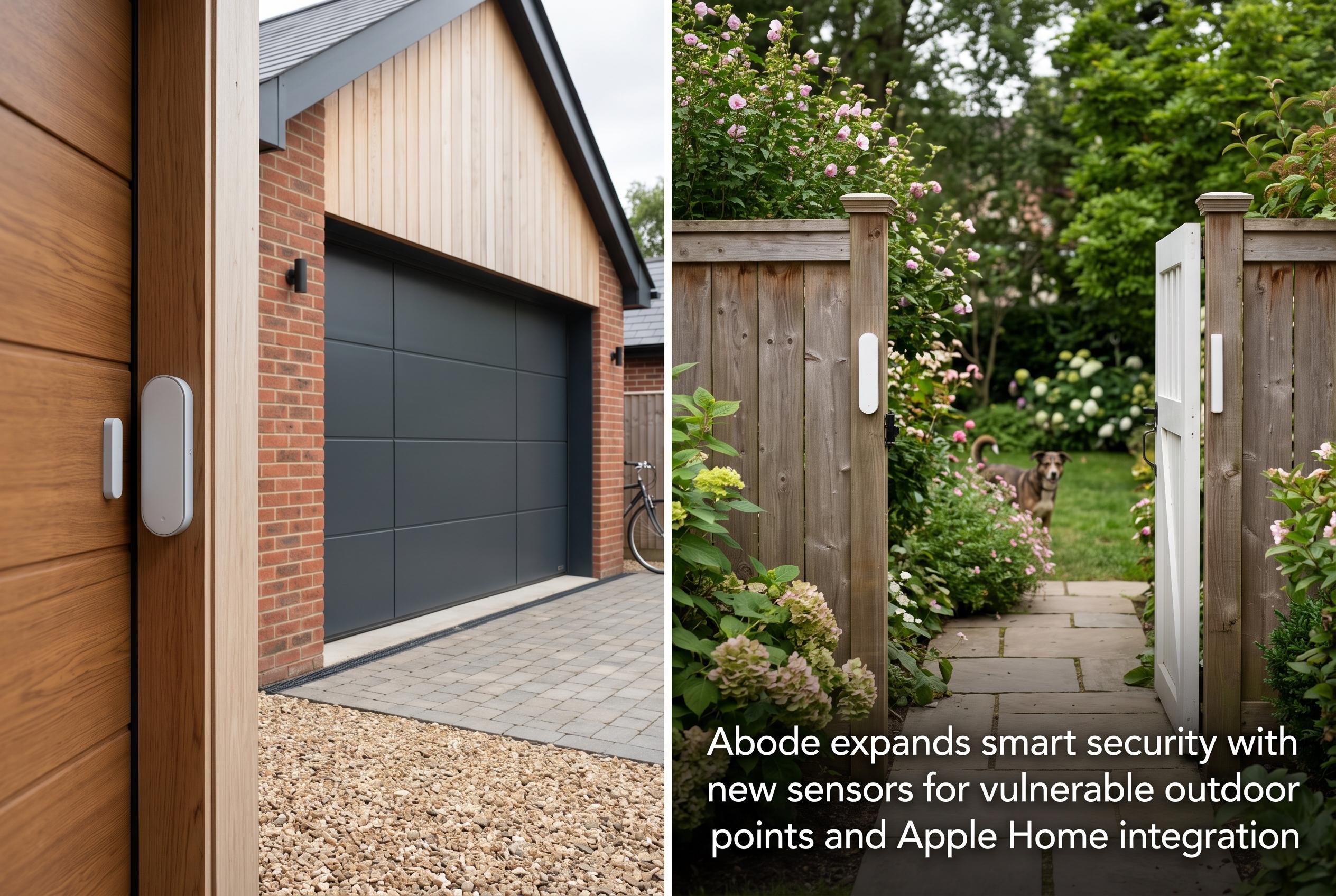

Abode has launched two new sensors designed to secure garages, gates, and detached structures, enhancing smart home security and compatibility with Apple Home, Alexa, and Google Assistant.
Abode has widened its smart home security range with two new sensors aimed at vulnerable points around a property, including garages, gates, sheds and other detached structures. The company says both devices work with Apple Home, giving users another way to fold them into existing home automation systems.
The Garage Tilt Sensor is designed for surfaces that move on a hinge or swing open at an angle. Abode says it detects movement once a panel shifts more than 45 degrees from its resting position, making it suitable for up-and-over garage doors, attic hatches and basement windows. The battery is rated for as long as 10 years, and the device is priced at $34.99. It also works with Alexa and Google Assistant, according to the company.
Abode is also launching an Outdoor Contact Sensor for exterior use. The device carries an IP66 weather-resistance rating and uses a stronger magnet plus a wider activation gap to help cut down on nuisance alerts caused by wind or vibration. Abode says it is designed for metal gates, mailboxes and detached buildings, with a connection range of up to 500 feet from the hub in good conditions. The sensor costs $49.99 and also supports Alexa and Google Assistant.
The new products reflect a broader push to extend security beyond front doors and interior rooms. Abode’s existing Motion Sensor and Mini Door/Window Sensor already support Apple HomeKit, along with Alexa and Google Assistant, while the company’s HomeKit guide explains how users can connect devices through an Apple Home hub such as a HomePod, Apple TV or iPad. In practice, that means the new outdoor hardware can be tied into routines, such as switching on driveway lights when a gate opens after dark.
Disclaimer: This content is intended for informational purposes only. Readers are advised to exercise their own judgement, conduct due diligence, or consult a qualified expert before acting on any information provided.