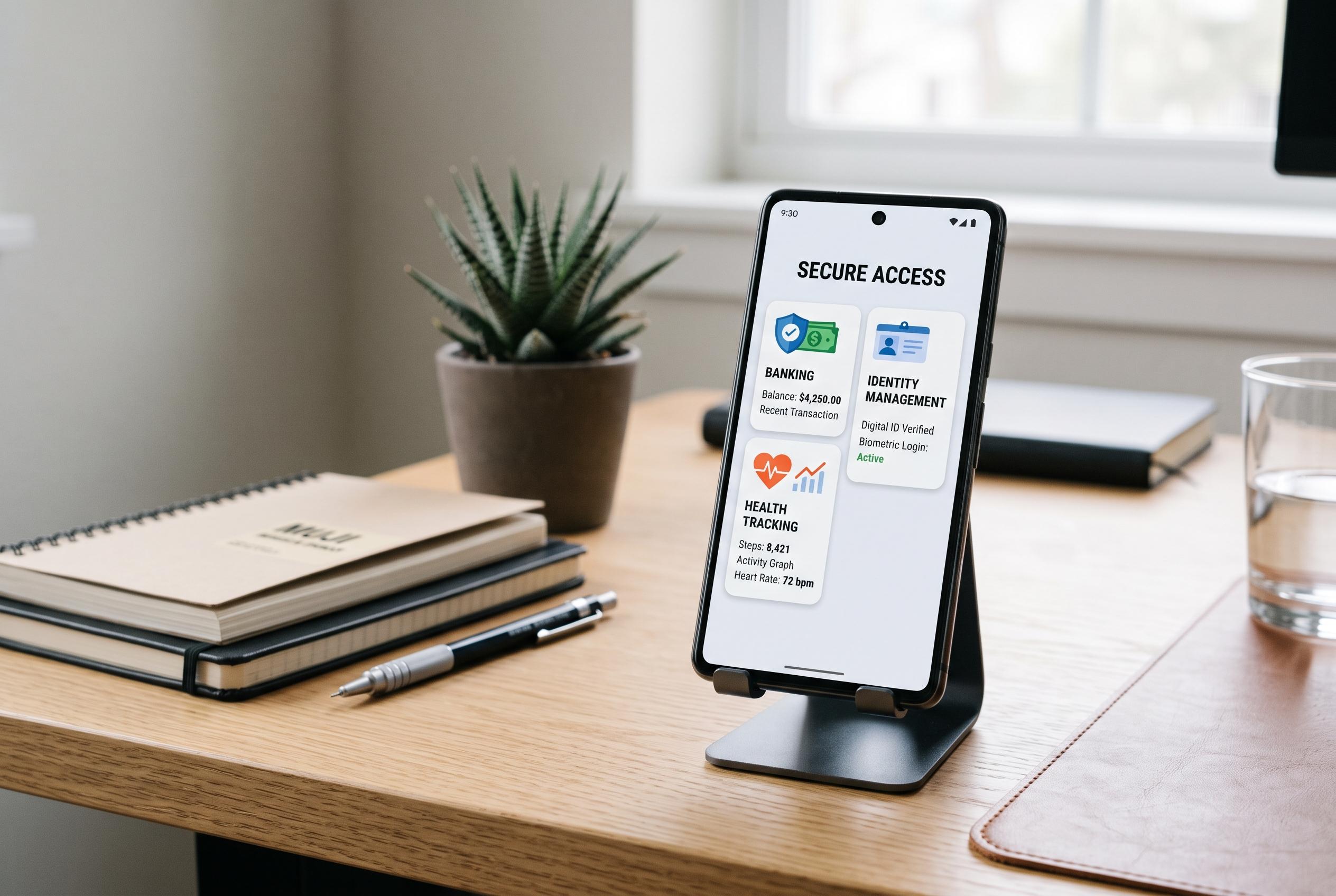

From communication devices to comprehensive personal data centres, smartphones are reshaping daily life, while presenting new security challenges as their functionalities expand into banking, health, and identity management.
The smartphone’s rise has been less about a single breakthrough than about a steady takeover. What began as a tool for calls and messages has become the device through which many people navigate, pay, work, photograph, authenticate and keep track of daily life. Better networks, touchscreens, app stores and faster chips turned a handset into a portable command centre, and by 2025 the scale of that shift was plain: the International Telecommunication Union estimated that 6 billion people were online, while GSMA said mobile technologies and services generated $7.6 trillion, equal to 6.4% of global GDP.
The first devices that hinted at this future were closer to office equipment than consumer essentials. IBM and BellSouth’s Simon Personal Communicator, introduced in 1994, combined a touchscreen with email, a calendar, fax functions and an address book. It is widely regarded as the first smartphone, although its high price, bulky design and short battery life kept it from mass appeal. Nokia’s Communicator line and BlackBerry’s email-focused handsets followed, but both were still aimed mainly at business users.
The real consumer shift came when glass replaced the keyboard. Apple’s first iPhone, unveiled in 2007, bundled a phone, music player and internet browser behind a multi-touch screen, while the App Store turned software into something users could add long after purchase. Android extended that model across a much wider range of devices and price points, helping drive faster progress in cameras, mapping, cloud backup and mobile browsing. The result was not just a better phone, but a platform that kept expanding.
That expansion changed what a single device could replace. The modern smartphone now stands in for a camera, a satnav, a bank card, a boarding pass, a music player and, for many users, the password manager that sits between them and their accounts. It also underpins health tracking, document signing, remote work and two-factor authentication. In football, too, the phone has become a second screen, feeding supporters live scores, player data and in-play updates alongside the match itself.
The move from browser to app deepened that dependence. Android’s own cross-device services and Qualcomm’s Snapdragon Seamless point to a wider industry push towards phones, laptops, watches, earbuds and cars that share data more fluidly. T-Mobile’s Digits service showed an earlier version of the same idea, letting customers use a number across multiple devices. For users, the appeal is obvious: fewer logins, less friction and a more continuous digital life. For football bettors and other mobile users, that convenience can make live markets, account tools and notifications easier to manage, but it does not remove the need for caution or judgement.
The phone is also taking on the roles of wallet, key and identity layer. Near-field communication turned handsets into payment devices, while biometrics gave them a stronger role in banking and travel. Health platforms now link watches, apps and connected hardware, and features such as satellite messaging and digital car keys are broadening what the device can unlock. At the same time, on-device AI is beginning to summarise alerts, translate speech and edit images without sending every task to the cloud.
That growing power comes with a corresponding risk. The more a smartphone absorbs, the more damage a theft, malware attack or locked account can cause. Backups, recovery codes, permission checks and offline copies of essential tickets and contacts have become basic digital hygiene. The smartphone’s success has been built on removing friction from everyday life. Its next test is whether it can keep doing that without becoming a single point of failure.
Disclaimer: This content is intended for informational purposes only. Readers are advised to exercise their own judgement, conduct due diligence, or consult a qualified expert before acting on any information provided.