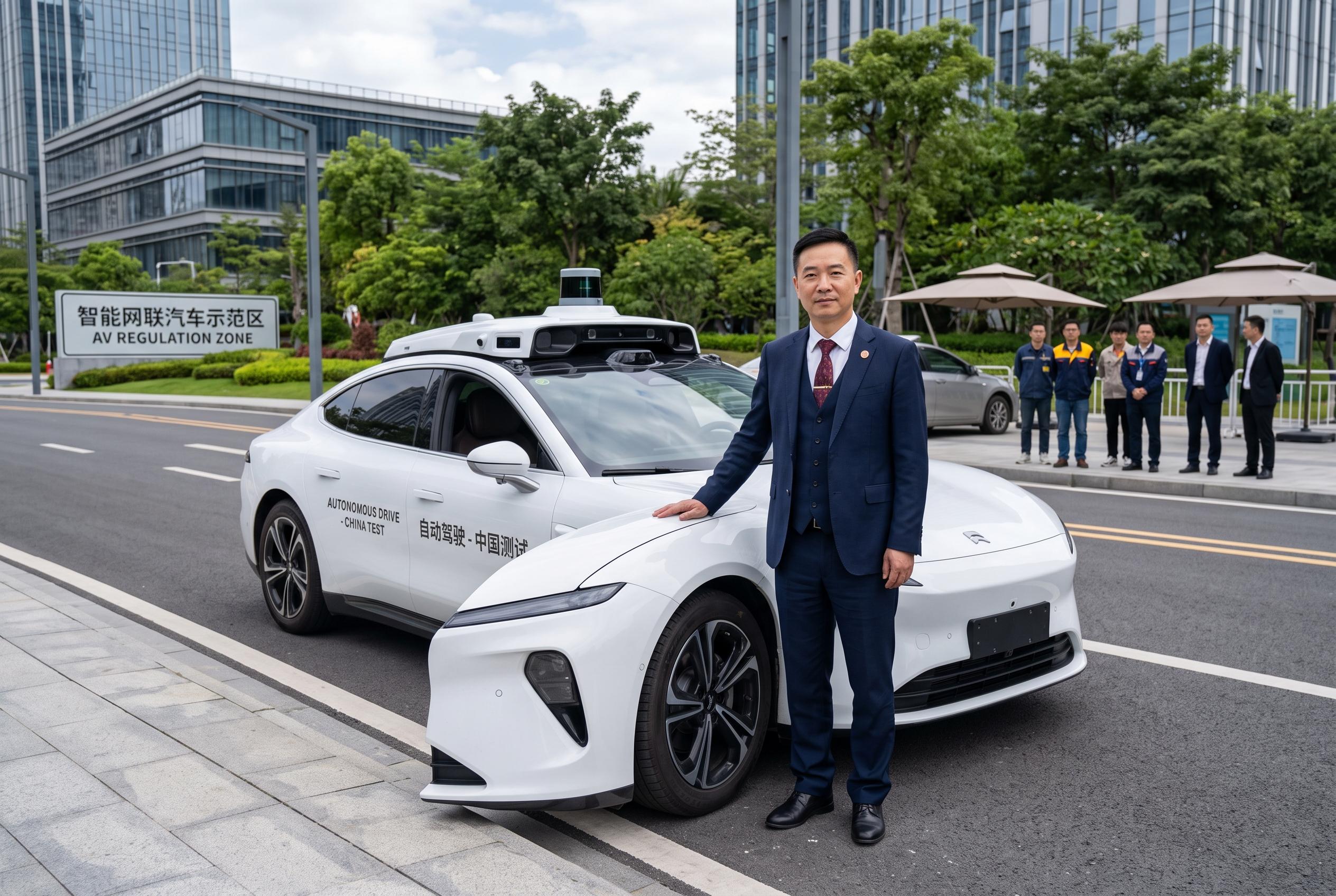

China has announced comprehensive safety standards for Level 3 and 4 autonomous driving systems, aiming to balance innovation with stricter oversight as the sector rapidly advances towards public deployment.
China has set out mandatory national safety standards for autonomous driving systems, marking one of its clearest regulatory moves yet in the fast-changing driverless vehicle sector. The rules, announced by the Ministry of Industry and Information Technology on Tuesday, will take effect on July 1, 2027 and apply to M- and N-category vehicles equipped with Level 3 and Level 4 systems, but not to automated parking functions.
According to China Daily, the new framework requires manufacturers to strengthen safety safeguards across the full product life cycle and to carry out simulation, track and road testing during development and verification. It also tightens expectations around dynamic driving performance, human-machine interaction and user warnings designed to reduce misuse. In particular, the standards require systems to monitor whether a driver is alert enough to take back control when needed.
The move builds on a series of earlier steps by Beijing. In February, the ministry proposed a mandatory national safety standard for Level 3 and Level 4 systems, laying out a wider framework for manufacturers, testing and safety management. Separate standards for automated-driving simulation testing and for advanced driver-assistance systems have also been issued this year, reflecting a broader push to give regulators firmer oversight as the technology moves closer to public deployment.
China’s standards-setting effort also comes after the country helped develop the world’s first global technical regulation on automated driving systems, a framework co-developed with the European Union, Britain, the United States, Canada and Japan. The ministry said it will continue refining the rules, while also tightening market access for intelligent connected vehicle products and improving testing methods. That suggests Beijing sees the latest standard not as an endpoint but as part of a longer effort to balance innovation with control in a sector advancing almost as quickly as the rules meant to govern it.
Disclaimer: This content is intended for informational purposes only. Readers are advised to exercise their own judgement, conduct due diligence, or consult a qualified expert before acting on any information provided.