
Play Digital Signage introduces built-in AI image generation to streamline visual content creation, aligning with a broader industry shift towards faster, tool-integrated signage solutions for retail, hospitality, and corporate environments.
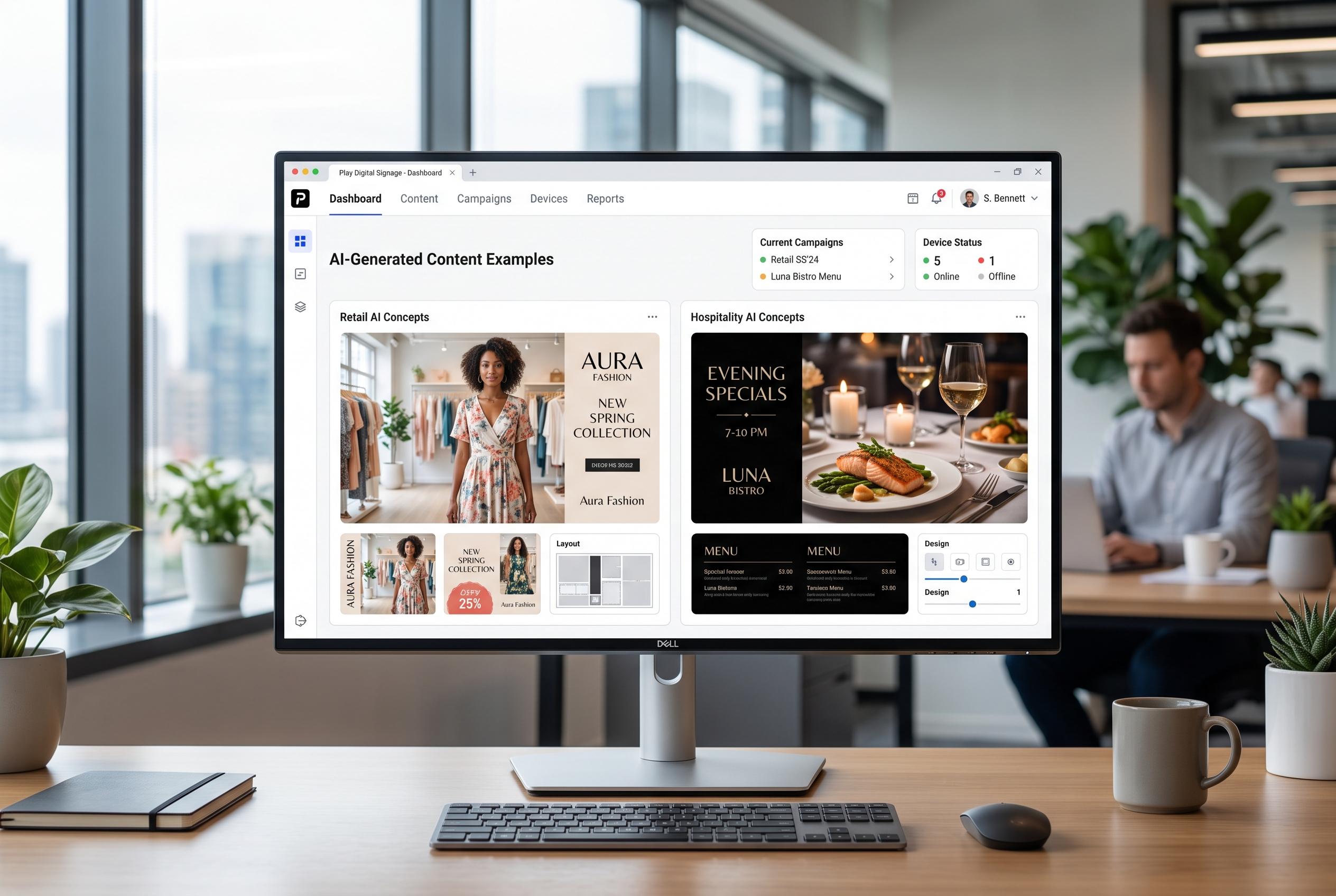
Digital signage teams are increasingly turning to artificial intelligence to speed up content creation, and Play Digital Signage is pitching built-in image generation as a way to reduce the friction of making screen-ready visuals. Instead of moving between separate design tools, downloads and uploads, the company says users can create an image from a text prompt and place it into a playlist in a few steps.
The appeal is straightforward: generate an illustration, promotional graphic or branded campaign image without leaving the platform. That matters for businesses that regularly refresh screens for offers, announcements or seasonal messages. Play says its system also includes a prompt-enhancement option, which it claims can turn a simple idea into a more detailed instruction for the image generator.
Aspect ratio remains an important part of the process. Play lets users choose from 16:9, 1:1, 9:16, 4:3 or custom resolutions, which helps content fit landscape displays, portrait screens and poster-style formats without awkward cropping. The company also says usage is capped by plan, with weekly generation limits that vary by subscription tier.
Play’s argument is part of a wider trend in digital signage. VIZN says its AI-based signage tools are aimed at menus, promotions and other real-world retail and hospitality uses, while Vizora says its platform combines content generation with audience-aware scheduling and predictive monitoring across multiple screens. SignageX, DisplAI, Screenza and AdGenius are all positioning AI as a way to create, manage and scale signage faster, often without specialist design skills.
For retailers, hotels, restaurants and offices, that could mean faster turnaround on campaign graphics, internal notices and menu updates. But the broader shift is not just about image generation. It is also about reducing the number of tools involved, keeping brand assets in one place and making sure content can be pushed to screens quickly when timing matters.
Disclaimer: This content is intended for informational purposes only. Readers are advised to exercise their own judgement, conduct due diligence, or consult a qualified expert before acting on any information provided.