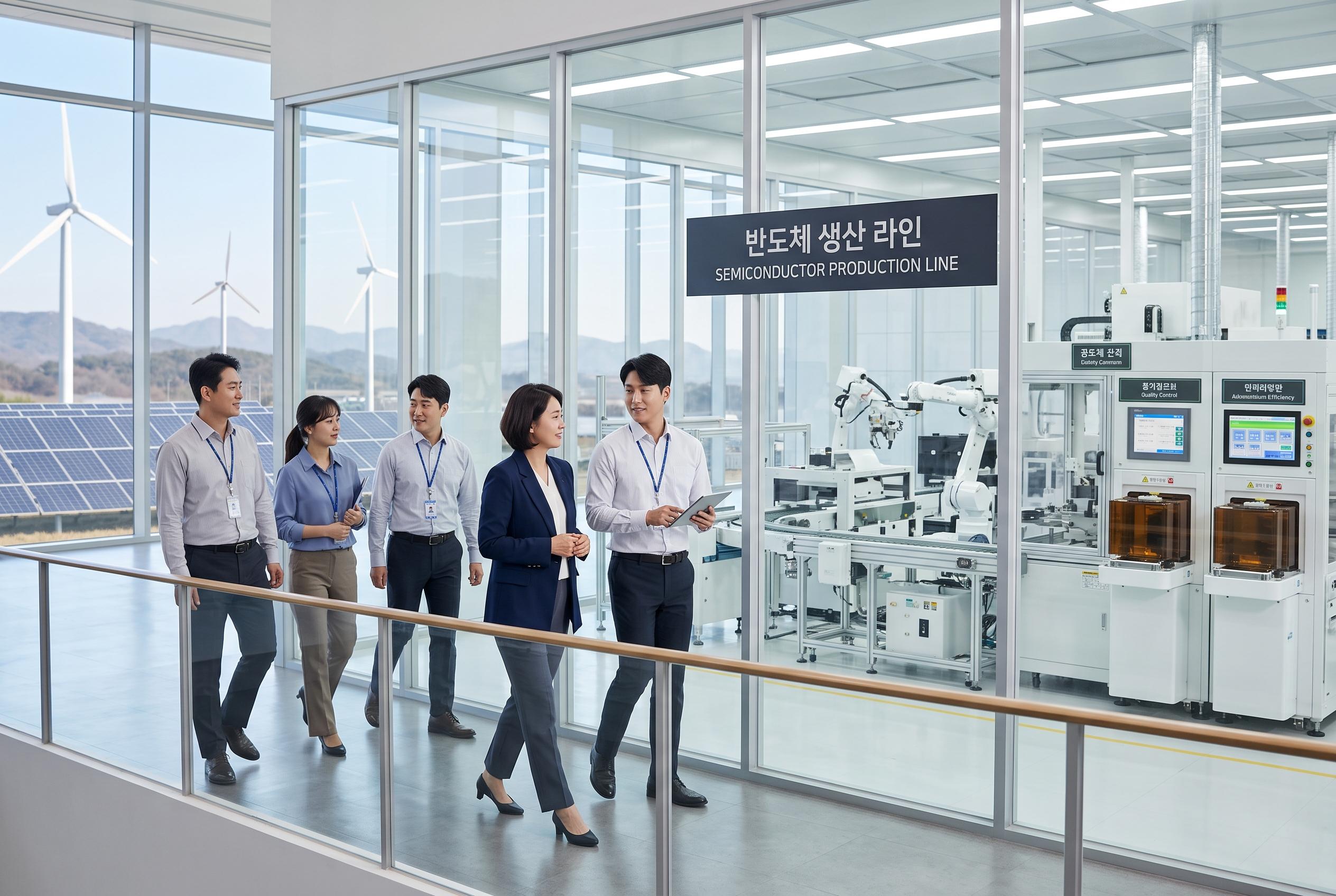

South Korea has announced a new domestic production tax credit as part of its 2026 tax reform, aiming to bolster local supply chains for renewable energy, semiconductors, and AI components, with regional incentives to promote investment outside Seoul.
South Korea has unveiled a new domestic production tax credit designed to bolster its industrial supply chain and encourage firms to manufacture key goods at home, according to the Ministry of Trade, Industry and Energy. The measure was included in the government’s 2026 tax reform package announced on August 3 and is intended to support sectors seen as central to economic security and the country’s green transition.
The credit will apply to six areas: solar power, wind power, secondary batteries, semiconductors, core materials and AI robot components. Companies will qualify if they are Korean-owned producers that make and sell the relevant products domestically, with the size of the benefit linked to output and a standard deduction amount. The programme is scheduled to run until the end of 2036.
Officials have also built in regional incentives to steer investment away from the capital area. Firms in Seoul and surrounding areas will receive the lowest coefficient, while businesses in non-capital regions and designated priority areas will be eligible for larger benefits. To address fiscal concerns, the credit will be phased down during the final three years before expiry, and it cannot be used alongside the integrated investment tax credit. The ministry said it expects to refine the detailed rules through talks with industry groups as the tax package moves through the National Assembly.
Disclaimer: This content is intended for informational purposes only. Readers are advised to exercise their own judgement, conduct due diligence, or consult a qualified expert before acting on any information provided.