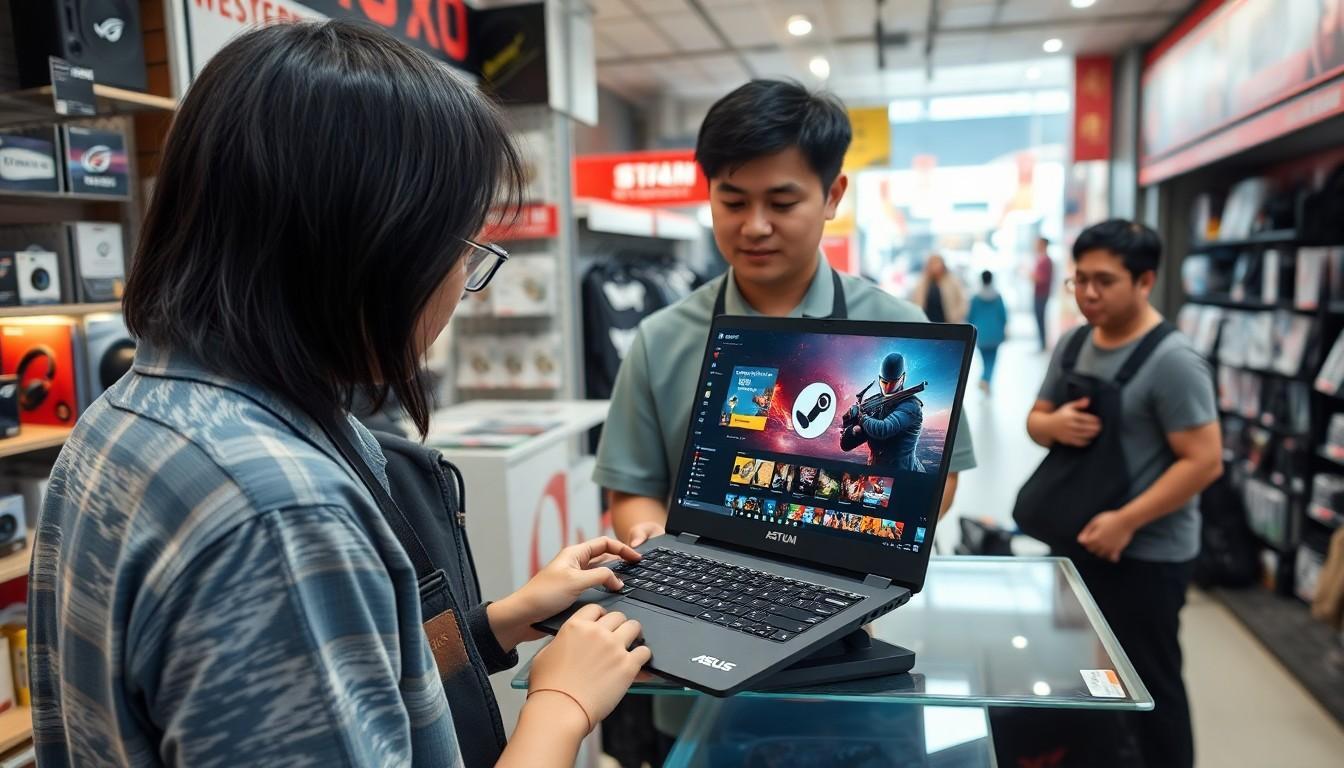

A recent real-world test of the Asus TUF Gaming A14 suggests SteamOS may be approaching viable mainstream use on AMD hardware, blurring the line between console and portable gaming experiences.
A fresh real-world test of Asus’s TUF Gaming A14 suggests that SteamOS may be edging closer to becoming a genuine option for gaming laptops, at least on the right AMD hardware. The machine used in the experiment pairs an AMD Ryzen AI Max+ 392 with integrated Radeon 8060S graphics, a Strix Halo configuration that sits a step below the more powerful 395 variant because it uses 12 Zen 5 CPU cores rather than 16. According to Notebookcheck, the interest here is not only frame rates, but also whether SteamOS can now offer a laptop experience that feels practical rather than merely experimental.
That matters because Valve has recently widened official SteamOS support to a broader range of AMD-based systems, allowing installation on hardware beyond the Steam Deck itself and on devices running the same software environment as Valve’s handheld and forthcoming Steam Machine. Until now, enthusiasts who wanted a SteamOS-like setup on gaming notebooks often relied on Linux builds such as Bazzite. The new test, featured in an ETA Prime YouTube video, gives a more concrete look at how the operating system behaves on modern portable hardware.
The underlying laptop is already something of a hybrid. Tom’s Hardware described the 2026 TUF Gaming A14 as exceptionally strong on CPU workloads, while also noting that its integrated graphics do not match the gaming output of systems with dedicated GPUs. In other words, the machine has often been positioned more as a compact productivity notebook with some gaming ability than as a pure gaming rig. Other reviews have been similarly measured, praising battery life, cooling and portability while pointing out that the A14’s gaming credentials are respectable rather than class-leading.
That context makes the SteamOS experiment more interesting than it might first appear. If a relatively compact AMD laptop with strong battery life and high-end integrated graphics can run SteamOS smoothly, it could appeal to users who want a console-like interface without abandoning laptop flexibility. But the broader reviews also suggest a limit: even when the operating system works well, the hardware itself still defines how far gaming performance can go. For most buyers, that means SteamOS on notebooks looks promising as an alternative platform, but not yet a universal replacement for Windows.
Disclaimer: This content is intended for informational purposes only. Readers are advised to exercise their own judgement, conduct due diligence, or consult a qualified expert before acting on any information provided.