
Abode expands its smart-home sensor range with two new devices designed for outdoor entry points, enhancing security integration with Apple Home, Alexa, and Google Assistant for existing users.
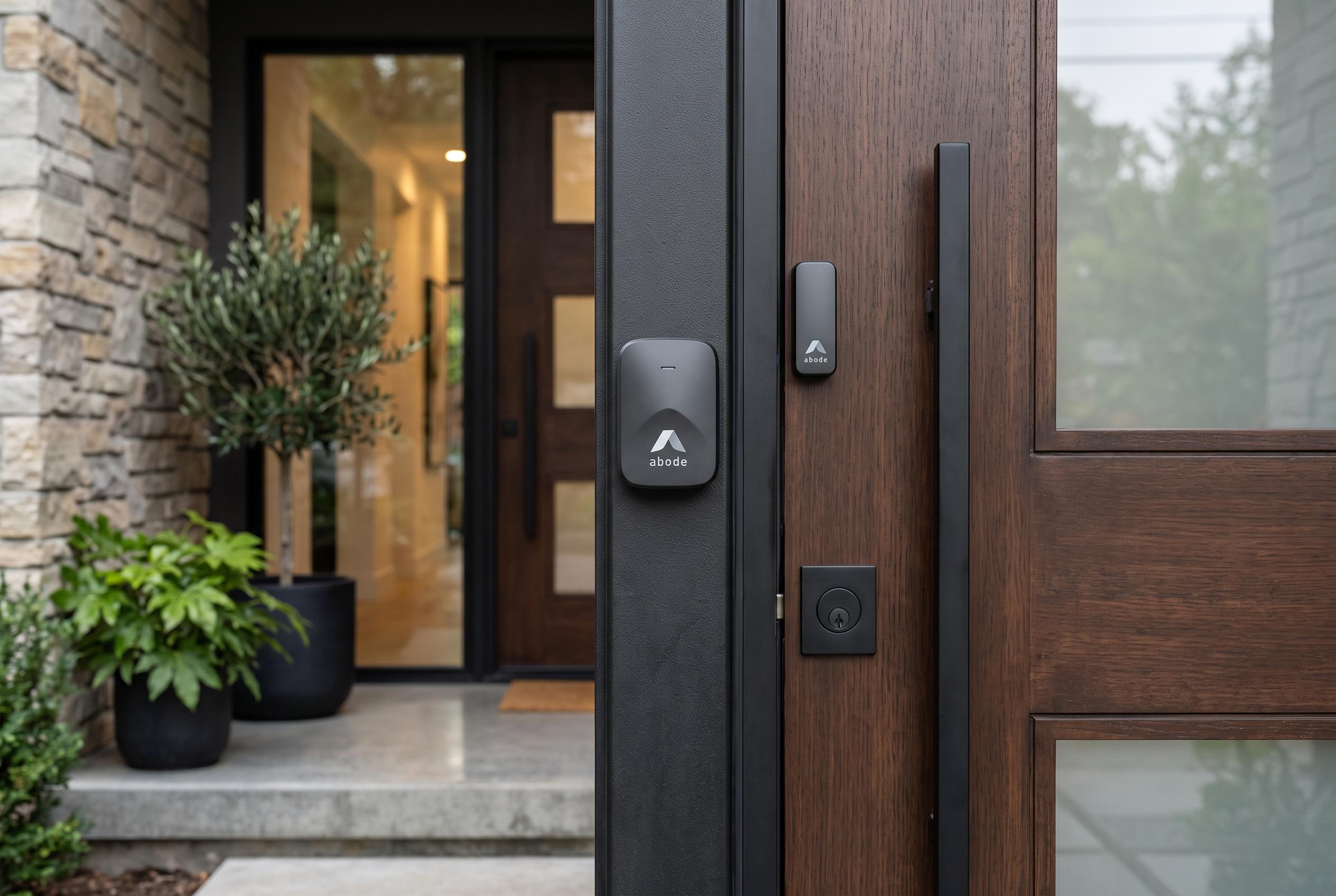
Abode has expanded its smart-home sensor range with two new devices aimed at places indoor contact sensors often struggle to cover: garage doors, gates, sheds and other exposed entry points. The company’s new Garage Tilt Sensor costs $34.99, while the Outdoor Contact Sensor is priced at $49.99. Both can report open and closed status inside Apple Home, and they also work with Alexa and Google Assistant, giving users a broader way to fold these checkpoints into a connected home setup.
The Garage Tilt Sensor is designed for surfaces that move rather than simply open on a hinge. Abode says it can detect an angle change of roughly 45 degrees, which makes it suitable for overhead garage doors, attic hatches, basement hopper windows and similar panels where a standard two-part sensor may not be practical. It uses a replaceable CR123 lithium battery, sends low-battery alerts to a phone and is rated for wireless range of more than 100 feet, which should help in detached garages and outbuildings.
The Outdoor Contact Sensor is built for tougher conditions. Abode says it can be mounted on wood or metal, with a stronger magnet and wider gap between the sensor parts than a typical indoor model. The unit carries an IP66 rating, meaning it is protected against dust and strong water jets, and it runs on two AA batteries. It is also rated to operate from -13°F to 140°F, which makes it a better fit for exterior gates, sheds, storage units, mailboxes and detached garages.
There is a catch, though: both sensors require an Abode security system, so they are best suited to households already invested in the company’s ecosystem or willing to buy into it. Apple Home support runs through Abode’s hub, and the appeal for Apple users is that these alerts can sit alongside other HomeKit devices and HomeKit Secure Video cameras. Abode says the new sensors are available now from its online store. The launch follows a wider pattern in which smart-home makers are extending compatibility across Apple Home, Alexa, Google Home and Matter, while still keeping some advanced features tied to their own hubs or subscriptions.
Disclaimer: This content is intended for informational purposes only. Readers are advised to exercise their own judgement, conduct due diligence, or consult a qualified expert before acting on any information provided.