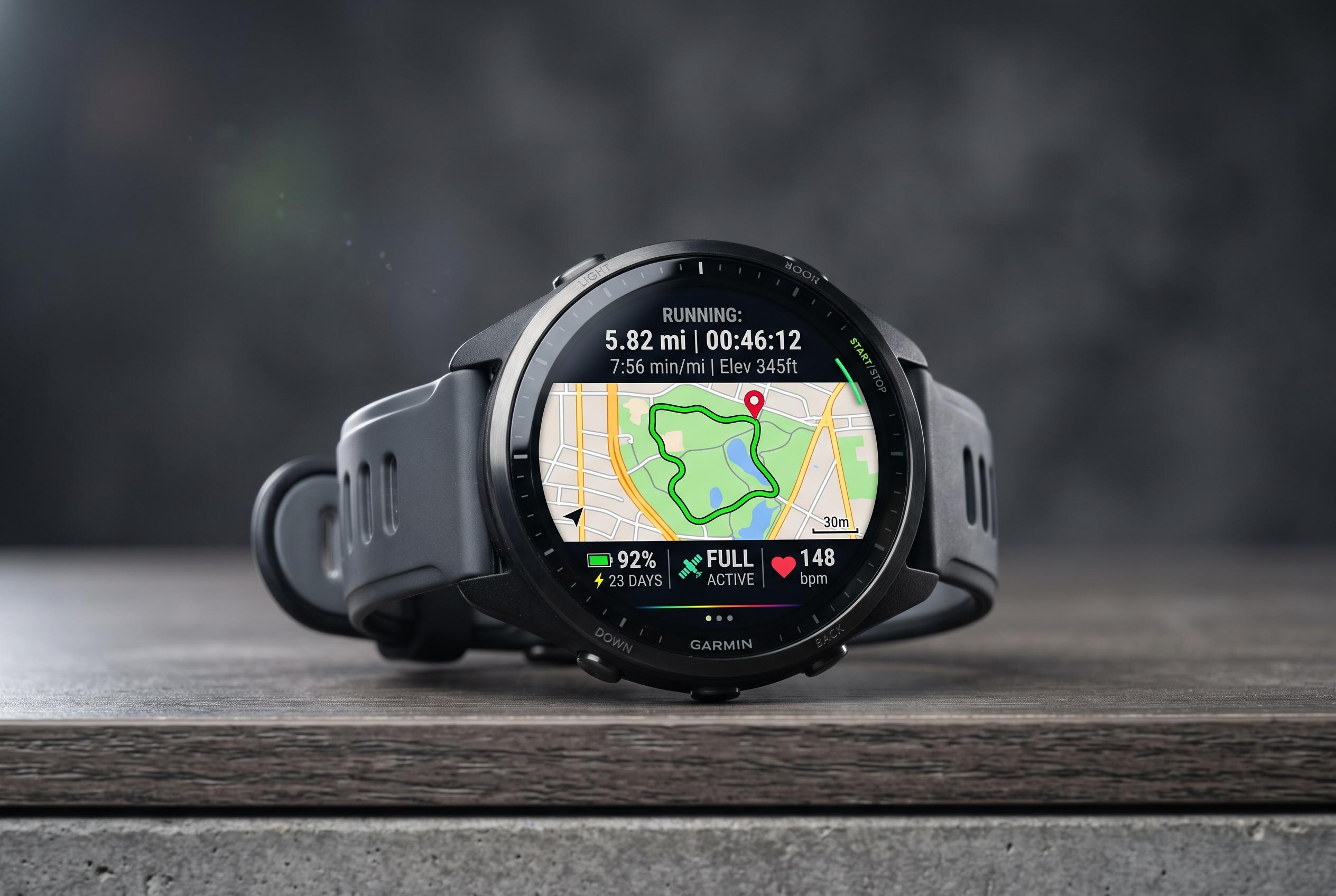

A decade after their rise, GPS running watches have undergone significant advancements, offering brighter screens, better GPS accuracy, and longer battery life, making them more accessible and tailored to different running needs than ever before.
A decade of GPS running watches has turned what was once a niche accessory into a crowded, fast-moving category, and the latest crop is far more capable than the basic trackers many runners started with. According to Peggy O’Mara’s testing guide, the 2026 field now includes brighter AMOLED screens, multi-band GNSS on cheaper models and battery life that no longer requires a bulky device on the wrist. The result is a market where the right watch depends less on brand prestige and more on how, where and how often you run.
O’Mara’s review, which covered 12 watches across road, trail and treadmill sessions, places the Garmin Forerunner 265 at the top for most runners, with the Forerunner 55 still a strong entry-level option and the Forerunner 165 offering a useful mid-price step up. The broader picture from TechRadar is similar: serious runners gravitate towards the Garmin Forerunner 965, while budget shoppers have increasingly good alternatives beyond Garmin, including the Coros Pace 3. That spread matters because the best watch for a first-time 5K runner is rarely the same one a marathoner or trail runner needs.
The biggest shift in the category is display and sensor quality. Tom’s Guide says Garmin’s newer Forerunner 70 and Forerunner 170 show how much has changed in the entry-level market, bringing AMOLED screens, richer training tools and improved heart-rate hardware to watches that sit much closer to the mainstream. Their reporting also underlines an important trade-off: these newer beginner models are more capable, but they are no longer dirt-cheap. That leaves the older Forerunner 55 as a simpler, lower-cost choice for runners who mainly want pace, distance and dependable battery life.
Battery life remains the other major dividing line. O’Mara’s testing found the Forerunner 965 strong enough for long training blocks and ultra-distance ambitions, while the Forerunner 55 and vívoactive 5 suit runners who spend more time on everyday workouts than on all-day efforts. TechRadar’s broader ranking points to a separate tier of specialist endurance watches, such as the Garmin Enduro 3, for athletes who need far more than a typical marathon’s worth of GPS time. For most runners, though, the practical question is simpler: choose enough battery for your longest race and the training that leads up to it.
Accuracy also depends on where you run. Multi-band GNSS is now the feature that separates watches designed for difficult routes from those aimed at open roads and tracks. O’Mara says the Forerunner 265 and 965 handled tree cover and urban drift better than single-band models, while Tom’s Guide notes that the Forerunner 70 improves GPS performance with multi-GNSS but stops short of the more advanced dual-band systems found in premium watches. That makes the middle of the market especially interesting: many runners can now get very good positioning without paying flagship prices.
For buyers, the message across the reviews is consistent. Pick the Forerunner 55 if you want the cheapest straightforward running watch. Choose the Forerunner 165 or Forerunner 70 if you want a modern display and more training tools without going premium. Step up to the Forerunner 265 if you care about accuracy, structured training and a strong balance of features, and go to the Forerunner 965 if you need maps, top-tier battery life and the deepest Garmin running metrics. The category has expanded enough that there is now a sensible option for almost every type of runner.
Disclaimer: This content is intended for informational purposes only. Readers are advised to exercise their own judgement, conduct due diligence, or consult a qualified expert before acting on any information provided.