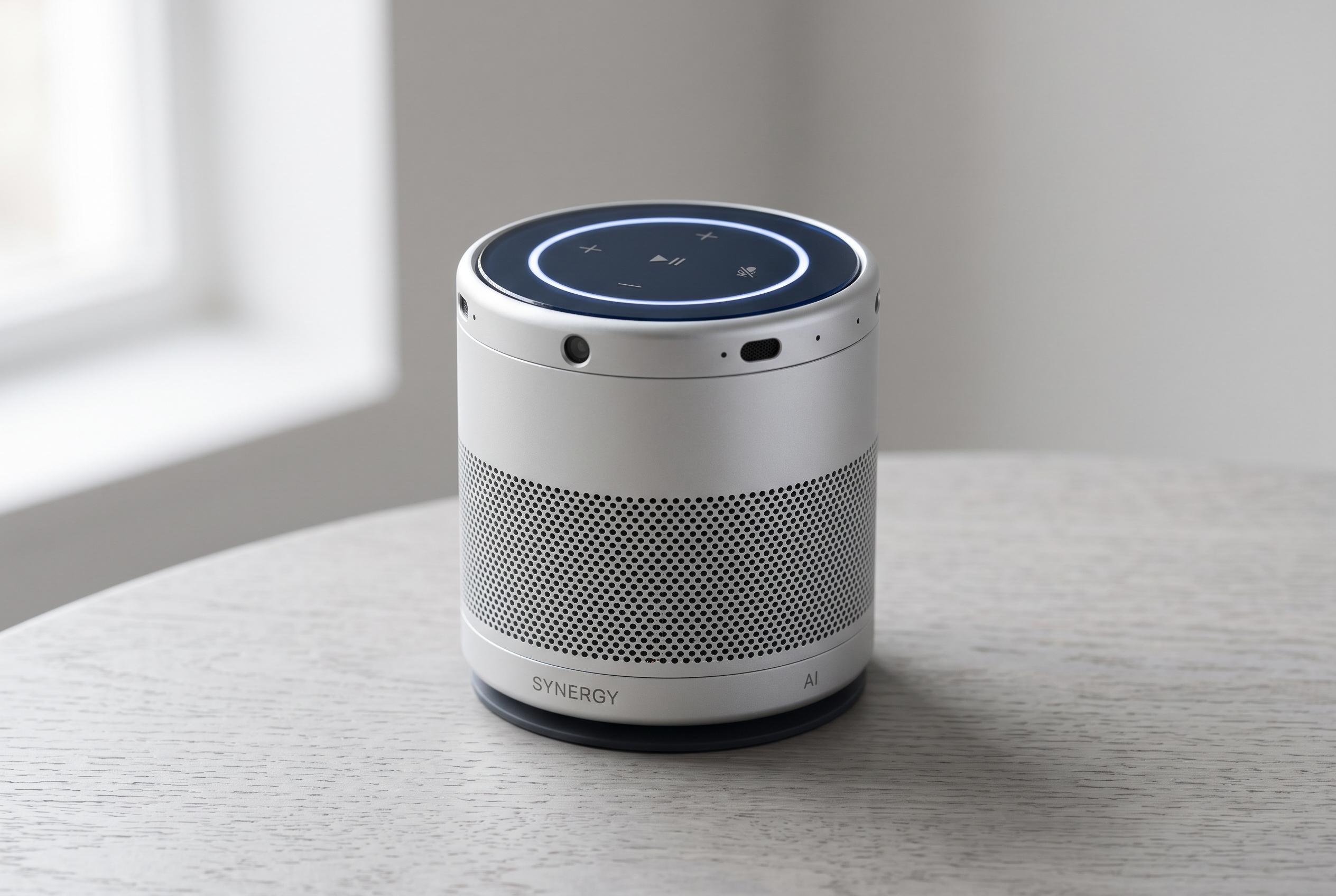

OpenAI is developing a small, screenless, high-end AI-powered speaker resembling a personal object, featuring premium materials and advanced sensors, signalling a bold move into consumer hardware with ambitions to reach 100 million units.
OpenAI is shaping its first consumer hardware device as a small, screenless speaker with a circular body, according to Bloomberg. The report says the unit is expected to be about the size of a hockey puck and designed to sit comfortably in one hand, a form factor that would make it easy to carry around the home or office. The company has not announced the product publicly, but the design appears aimed at making an AI assistant feel more like a personal object than a conventional smart speaker.
Bloomberg also reported that OpenAI is considering a price range of roughly $300 to $400, putting the device above many mainstream smart speakers and closer to premium connected hardware. The speaker is said to use high-quality metal and other upscale materials, which would give it a more polished appearance than typical plastic rivals. That approach fits with OpenAI’s move into hardware after its acquisition of Jony Ive’s io startup, which brought one of Apple’s most influential designers into the company’s orbit.
The device is expected to be built around cameras, microphones and other sensors so it can observe its surroundings and adapt to the person using it. Bloomberg has said the speaker may also draw on information such as email access to personalise responses and behave more like an always-available assistant than a simple voice interface. A light indicator is expected to show when the device is listening.
The hardware push comes as OpenAI faces growing scrutiny over its broader ambitions. In July 2026, Apple sued the company, alleging trade-secret theft involving former Apple employees, while OpenAI rejected the claims. Separately, OpenAI has said it plans a wider family of devices with Ive’s design team playing a central role, and earlier reports suggested the company wants to ship hardware at scale, with a long-term target of 100 million units. That ambition suggests OpenAI sees consumer devices as a core extension of ChatGPT rather than an experiment on the side.
Disclaimer: This content is intended for informational purposes only. Readers are advised to exercise their own judgement, conduct due diligence, or consult a qualified expert before acting on any information provided.