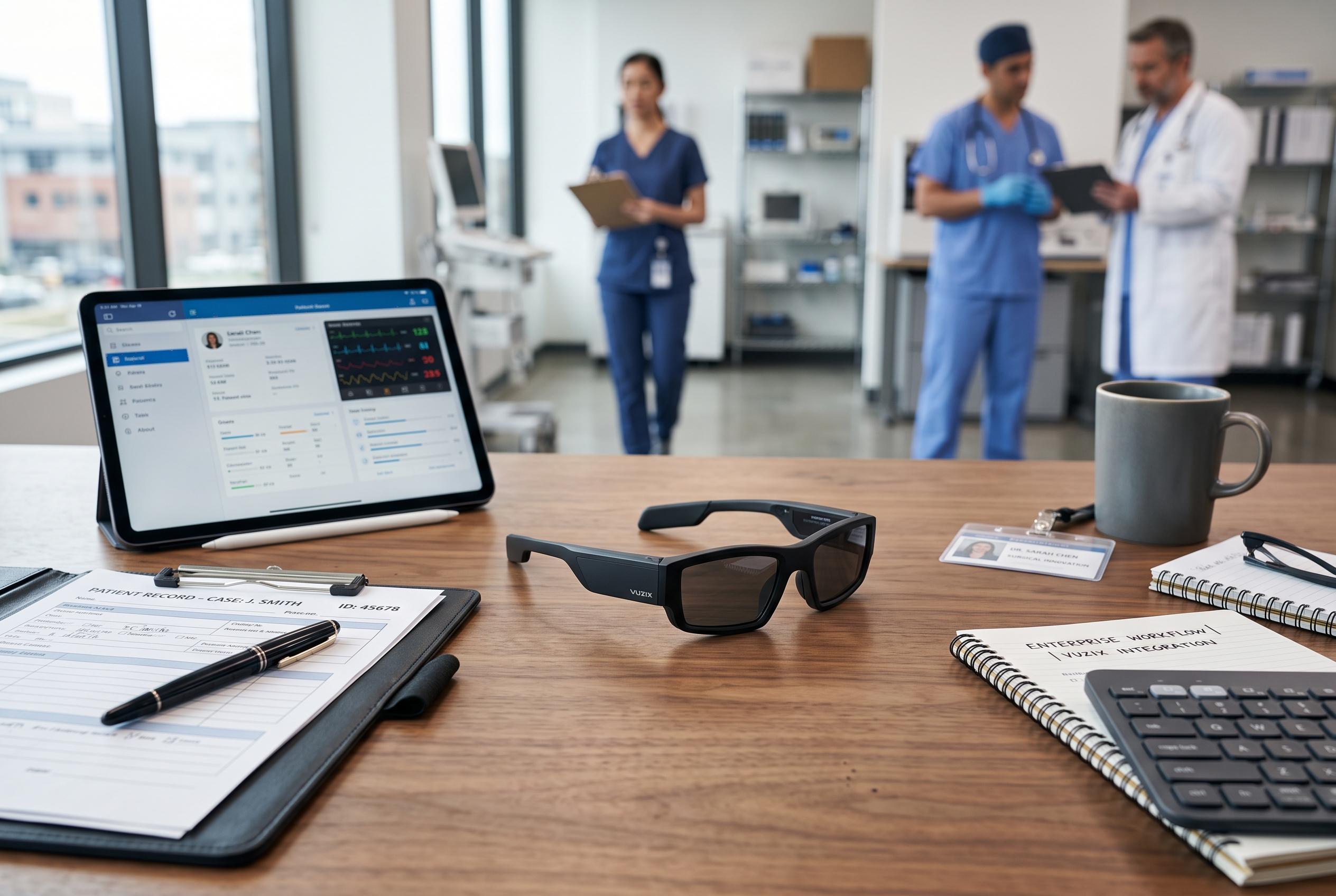

The wearable tech is shifting from niche gadgetry to a vital enterprise tool, with AI-driven features poised to transform industrial, healthcare, and consumer markets amid rapid market expansion forecasts.
Smart glasses are moving from a niche wearable category into a broader enterprise technology, with market analysts expecting rapid expansion as augmented reality and artificial intelligence mature. MarketsandMarkets says the sector is being propelled by demand for hands-free access to digital information in settings where workers need to stay focused on physical tasks. Grand View Research offers a similar view, pointing to rising adoption across healthcare, manufacturing, logistics and field services, while also describing North America as the largest market and Asia Pacific as the fastest-growing region.
The technology at the centre of that shift is changing quickly. Smart glasses now combine displays, cameras, motion sensors, microphones and wireless modules in eyewear-sized devices, allowing users to see instructions, data and graphics without looking down at a phone or tablet. IDC said in 2025 that extended reality device shipments rose sharply, with smart glasses playing a major role, as products from Meta, Xiaomi and other makers pushed the category towards lighter, always-on and AI-led designs.
Enterprise use cases remain the clearest commercial driver. According to the MarketsandMarkets assessment, manufacturers are using smart glasses for assembly guidance, maintenance, inspection and training, while logistics operators are applying them to picking, scanning and shipment checks. Healthcare is also becoming a meaningful market, with uses ranging from surgical support to remote consultation and medical training. Grand View Research likewise says enterprise demand is a core reason for the market’s expansion, particularly where companies want better productivity and fewer errors.
AI is becoming the feature that may determine which smart glasses succeed. The GlobeNewswire report in June said generative AI is turning eyewear into a voice-controlled assistant capable of translation, content capture and on-device guidance. Recent product launches underline that direction. TechRadar’s review of TCL’s RayNeo X3 Pro described full-colour MicroLED displays and Gemini-powered assistance, while Axios reported that Snap’s new Specs glasses, launched at Augmented World Expo 2026, are lighter than earlier models and priced at $2,195.
That momentum comes with familiar constraints. High prices, battery limits, comfort concerns and privacy issues around camera-equipped eyewear still shape adoption. Even so, the market outlook remains strong. MarketsandMarkets projects revenue of $4.13bn by 2030 from $878.8m in 2024, while Grand View Research forecasts a rise to $14.4bn by 2033. The gap between those estimates reflects different methodologies, but both point in the same direction: smart glasses are becoming a serious platform for industrial computing, remote collaboration and, increasingly, consumer AI.
Disclaimer: This content is intended for informational purposes only. Readers are advised to exercise their own judgement, conduct due diligence, or consult a qualified expert before acting on any information provided.