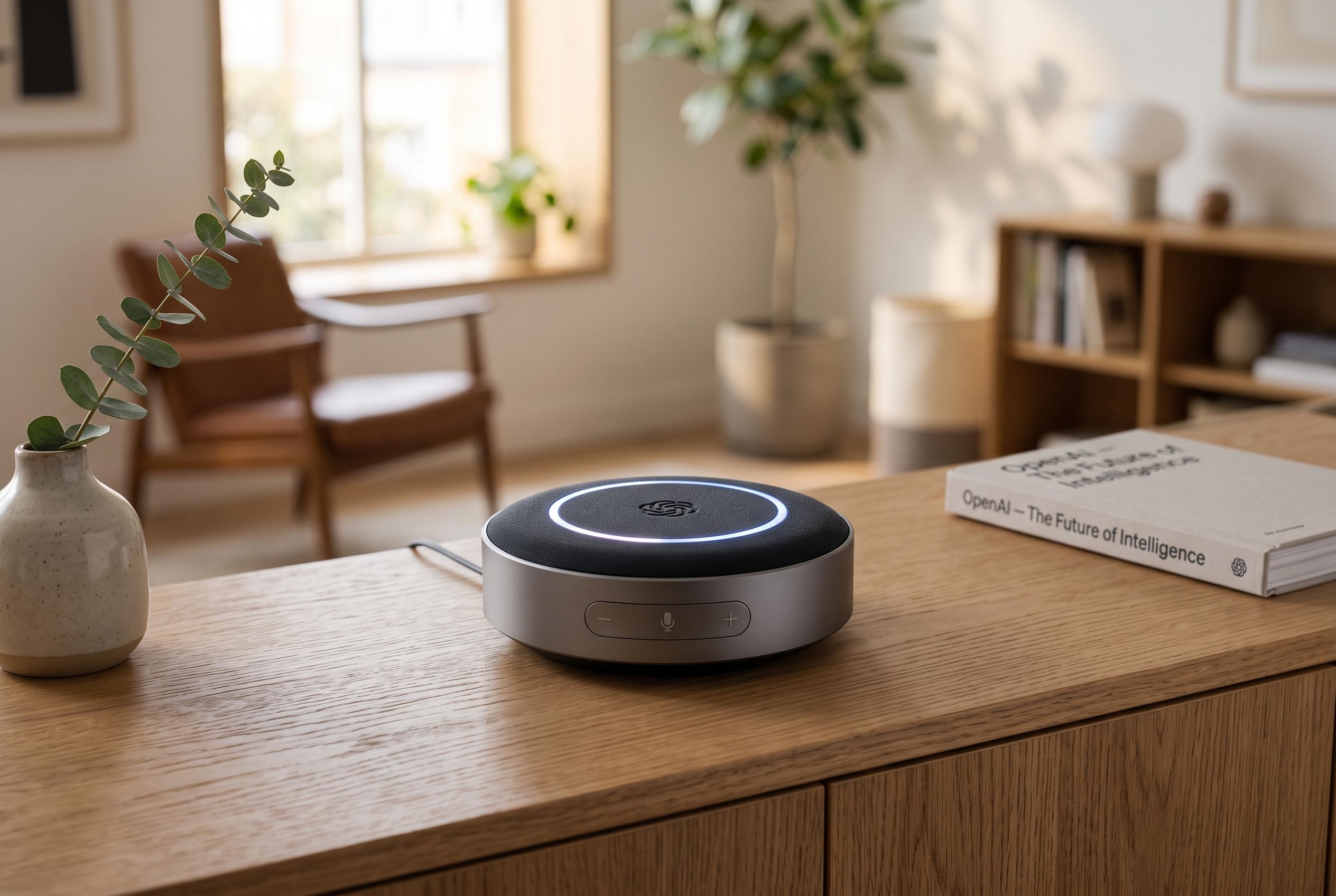

OpenAI advances toward consumer hardware with a high-end, puck-shaped smart speaker designed for all-day use and immersive AI interactions, potentially challenging established tech giants and redefining home assistant aesthetics.
OpenAI is moving closer to consumer hardware with a smart speaker that would sit somewhere between a home assistant and a design object. According to Bloomberg reporting cited by SmartWorld, the device is planned as a display-free speaker with a rounded, puck-like form and a premium metal finish, a clear attempt to move away from the look of Amazon and Google’s mainstream products. The internal price target appears to be about $300 to $400, which would place it well above typical mass-market smart speakers.
The device is said to be designed for all-day use and to support natural voice conversations through advanced AI models. Bloomberg’s account indicates that it may operate in more than one orientation, whether carried in the hand or placed on furniture, and that some internal prototypes include moving mechanical elements intended to create a stronger sense of presence. That approach suggests OpenAI is trying to make the speaker feel less like a static appliance and more like an interactive companion.
Other reports have added further detail about the broader hardware plan. MacRumors said OpenAI is working with former Apple designer Jony Ive on a smart speaker expected in early 2027, while WinBuzzer reported a lower price band of $200 to $300 and said the company is also considering features such as always-on listening, a camera and facial recognition for user identification and purchases. WinBuzzer also said the speaker would be the first product in a wider family of devices, potentially including smart glasses and an in-ear product.
The hardware push comes as OpenAI is already locked in a legal dispute with Apple. In July, Apple filed suit accusing OpenAI of using trade secrets obtained through former employees to develop its hardware ambitions, while OpenAI responded that the claims were inaccurate and overstated. The dispute has put added scrutiny on the company’s industrial design work, even as Bloomberg reported that the speaker’s doughnut-like shape itself does not appear to mirror any Apple concept. If OpenAI does bring the device to market in 2027, it will be tested not only on technical capability but also on whether consumers are willing to pay a premium for a speaker that is meant to behave like a presence in the room.
Disclaimer: This content is intended for informational purposes only. Readers are advised to exercise their own judgement, conduct due diligence, or consult a qualified expert before acting on any information provided.