
QDC is launching its first gaming earphone in Japan, featuring an onboard DSP chip that preserves customised sound profiles across multiple devices, including tournament PCs with locked-down software, signalling a new hardware-first approach for competitive audio.
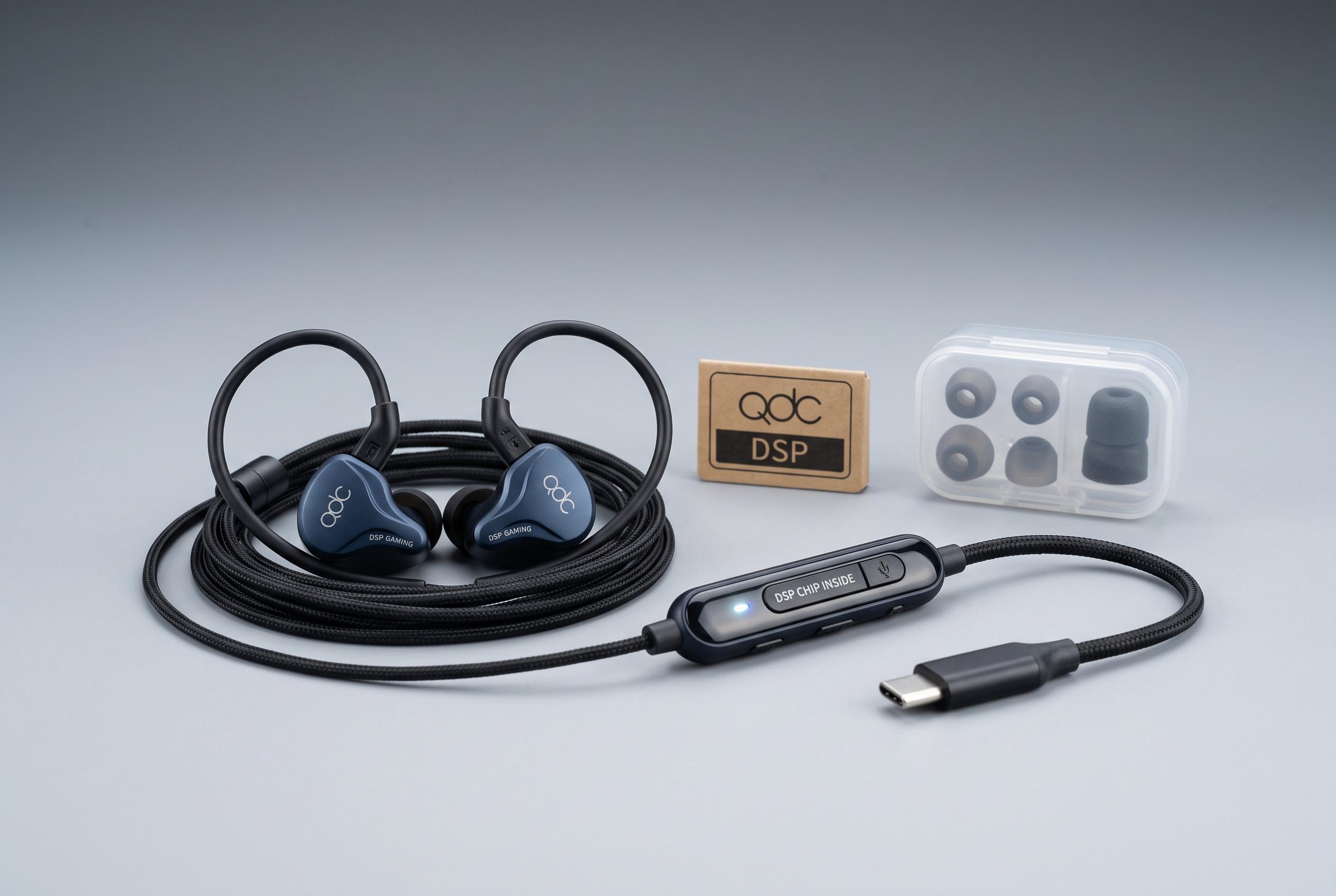
qdc is set to bring its first gaming earphone to Japan on August 8, pitching the FSF Blink Bound BD01 as a product built for players who move between home PCs, consoles and tournament machines that block third-party software. According to the company’s distributor, Aiuto, the earphone will cost ¥16,500, or about $105, and its defining feature is an onboard DSP chip that stores EQ settings on the hardware itself rather than in host software. That means a user’s tuning should remain intact even when the earphones are unplugged from one system and used on another, including locked-down competition PCs.
The launch comes after qdc already moved into gaming audio with the DEBUT-CG, a custom in-ear monitor released in June at ¥60,500. Aiuto said that model was developed with feedback from more than 100 professional gamers, showing that qdc has been building towards this market rather than entering it casually. The BD01 extends that push into a cheaper, more portable category, where the company is arguing that competitive audio no longer needs to be tied to heavyweight software suites.
Technically, the BD01 combines a custom 10mm dynamic driver with a dual magnetic circuit and a diaphragm made using physical vapour deposition magnetron sputtering, a thin-film process that can increase rigidity while keeping mass low. qdc says the earphones are tuned for a 10Hz to 30kHz range, with 102dB sensitivity and 19 ohms impedance. It also includes a physical mode switch on the shell, letting users move between an e-sports setting and an ACG Music mode without opening any software. The connection is USB-C through USB Audio Class 2.0, and the company says the device supports up to 384kHz/32-bit PCM audio.
That hardware-first approach puts the BD01 in a small but growing part of the market. Moondrop’s Rays Gaming IEMs, for example, also pair USB-C audio hardware with an AI noise-cancelling microphone and downloadable EQ profiles, while Qudelix’s 5K stores equaliser presets locally and reloads them at boot. qdc is trying to push the idea further by making the tuning itself travel with the earphone. Whether that proposition holds up outside the company’s own specifications will depend on independent testing, but the BD01 is clearly designed for one practical problem: preserving a player’s sound profile when the software cannot follow.
Disclaimer: This content is intended for informational purposes only. Readers are advised to exercise their own judgement, conduct due diligence, or consult a qualified expert before acting on any information provided.