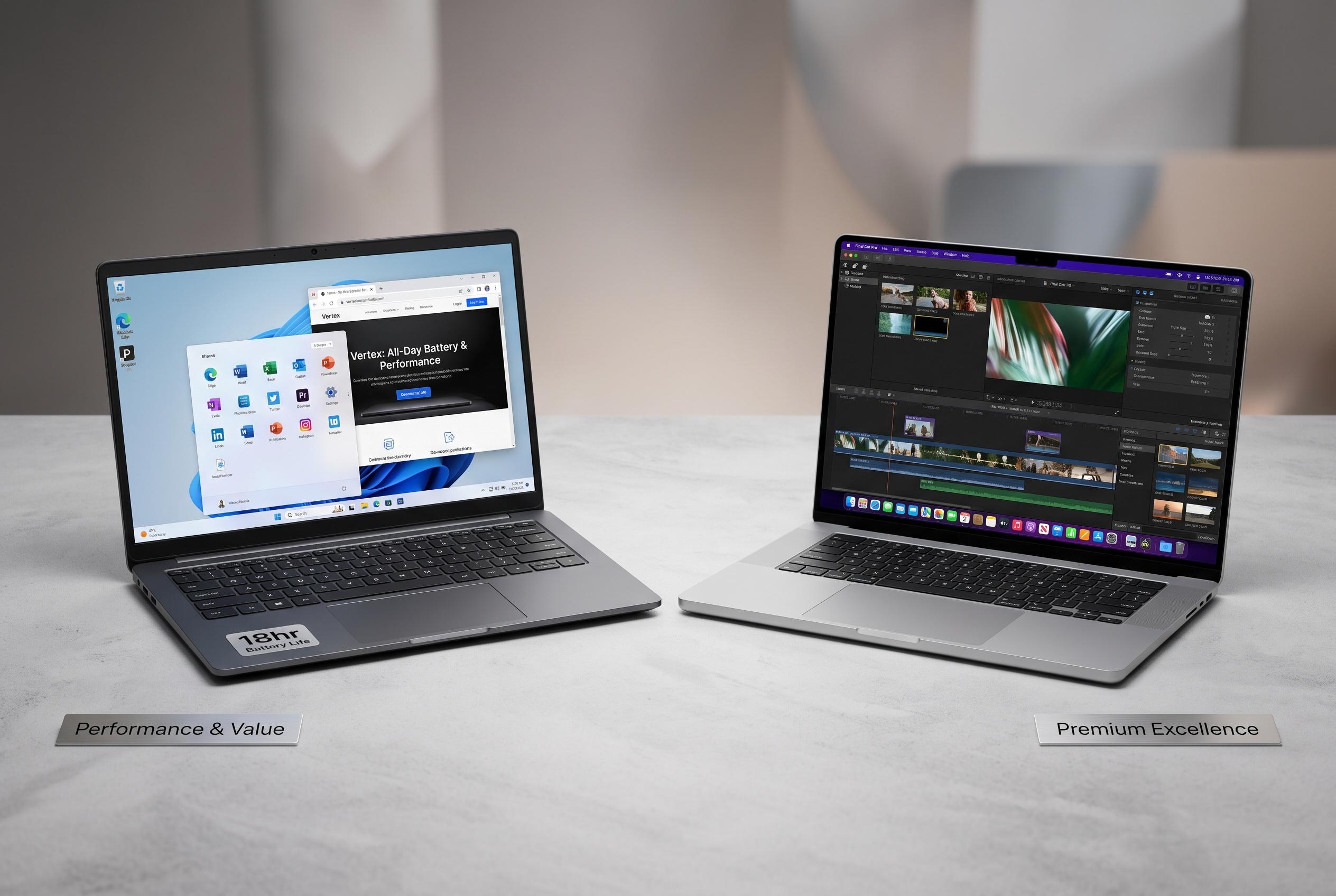

A shift in the student laptop market sees affordable models offering improved design and battery life, while premium options like Apple’s MacBook Neo and Dell XPS 13 challenge budget rivals with high performance and advanced features, highlighting a new focus on balancing affordability with usability amid rising memory prices.
Students shopping for a new laptop are being pushed into a difficult market. Tom’s Guide says rising memory prices have made many current models more expensive than they should be, which is why it has narrowed the field to machines that stay under $700/£700 while still handling study, streaming and everyday multitasking. The emphasis is on practical value: enough speed for coursework, enough battery life for a full day on campus and a design light enough to carry in a backpack.
At the top of the list is Apple’s MacBook Neo. Tom’s Guide describes it as the best overall option for most students, largely because it combines a premium 13-inch aluminium build, 13 hours and 28 minutes of battery life and the A18 Pro chip in a package that starts at $599/£599 with Apple’s education pricing. The site says the laptop feels more polished than cheaper rivals, although it lacks features such as a backlit keyboard and Thunderbolt support. Even so, it is positioned as a strong choice for students who want a Mac without paying MacBook Air money.
For students who prefer Windows, the Dell XPS 13 (2026) is the standout premium-value pick. Tom’s Guide says the model, which it tested with an Intel Core 5 320 Wildcat Lake processor and 8GB of RAM, delivered smooth performance in a heavy browser-and-app workload and lasted 14 hours and 26 minutes in battery testing. Its 2.5K touchscreen and aluminium chassis give it a more expensive feel than the price suggests, and the publication notes that student pricing can bring it down to $599. That makes it a compelling option for anyone who needs Windows compatibility for classes and wants a machine that can stay unplugged all day.
Lenovo’s IdeaPad Slim 3x is the endurance leader. Tom’s Guide records 16 hours and 29 minutes on battery, a result that puts it ahead of both the MacBook Neo and the XPS 13. The 15-inch laptop uses an Arm-based Snapdragon X chip and 16GB of RAM, and the review praises its comfortable keyboard with a number pad, which should suit long essays and note-taking. It is not the brightest or most powerful machine in the group, and Tom’s Guide says its speakers and display are less impressive than its battery life, but that is the trade-off for a budget laptop that can last through a full academic day.
Creative Bloq’s recent student laptop shortlist points to a similar trend: buyers are splitting between cheaper MacBook models, higher-end Apple hardware and thin Windows systems that focus on display quality and portability. Tom’s Guide also highlights newer student-focused laptops such as the HP OmniBook 3, which it says can reach up to 41 hours of battery life, showing how aggressively manufacturers are now targeting the education market. The wider message is clear: students no longer need to choose between affordability and usability, but they do need to decide which compromise matters least.
Disclaimer: This content is intended for informational purposes only. Readers are advised to exercise their own judgement, conduct due diligence, or consult a qualified expert before acting on any information provided.