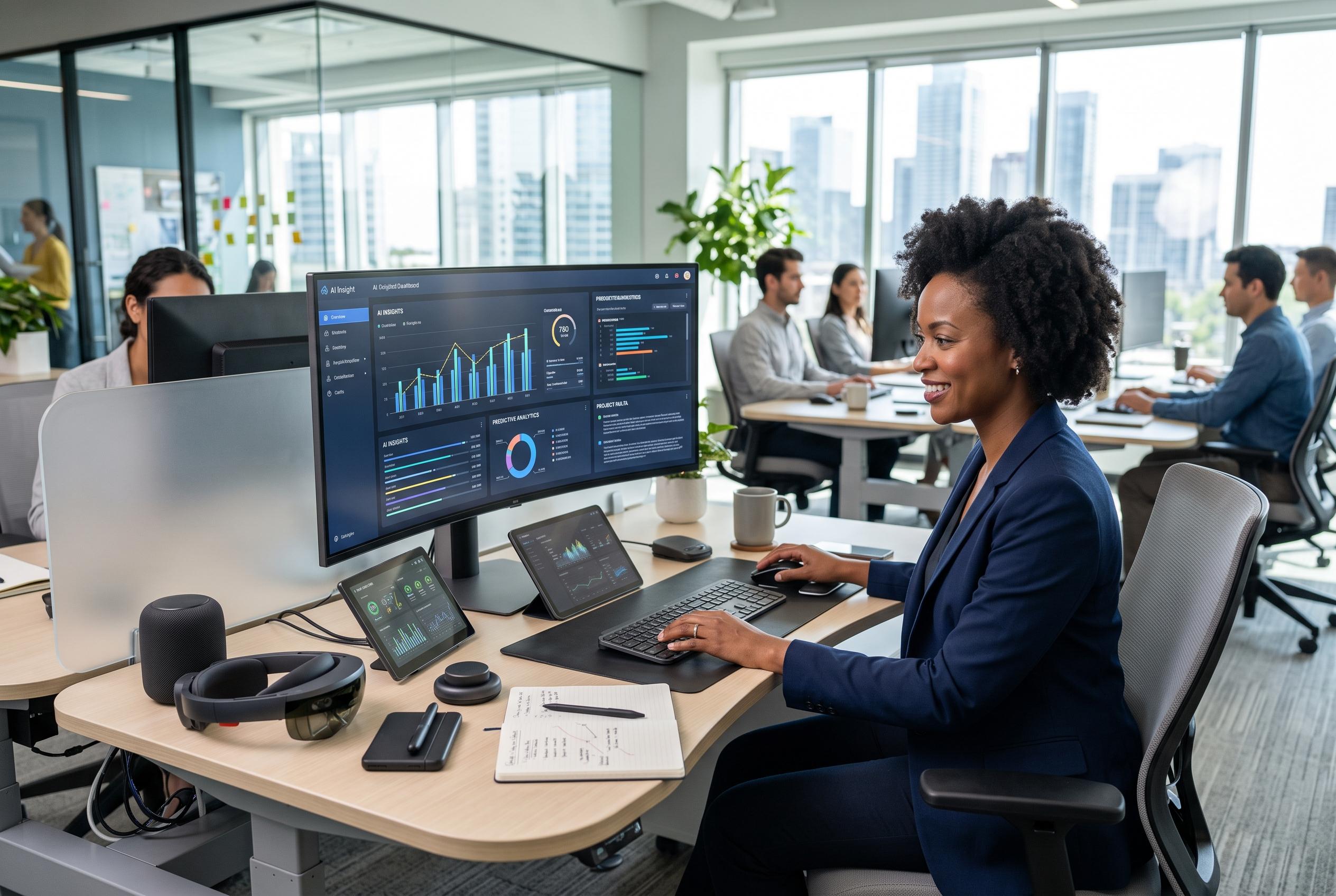

As hybrid work accelerates, professionals are shifting towards specialised, integrated software and AI-enabled tools to combat fragmentation, boost efficiency, and reduce busywork in 2026.
Most professionals still depend on a narrow set of familiar workplace apps, even as hybrid work, digital administration and information overload have changed the shape of their day. According to Digital Connect, that mismatch is leaving many people with software that handles individual tasks well but does little to reduce the constant switching between systems that now defines modern work.
The case for more specialised tools is stronger in 2026 because many work routines are now fragmented across chat, scheduling, documents and project management. Industry commentary from TechRadar says AI is increasingly moving away from generic assistance and towards context-aware systems that can understand work patterns, while a 2026 productivity-stack guide from Dench argues that tools are now being chosen less for brand recognition and more for how well they fit together.
Knowledge management is one of the clearest areas where overlooked tools can have an outsized impact. Digital Connect points to personal knowledge bases and password managers as practical examples: one keeps notes, research and project details in a single place, while the other reduces the friction of login management and improves security. That same logic is reflected in other 2026 round-ups, which highlight local-first and composable systems designed to keep information accessible without scattering it across too many services.
AI is also being used to take over repetitive work that once consumed much of the working day. The Digital Connect article highlights meeting summarisers, inbox managers and scheduling tools, while iTechObserver’s list of lesser-known AI products includes Taskade AI and Rewind AI as examples of software aimed at task generation and personal search. Best in 2026 similarly points to the PLAUD AI Note as a portable capture device that can turn spoken content into structured outputs such as meeting notes and mind maps.
For focus and collaboration, the shift is towards reducing unnecessary interruptions rather than adding more oversight. Digital Connect argues for distraction-blocking tools, automated time tracking and asynchronous video or text updates to cut meeting load. OrTechy’s 2026 guide reaches a similar conclusion, noting that time trackers, focus aids, cloud storage and system utilities can improve workflow quality without requiring major behavioural change.
The most practical approach is selective adoption. Digital Connect says the best tools are the ones that integrate cleanly with existing workflows, scale with the organisation and meet security and compliance needs. That is also the central theme across the broader 2026 coverage: professionals do not need more software for its own sake, but a smaller number of well-chosen tools that reduce busywork, improve visibility and make work less fragmented.
Disclaimer: This content is intended for informational purposes only. Readers are advised to exercise their own judgement, conduct due diligence, or consult a qualified expert before acting on any information provided.