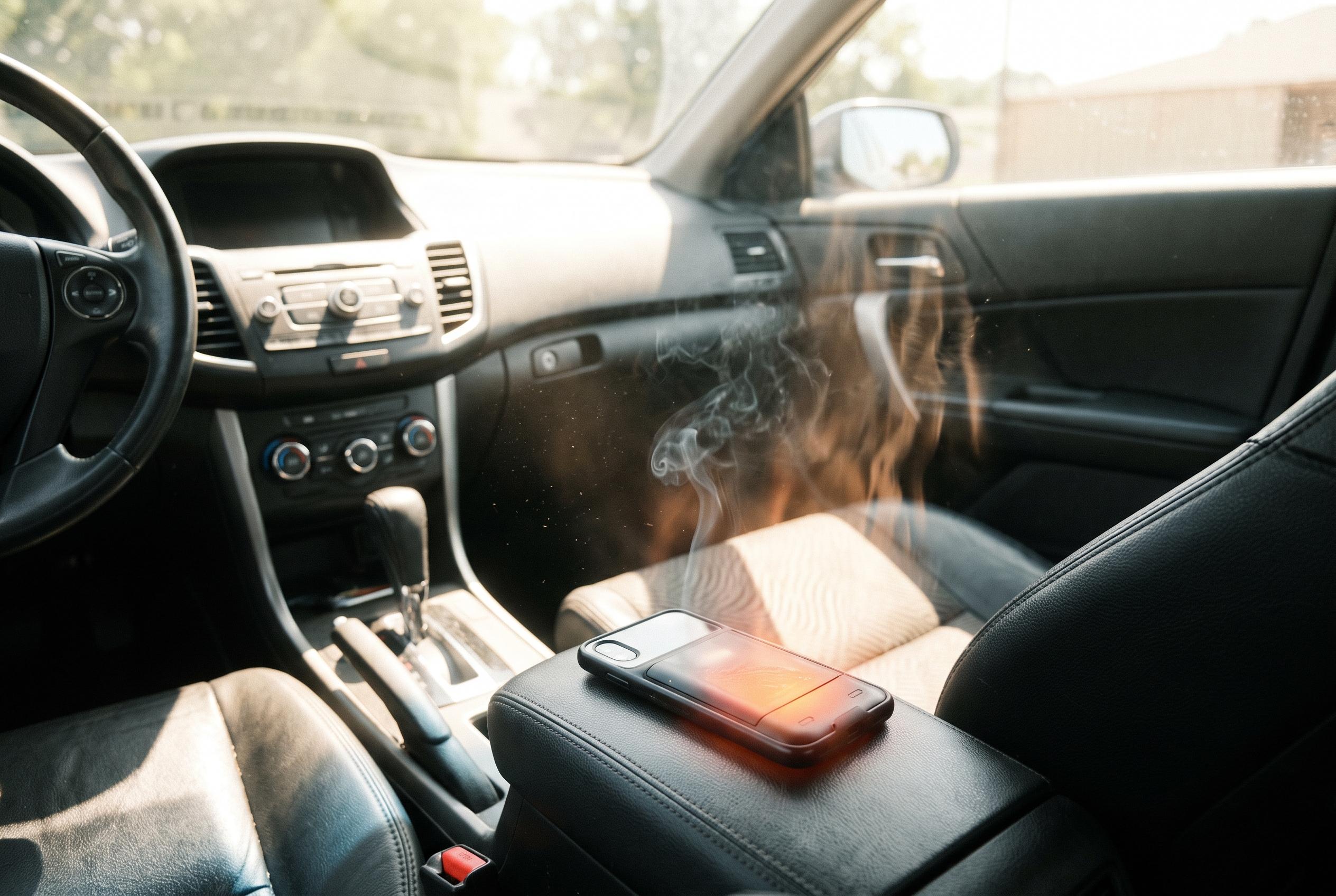

As lithium-ion batteries become ubiquitous in devices from phones to cars, experts warn that heat, damage, and misuse significantly increase the danger of fires and explosions, especially in hot weather and confined spaces like parked cars.
Lithium-ion batteries are now embedded in everyday devices, but their risks are often misunderstood. A recent case in Debrecen, described by Vezess and reported by Duol, involved a Toyota Celica that burned out after a portable charger left on the back seat exploded. The same battery chemistry is found in phones, laptops, tablets and wireless earphones, which means the hazard is not confined to power banks alone.
The danger rises sharply in hot weather, especially inside a parked car. Apple says the normal operating range for iPhone and iPad is 0C to 35C, with 45C as a storage limit, figures that a vehicle sitting in direct sun can exceed quickly. The company also warns that prolonged use above 35C can reduce battery capacity over time. In practical terms, a device that feels unusually hot is a warning sign, whether it is a phone, a laptop or a power bank.
Safety agencies say heat is only part of the problem. The Federal Emergency Management Agency explains that damage, overcharging, overheating and short circuits can trigger thermal runaway, a chain reaction in which a battery heats itself uncontrollably and may ignite or explode. The Federal Aviation Administration gives similar guidance and says passengers should keep spare lithium batteries in carry-on luggage and alert crew immediately if a device begins to smoke or overheat.
The risk is greater again if a device has already been dropped, swollen or otherwise damaged. Devon and Somerset Fire and Rescue Service says lithium-ion battery fires can spread quickly and are difficult to extinguish, while Washington State University notes that some battery fires burn so intensely that conventional methods may not be enough. The safest response is simple: do not charge a overheated device straight away, move it into shade, let it cool gradually and avoid leaving battery-powered electronics in a parked car during hot weather.
Disclaimer: This content is intended for informational purposes only. Readers are advised to exercise their own judgement, conduct due diligence, or consult a qualified expert before acting on any information provided.