
During its Jakarta preview, Xiaomi unveiled its 2026 TV line designed not just as screens but as central hubs for seamless home automation, entertainment, and productivity, showcasing their vision for an integrated smart household.
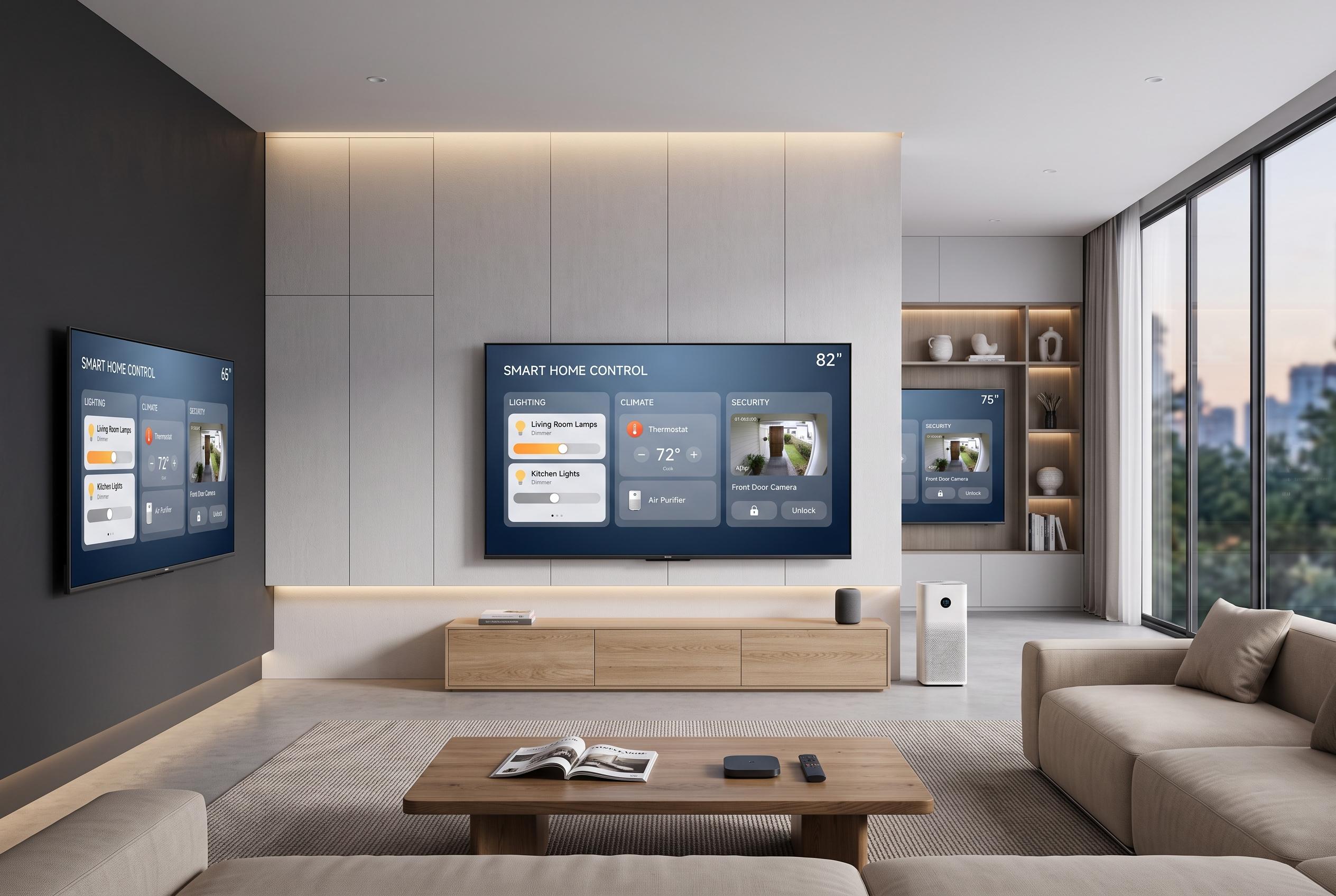
Xiaomi used a preview event for its TV S Mini LED 2026 range in Jakarta to show that the set is meant to sit at the centre of a wider connected-home setup, not just serve as a larger screen. In the demonstration space, the company grouped products by room and use case to show how a television, appliances and home security devices can work together through the Xiaomi ecosystem.
In the living room display, Xiaomi paired the 65-inch TV with the Mijia Capsule Coffee Machine and the Smart Air Purifier Max, presenting them as part of a single entertainment-and-comfort routine. The TV itself is listed by Xiaomi as a 4K QD-Mini LED model with peak brightness of up to 1,200 nits, Google TV, Google Cast, Miracast and Apple AirPlay support, plus HDMI 2.1 connectivity for external devices. Xiaomi Indonesia also says the local Smart Display S Mini LED 65 2026 version supports Dolby Audio and DTS:X, while the company’s own product pages for the wider 2026 line show 60Hz panels on some variants and a 120Hz refresh rate on the Indonesian model.
The work area demonstration focused on productivity and device control. Xiaomi showed a tablet casting to the television through Xiaomi Cast, expanding a smaller display into a larger desktop-style view. The company also highlighted the Mi Home app, which can be used to monitor CCTV cameras, adjust air purifiers and run robotic vacuum cleaners. That approach matches Xiaomi’s broader smart-home architecture, where the Mi Home app acts as the control layer for connected devices and automation routines.
Xiaomi also positioned the television as a design object, using an art mode to display paintings and photographs when the screen is idle. The final section of the demo was built around gaming, with the 85-inch TV S Mini LED model presented in Game Boost Mode with a refresh rate of up to 288Hz. The company’s message was clear: the television is being marketed not only as a display, but as the central interface for a household built around connected appliances, sensors and entertainment hardware.
Disclaimer: This content is intended for informational purposes only. Readers are advised to exercise their own judgement, conduct due diligence, or consult a qualified expert before acting on any information provided.