
The Epomaker Glyph blends nostalgic design with cutting-edge technology, offering a customisable and theatrical typing experience for enthusiasts and professionals alike, though with some ergonomic compromises.
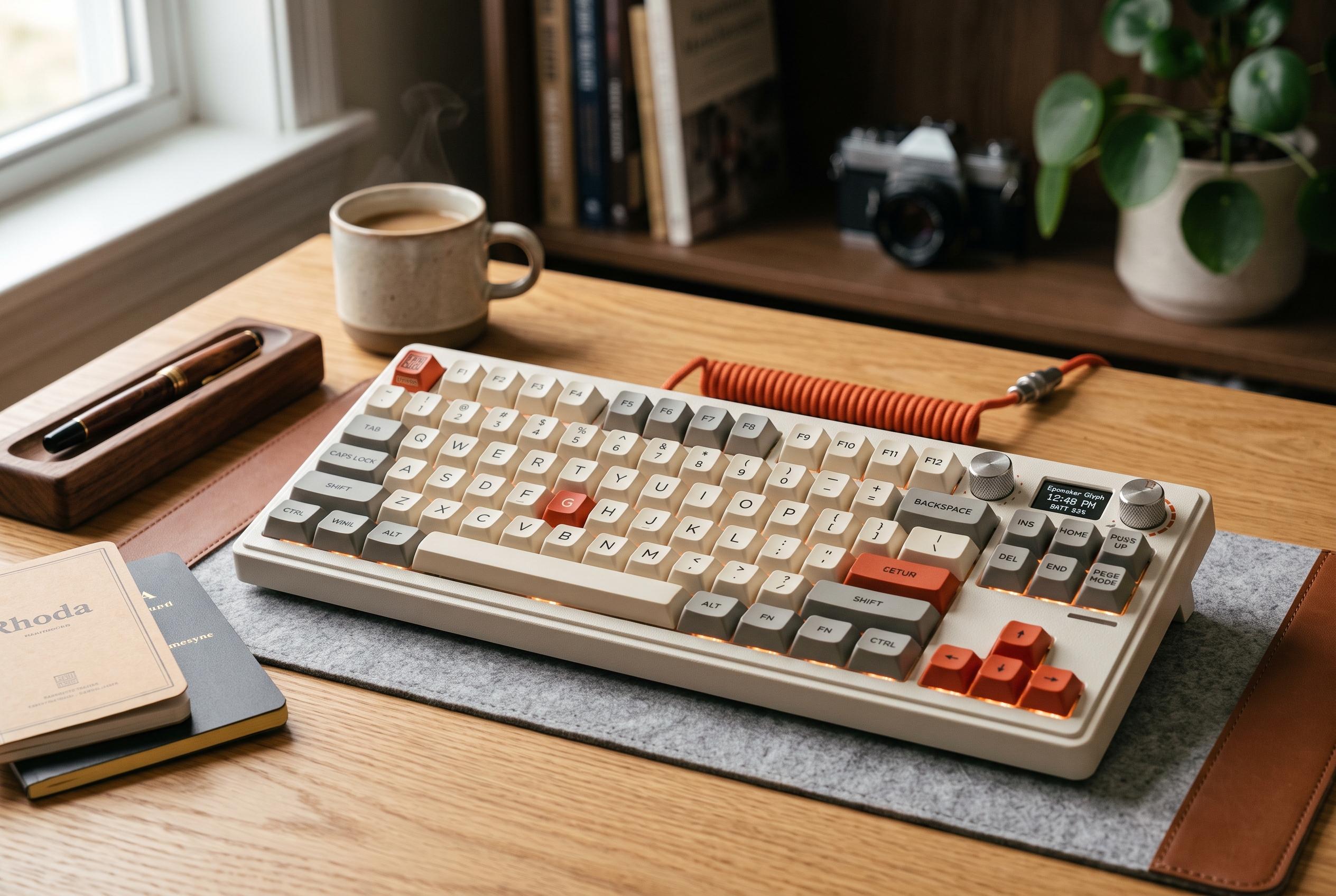
Epomaker’s Glyph is a mechanical keyboard that trades on nostalgia without giving up modern convenience. GeekDad described it as one of the more striking boards in the reviewer’s collection, and that judgement is reinforced by other reviews that place the keyboard at the intersection of retro styling and practical desktop use. The result is a 75% board that tries to appeal as much to writers and design-conscious users as to anyone shopping for a traditional typing tool.
The hardware mix is unusually rich for a board in this class. According to Epomaker and independent reviews, the Glyph uses Wisteria V2 linear switches, hot-swappable sockets for three-pin and five-pin switches, round dye-sublimated PBT keycaps and tri-mode connectivity through 2.4GHz wireless, Bluetooth and USB-C. It also includes an 8,000mAh battery, dual TFT displays, a rotary knob, a return lever that doubles as Enter or Backspace and a silicone wrist rest. Epomaker says the board is compatible with Windows, macOS and Android, while reviewers note that its companion software adds macro and lighting control, along with support for custom images and GIFs.
In use, the Glyph is more theatrical than most keyboards, but not merely decorative. GeekDad found the typing feel smooth and lightly weighted, with the low-force switches making it easy to type for long sessions. Tom’s Guide and MechanicalKeyboard.net made similar points, saying the board feels solid and comfortable for frequent typists. The raised round keycaps do change the experience, however. They can cause a few early mis-presses and may feel awkward at first, especially for users accustomed to flatter key profiles.
Ergonomics are decent but not class-leading. Reviewers noted that the included wrist rest helps, particularly because the keyboard sits higher than many compact boards, but the fixed height means it is not as flexible as products with more adjustable tilt options. That limits its appeal for gamers and for users who prefer a lower, more conventional stance. The layout also omits a number pad, which may matter in office or data-heavy workflows.
Battery life depends heavily on how the board is used. GeekDad reported that the Glyph held up well over two weeks of intermittent use with lighting mostly off, while other reviews warned that enabling RGB effects and the displays shortens endurance noticeably. That trade-off is typical of feature-heavy wireless keyboards. At $139, the Glyph is not cheap, but it is aimed at buyers who want a distinctive typing experience rather than a utilitarian slab of plastic. For writers, typists and anyone building a desk setup around personality as much as function, it makes a clear case for itself.
Disclaimer: This content is intended for informational purposes only. Readers are advised to exercise their own judgement, conduct due diligence, or consult a qualified expert before acting on any information provided.