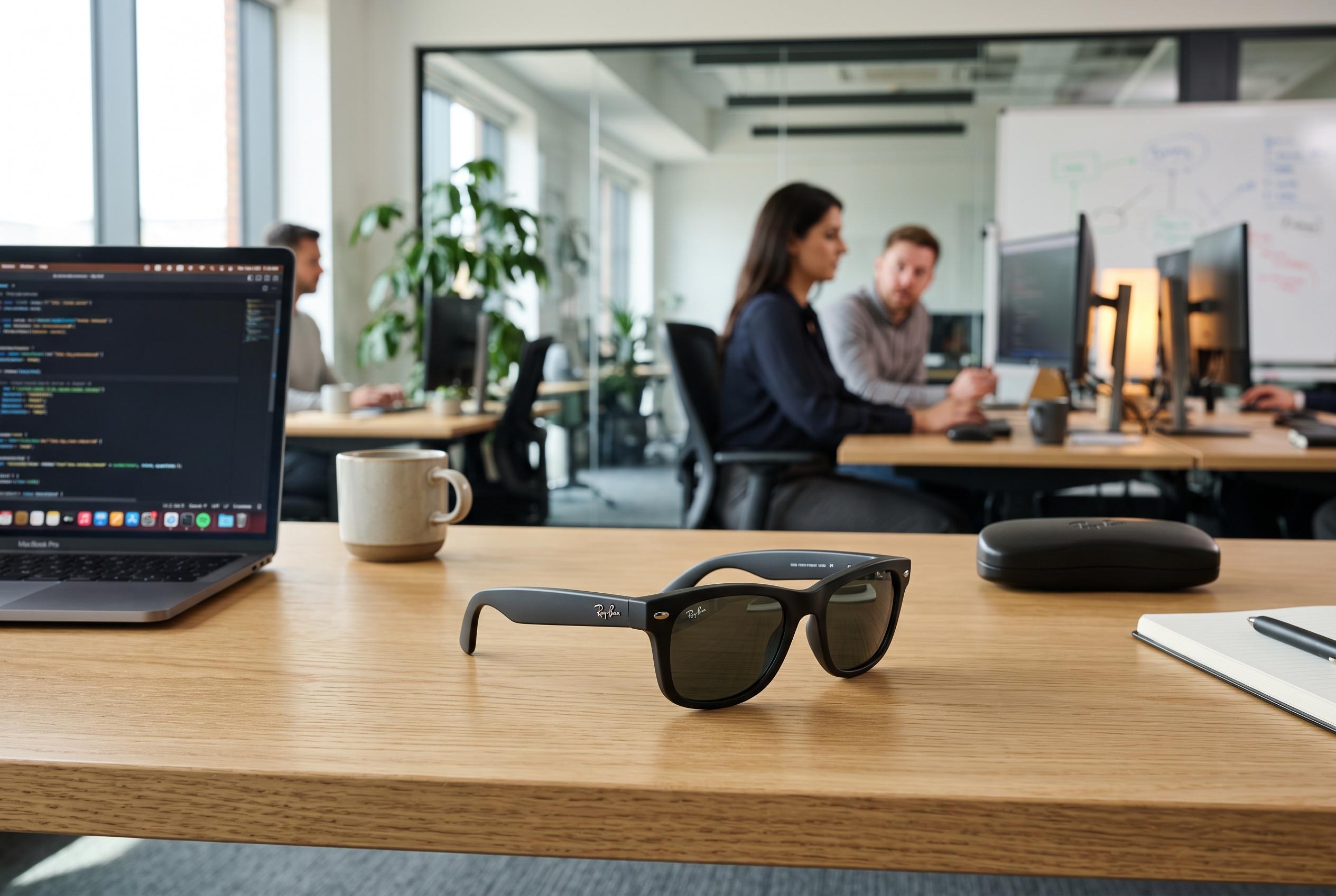

Meta’s Ray-Ban smart glasses, promoted for accessibility and hands-free searching, are capturing and storing user images for AI processing, prompting privacy fears as contractors review sensitive footage without clear user consent.
Meta’s Ray-Ban smart glasses are being sold as a hands-free way to see and search the world, but that convenience comes with clear privacy trade-offs. According to Engadget, when users activate camera-based AI functions such as Live AI or ask Meta to identify something in view, the glasses capture an image for analysis and Meta stores that material rather than keeping it only on the device.
That processing does not stop with Meta’s systems. The company has confirmed that third-party contractors review and label some of the images and video shared through Meta AI in order to improve its products. Business Standard reported that Meta says it filters the material to reduce exposure of personal information, but the company’s public messaging does not make the extent of that review especially obvious to users. TechRadar separately reported claims from contractors that the footage they saw could be highly intimate, underlining how broadly the data can travel once it leaves the glasses.
The privacy questions matter most because Meta has heavily promoted the glasses for accessibility use, including for people who are blind or have low vision. Those features can be genuinely useful, but they also depend on frequent image capture and remote processing. Engadget advised users to avoid using the AI tools around documents with personal details or in any setting where being recorded would be unwelcome. Ray-Ban’s own FAQ says images and videos used for AI features are not saved in Meta AI conversation history and that the company does not use facial recognition, but that does not remove the wider concern about how much visual data is collected and reviewed.
The broader issue is that smart glasses blur the line between a private device and a recording platform. MacRumors reported in 2025 that Meta changed its privacy policy so AI features are enabled by default and voice recordings may be stored to improve products, with no opt-out. More recently, Fortune reported in July that Meta has been adding safeguards such as shutting off the camera if the device detects tampering with the indicator light, a sign that the company is still trying to balance product capability with public concern about covert recording.
Disclaimer: This content is intended for informational purposes only. Readers are advised to exercise their own judgement, conduct due diligence, or consult a qualified expert before acting on any information provided.