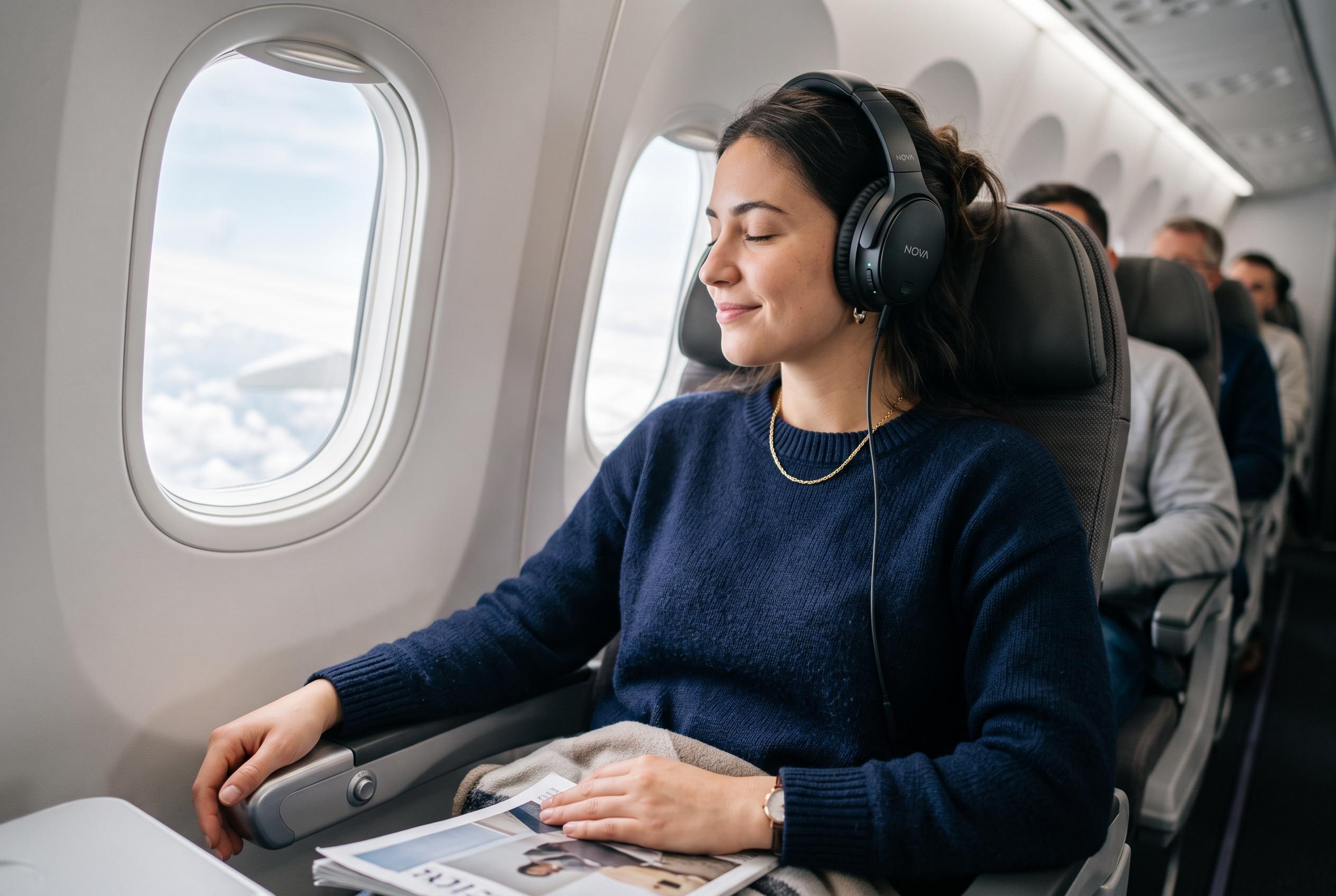

A recent traveller’s experience highlights how ANC can transform long-distance travel from exhausting to tolerable, changing consumer perceptions of its importance in modern headphones.
Active noise cancellation has become one of the defining features of modern wireless headphones, but it is still easy to dismiss it as a nice extra rather than an essential one. For a long time, that was the view taken by the Android Police writer behind this piece. Fit, battery life and sound quality seemed more important, while passive isolation and louder playback were often enough for everyday listening.
That view changed during a stretch of heavy travel. Over roughly 15 hours on trains and coaches, the author used Anker’s Soundcore Space 2 headphones, a mid-range model launched at about $130 with a claimed 50-hour battery life and strong ANC. Reviews from Tom’s Guide, What Hi-Fi and RTINGS place the Space 2 in the upper budget bracket, noting that they combine long endurance, multipoint connectivity and respectable noise cancellation with a build that is solid for the money, if not especially premium.
The reason ANC mattered became obvious almost immediately. Long-distance travel can be far noisier than ordinary commuting, with engine rumble, station announcements, crying children and passengers playing videos aloud. On one coach journey, a child behind the author spent three hours watching narrated SpongeBob SquarePants recaps at full volume. In that kind of environment, passive isolation alone is not enough, and even loud music only goes so far. Independent testing from Headphonecheck also found that the Space 2 reduces low-frequency noise particularly well, which is exactly the kind of sound that dominates trains and aircraft.
That does not mean ANC is suddenly the only specification that matters. But the experience sharpened the argument for treating it as a serious buying factor, especially for people who travel often. Bose’s latest QuietComfort headphones, unveiled with a more advanced six-microphone array and revised noise handling, underline how central cancellation has become in the broader market. In consumer audio, the trade-off is often not between ANC and nothing at all, but between competent noise suppression and a better overall experience in loud, real-world settings.
For readers choosing headphones today, the lesson is straightforward. ANC may still be unnecessary for someone who listens mostly at home or in a quiet office. But on trains, planes and coaches, it can turn an exhausting journey into something tolerable. For the first time, the author now sees it as a feature that can outweigh even sound purity in the right circumstances.
Disclaimer: This content is intended for informational purposes only. Readers are advised to exercise their own judgement, conduct due diligence, or consult a qualified expert before acting on any information provided.