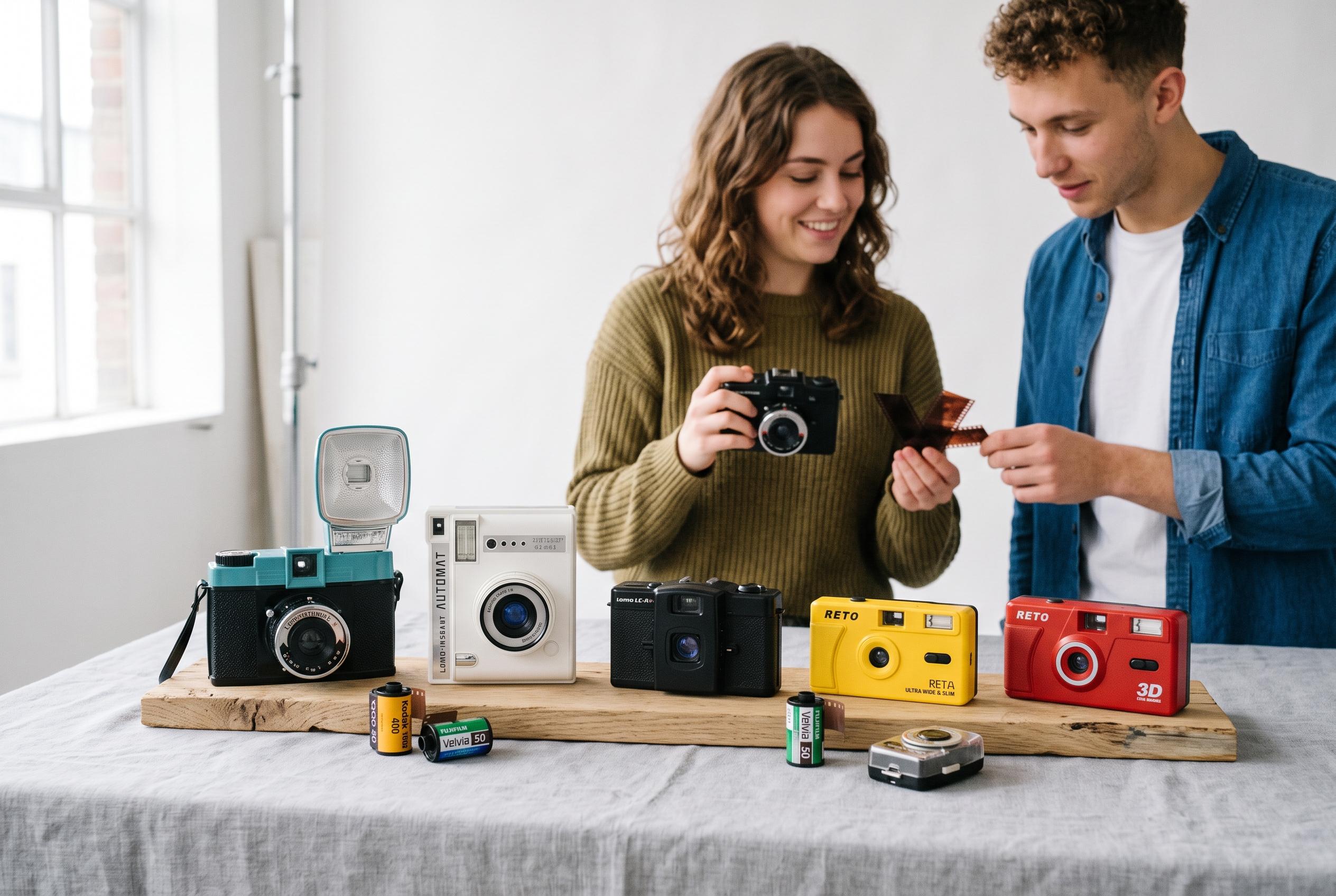

New low-cost, simple film cameras from Lomography and Reto reflect a surge in analogue photography interest among younger and casual users, indicating the market’s unexpected growth.
Two new entry-level film cameras from Lomography and Reto are a small but telling sign that manufacturers still see a market for analogue photography. In an opinion piece for Kosmo Foto, Stephen Dowling argues that the arrival of simple, inexpensive point-and-shoot models suggests film is not merely surviving as a nostalgia category but continuing to attract new users.
Lomography’s Half-Frame Simple Use Reloadable Film Camera is the more unusual of the two. It shoots half-frame images, which means a standard 35mm roll yields roughly twice as many exposures as a conventional full-frame camera. The body is deliberately basic: fixed focus, a built-in flash and a disposable-camera look, but it is reusable and can be reloaded once the supplied film is finished. Lomography says the camera is made from 100% recycled materials and ships preloaded with either colour or black-and-white film. Its price also keeps it within reach of beginners, at about $30 to $35 depending on version.
Reto’s Kodak EC35 follows a similar formula. It has the retro styling of a compact film camera, including a sliding lens cover, but its specification is equally stripped back, with a fixed-focus lens, fixed exposure and built-in flash. Creative Bloq reported that it is priced at about $35 and is positioned as a low-cost way into film photography. Unlike the Lomography model, it does not include film in the box. That comparison underlines the current trend: manufacturers are not trying to reinvent film cameras so much as make them easy to buy, easy to use and cheap enough to justify experimentation.
For Dowling, that matters because it points to confidence in demand from both brands and their distributors. The new cameras are aimed squarely at younger photographers and casual users drawn to film’s look, its slower pace and its social-media-friendly aesthetics. Lomography has also stressed the practical appeal of half-frame, which can produce around 72 frames from a 36-exposure roll and can encourage diptychs and other paired-image storytelling. The broader pattern is consistent with the recent appearance of refreshed film stocks and other modest product updates, suggesting the analogue market still has room to grow rather than merely maintain itself.
Disclaimer: This content is intended for informational purposes only. Readers are advised to exercise their own judgement, conduct due diligence, or consult a qualified expert before acting on any information provided.