
Experts highlight the hidden costs of habitually leaving iPhone and MacBook chargers plugged in, revealing potential safety hazards, energy wastage, and battery longevity concerns.
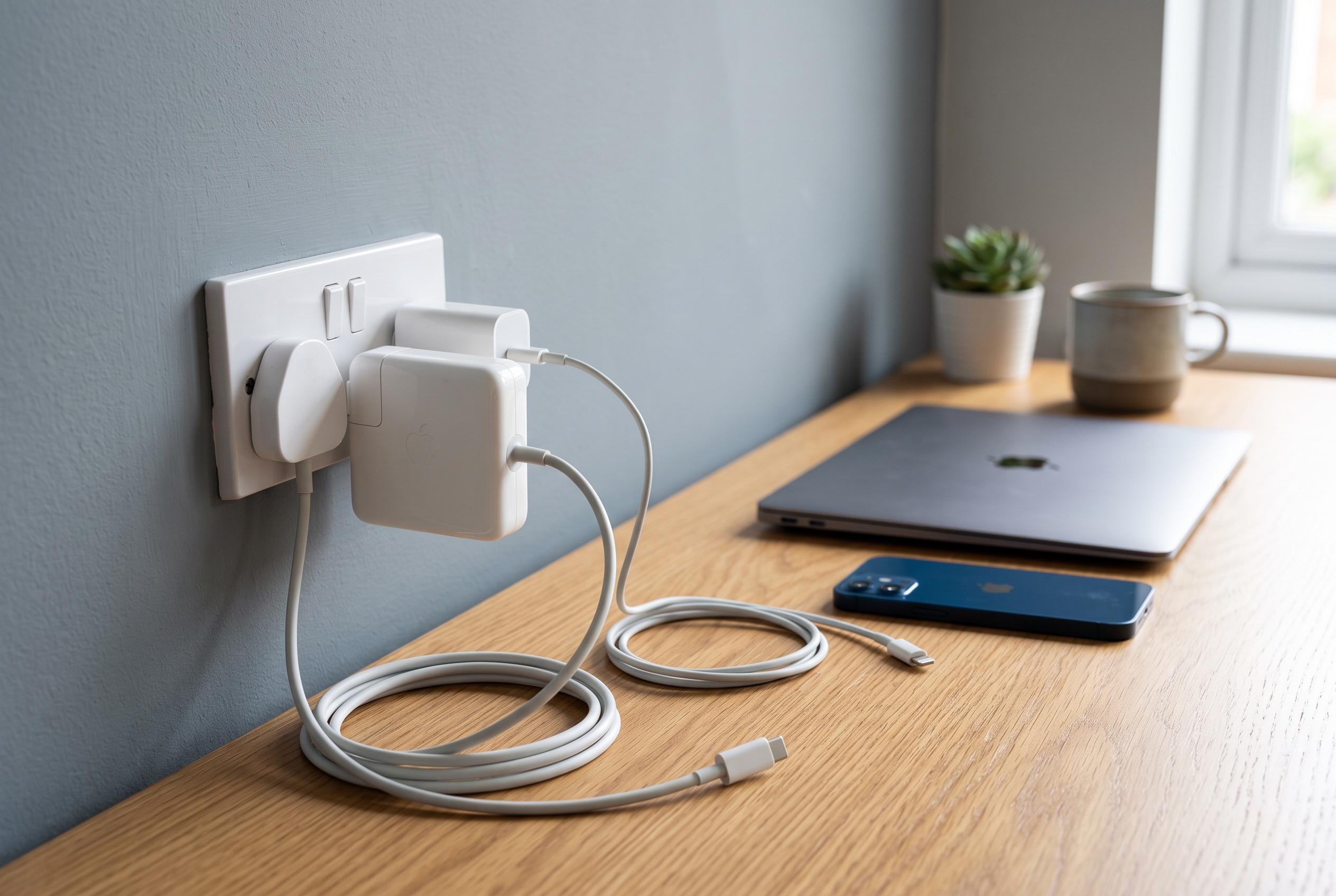
Many people leave iPhone and MacBook chargers permanently plugged in under desks or behind furniture, treating them as part of the room’s fixed wiring. Yet experts say that habit has three distinct costs: it wastes a small amount of electricity, can add to household standby consumption when repeated across many devices and may increase safety risks if the charger is poor quality or damaged.
According to Good Housekeeping and Business Standard, a modern charger uses only a small amount of power when idle, but the effect becomes more noticeable when several chargers and adapters stay connected all the time. That standby demand is often described as phantom load or vampire power. Even if one block draws very little, the combined drain across a home can still push up energy use over the year.
The larger concern is safety. Business Standard and ConsumerAffairs both note that the main danger is not a certified Apple charger used correctly, but cheap, counterfeit or worn-out units. Overheating, frayed cables, damaged casings and overloaded power strips raise the risk. Signs that a charger should be discarded include unusual heat, a smell of hot plastic, crackling sounds, yellowing or cracking around the casing, or any use in damp conditions such as a bathroom.
The battery question is more nuanced. Lithium-ion batteries in iPhone and MacBook devices generally last longer when they are not held at full charge for long periods, especially in warm rooms. Keeping a device at 100% on charge overnight will not cause immediate damage, but repeated high-charge exposure can slowly reduce capacity. On Macs, Apple’s battery management tools are designed to ease that wear, but experts still recommend unplugging when practical and avoiding the habit of leaving laptops on mains power indefinitely.
Disclaimer: This content is intended for informational purposes only. Readers are advised to exercise their own judgement, conduct due diligence, or consult a qualified expert before acting on any information provided.