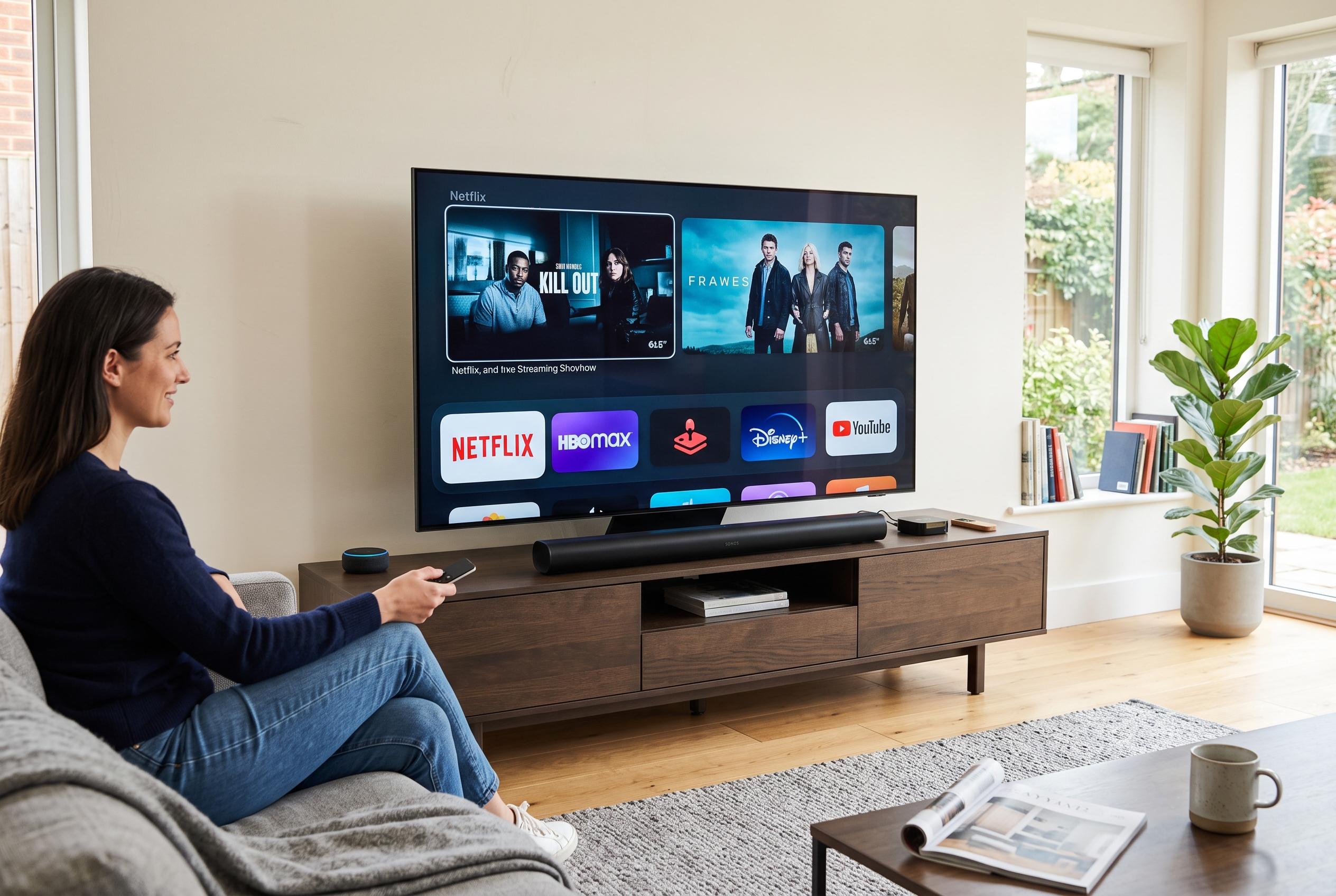

As home entertainment becomes increasingly connected, experts warn of growing cybersecurity risks and the need for improved safeguards to protect smart devices from cybercriminals exploiting network entry points.
The modern living room now contains a networked system, not a single television. Smart TVs, streaming boxes, games consoles, voice assistants, wireless speakers and companion apps increasingly operate as one connected environment, and that convenience has made home entertainment a more exposed target for cybercriminals. As reported by TechBullion, the shift has widened the number of possible entry points inside the home.
Security specialists say the risk is not abstract. Homes and Gardens notes that a single weak or reused password can compromise an entire smart-home setup, while ITPro says connected devices are multiplying at a pace that is stretching traditional security tools. The broader concern is that many of these products are built for ease of use first and protection second, leaving them online, unmonitored and often behind on updates.
Smart TVs now behave much more like general-purpose computers than old-style televisions. They run operating systems, store data, connect to wireless networks and sometimes include microphones or cameras. ITPro says that as connected devices approach 40 billion globally by 2030, their scale makes them attractive for lateral movement attacks, where an intruder uses one compromised device to reach others on the same network. Older televisions and media players may also stop receiving firmware support, which leaves known flaws open for longer.
Third-party apps create another layer of risk. Home Security Systems Authority describes cloud-connected home systems as involving multiple layers: the device itself, the communications channel, the cloud backend and the user interface. Weaknesses can appear at any of those points, including hardcoded credentials, unencrypted local traffic and infrequent firmware cycles. That complexity is now a routine feature of connected entertainment systems as well, especially where streaming services, app stores and voice control are tightly integrated.
Recent enforcement actions have underlined the scale of the problem. PC Gamer reported that Google has taken legal action over BadBox 2.0, described as the largest known botnet affecting more than 10 million Android-based internet-connected devices, including smart TVs and other household screens. The Electronic Frontier Foundation has also warned that newer BADBOX variants can turn affected devices into network proxies, exposing owners to criminal abuse they may not even notice.
The simplest defences remain the most effective. Homes and Gardens recommends unique passwords, multi-factor authentication, disabling features that are not needed and keeping software updated. Security experts also advise buying from manufacturers with a clear update policy, using trusted app stores, limiting microphone and camera access and separating guest devices from the main home network. In practice, connected entertainment is safest when consumers treat it as part of their wider home network, not as a sealed appliance.
Disclaimer: This content is intended for informational purposes only. Readers are advised to exercise their own judgement, conduct due diligence, or consult a qualified expert before acting on any information provided.