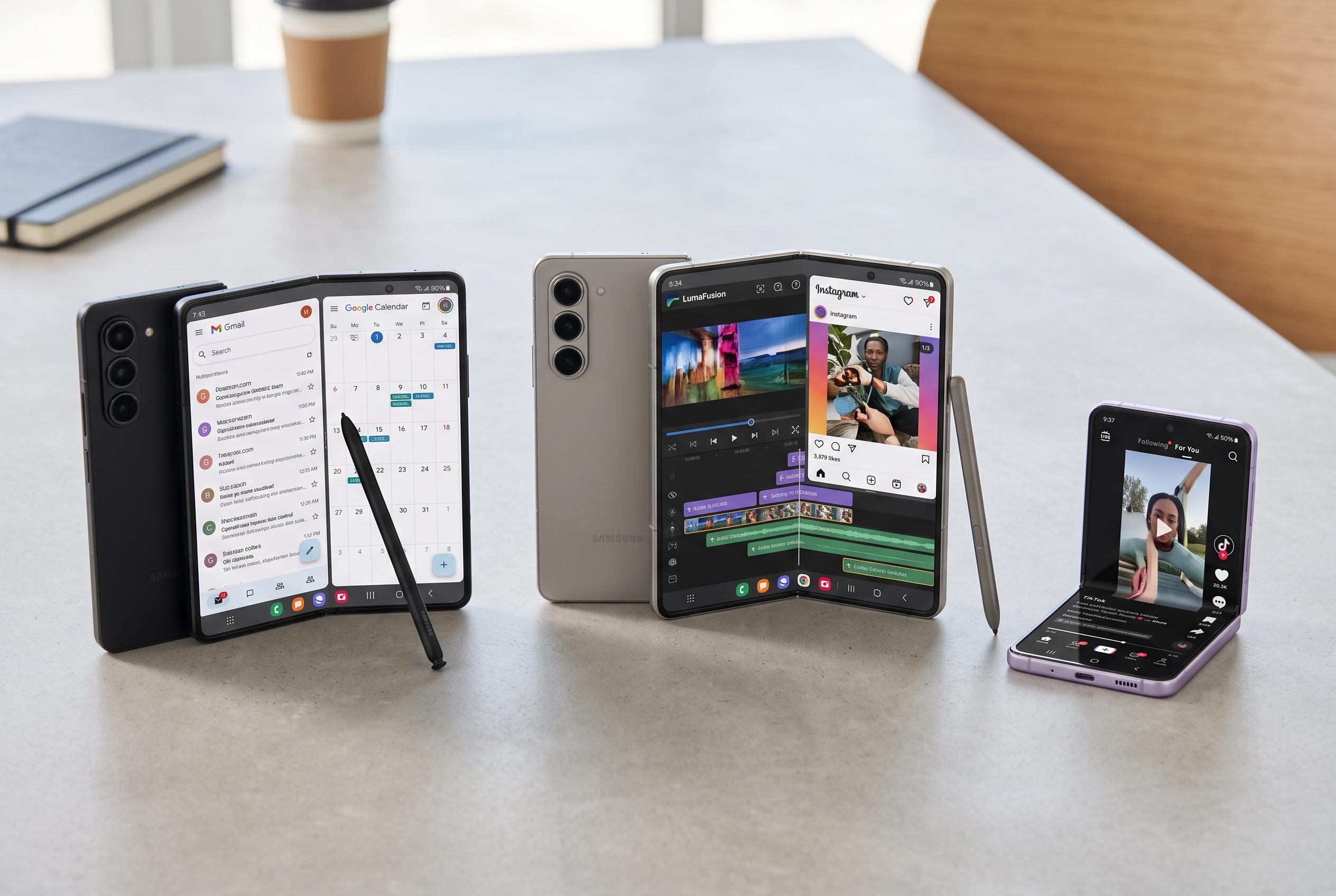

Samsung introduces a trio of foldable devices, the Galaxy Z Fold 8, Ultra, and Flip 8, each designed to serve different priorities, signalling a shift towards personalised foldable experiences for media, productivity, and content creation.
Samsung’s latest foldable line gives buyers three distinct options rather than a single flagship answer. According to Frandroid, the Galaxy Z Fold 8, Galaxy Z Fold 8 Ultra and Galaxy Z Flip 8 are aimed at different priorities: media consumption, uncompromising productivity and pocketability for creators. TechRadar and Digital Camera World both describe the Fold 8 as a more compact, passport-sized device that sits between a conventional smartphone and a small tablet, while the Ultra stretches that idea further with a larger internal display and a stronger camera system.
For most buyers who want a foldable mainly for watching video, reading and everyday use, the standard Galaxy Z Fold 8 appears to be the most balanced choice. Frandroid says its 5.5-inch outer screen and 7.6-inch inner panel are designed to keep the phone usable when closed and comfortable when opened, while TechRadar notes that its 4:3-style internal display makes it especially effective for media and multitasking. Digital Camera World adds that Samsung has reduced the visibility of the crease and kept the device relatively light, which helps explain why it feels easier to live with than larger foldables.
The Galaxy Z Fold 8 Ultra is the model for users who want the biggest screen and the strongest hardware package. Frandroid says it uses a 6.5-inch outer display and an 8-inch inner panel, all while keeping the chassis extremely thin at 4.1 mm and the weight at 215 grams. TechRadar says the Ultra’s larger screen is better suited to multitasking and productivity, but in content viewing tests the standard Fold 8 delivered a more natural experience across different orientations. The Ultra also carries the more ambitious camera array, including a 200-megapixel main sensor, which should appeal to buyers who want a foldable that can replace a traditional premium handset more completely.
The Galaxy Z Flip 8 serves a different audience. Frandroid says its clamshell design makes it the most compact option, with a 13.1 mm folded thickness and a weight of 180 g. Tom’s Guide reports that Samsung has focused this generation on performance and video capture rather than major design changes, even as the phone launches at a higher starting price of $1,199. The cover display remains central to the experience, but the main draw is still the ability to prop the phone up, film hands-free and create content without needing a tripod.
Under the surface, Samsung has pushed all three models towards heavier AI use and stronger hardware. Frandroid says the Fold 8 family runs One UI 9 with tighter Galaxy AI integration, while the Flip 8 uses an Exynos 2600 chip with 12GB of RAM and support for Wi-Fi 7 and Bluetooth 5.4. Tom’s Guide says the Flip 8’s performance gains are real, but that the rest of the experience has changed only modestly. Battery figures remain modest by mainstream smartphone standards, with the Flip 8 carrying 4,300 mAh and the Fold 8 using a 4,800 mAh cell, while the Ultra goes to 5,000 mAh and adds faster endurance claims. In practical terms, Samsung is still trading absolute battery size for slimness, folding mechanics and premium materials.
Disclaimer: This content is intended for informational purposes only. Readers are advised to exercise their own judgement, conduct due diligence, or consult a qualified expert before acting on any information provided.