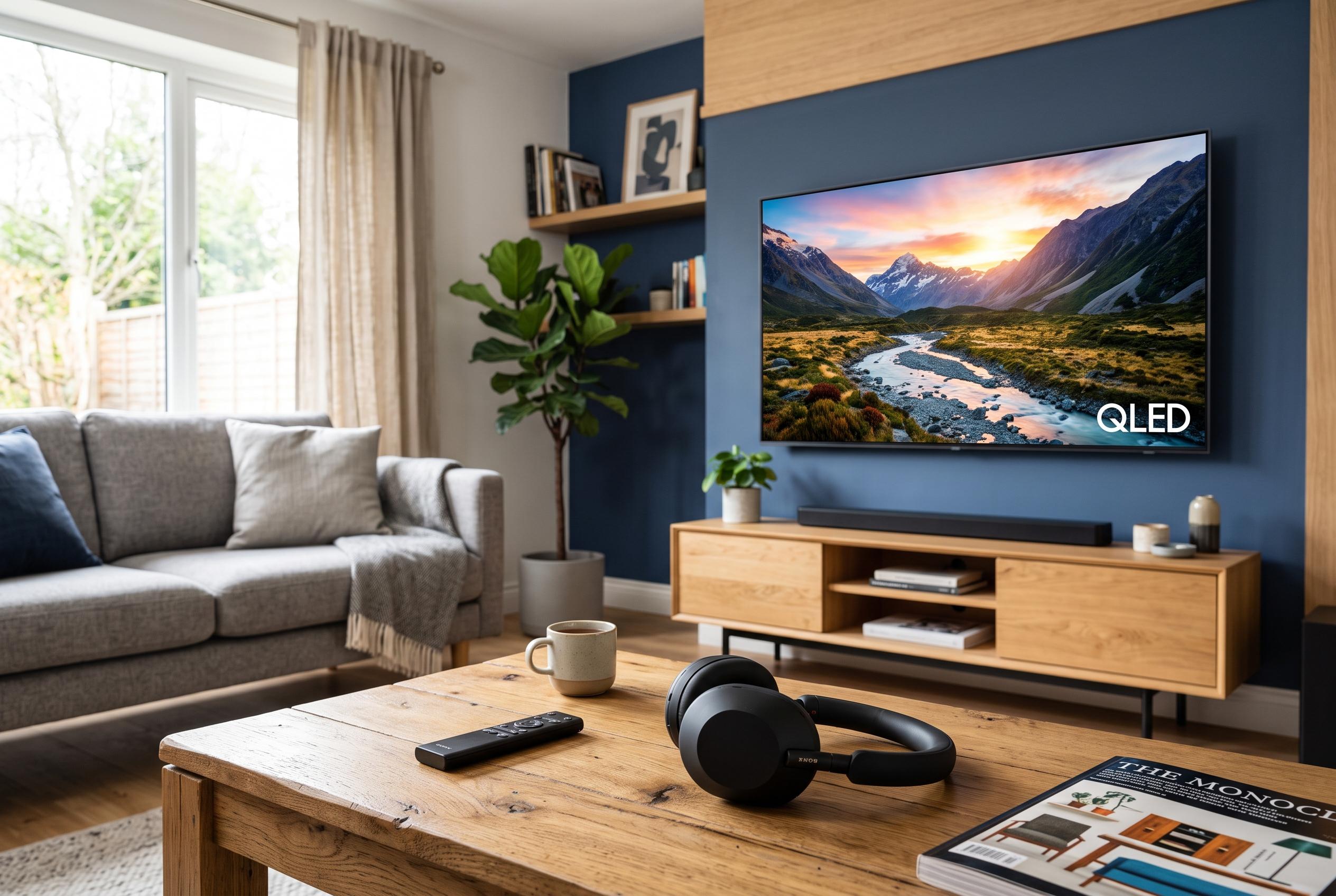

Pairing Bluetooth headphones or speakers with modern televisions is transforming user experience, offering enhanced sound, privacy, and convenience without additional hardware upgrades, says industry experts.
A simple Bluetooth connection can make a modern television far more useful than many owners realise. For viewers who mostly think of a TV as a screen for streaming apps or consoles, pairing wireless headphones, earbuds or even a Bluetooth speaker can change how the set is used day to day. It is especially practical for late-night viewing, shared homes and anyone who wants better sound without investing in a full surround system. According to Samsung’s support materials, the feature is widely available on many recent sets, although it is not universal and should be checked in the sound settings first.
On Samsung TVs, the company says users can usually find Bluetooth audio options through Quick Settings or the full Settings menu, then pair compatible headphones from the device list. Samsung also notes that some headphones built only for phones may not work properly with a television, and that Bluetooth audio use can be limited when other wireless audio features are active. Its UK guidance says one Bluetooth audio device is normally supported at a time, although some 2022-and-newer models can handle two devices simultaneously.
That broader point matters because Bluetooth is no longer just a convenience feature. On many smart TVs, it can act as a private listening tool, a way to improve clarity over built-in speakers and a bridge to gaming accessories such as controllers and keyboards. TechRadar and Yahoo Tech both note that Bluetooth headphones are a common fix for viewers who want to avoid disturbing others while still watching films or playing games at full volume. They also warn that compatibility varies by brand and model, so the TV’s own menu remains the most reliable place to confirm support.
The feature is now common across a wide range of sets. Smartprix’s July 2026 catalogue lists thousands of TVs with built-in Bluetooth and Wi-Fi, including models from LG, Samsung, Sony, TCL, Hisense, Philips, Xiaomi and Realme. That reflects how mainstream wireless connectivity has become in televisions, alongside familiar display technologies such as OLED, Mini-LED and QLED. In practice, Bluetooth may not be the headline specification shoppers look for first, but it is often one of the most immediately useful.
For owners of newer smart TVs, the advice is straightforward: check the sound menu, look for wireless speaker or Bluetooth device options and try pairing a headset before buying extra equipment. If the TV supports it, the gain can be immediate. Audio becomes personal, games feel less tied to the room and the television takes on a role closer to a hub for all connected devices. That is not a dramatic hardware upgrade, but it is a meaningful one.
Disclaimer: This content is intended for informational purposes only. Readers are advised to exercise their own judgement, conduct due diligence, or consult a qualified expert before acting on any information provided.