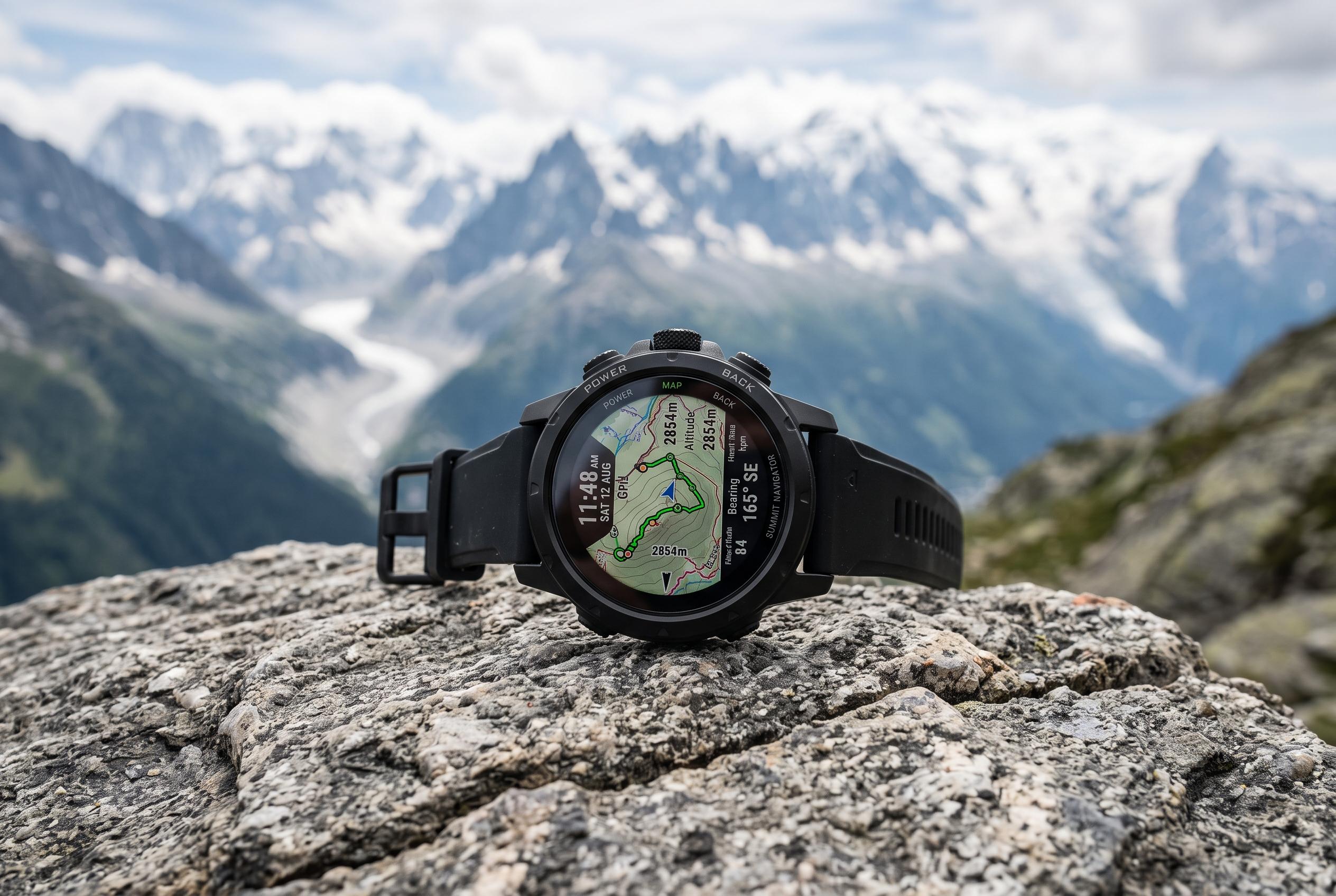

As holidaymakers seek cooler destinations, mountain travel is on the rise, prompting the latest sports watch innovations that prioritise safety, offline mapping, and reliable performance in challenging terrains.
Mountain travel is drawing more attention as holidaymakers seek cooler destinations, and that shift is visible in places such as Chamonix, where summer bed nights have reportedly overtaken winter for the first time. The trend reflects the wider rise of so-called “coolcations”, but the appeal of higher terrain comes with practical risks: navigation can become difficult, weather can change fast and a poor connection can leave travellers isolated from both family and emergency support.
That is the setting for the latest pitch from Amazfit, which says a capable sports watch can improve safety as well as convenience in the mountains. The company highlights models such as the T-Rex Ultra 2, Cheetah 2 and Cheetah 2 Ultra, and says mountaineer Jost Kobusch and photographer and filmmaker Chris Burkard use its devices for training, expeditions and work. Amazfit argues that the most useful watches for mountain travel combine long battery life, detailed offline mapping and route guidance, rather than focusing only on everyday smartwatch functions.
Several of those features are now standard across the better outdoor watches on the market. Polar’s Vantage M3, for example, includes offline topographic maps and dual-frequency GPS, which can improve location accuracy in difficult terrain. COROS says its Vertix 2S delivers global offline maps, turn-by-turn directions and up to 36 days of battery life in regular use. A review by Tom’s Guide of the newer COROS Apex 4 also underscored how endurance, mapping and altitude tracking remain central buying points for serious hikers and runners.
Amazfit’s own list goes further, placing emphasis on tools that are easy to overlook until they are needed. These include barometric weather alerts, a built-in torch, an SOS signal, blood oxygen readings and an electronic compass. The company also points to AI-assisted help through ZeppFlow and to phone calling when the watch is paired with a compatible smartphone. Taken together, those functions are designed to help users judge effort, avoid being caught out by darkness or storms and keep a line of contact open if plans go wrong.
The broader market supports that direction. Forbes recently noted that offline maps have become a defining feature in the GPS sports watch category, with makers from Garmin to Coros, Polar and Amazfit using navigation as a key differentiator. In practice, the best device for mountain use is likely to be the one that combines accurate satellite tracking, dependable battery performance and clear, relevant data on screen. In remote terrain, that combination matters more than style or novelty.
Disclaimer: This content is intended for informational purposes only. Readers are advised to exercise their own judgement, conduct due diligence, or consult a qualified expert before acting on any information provided.