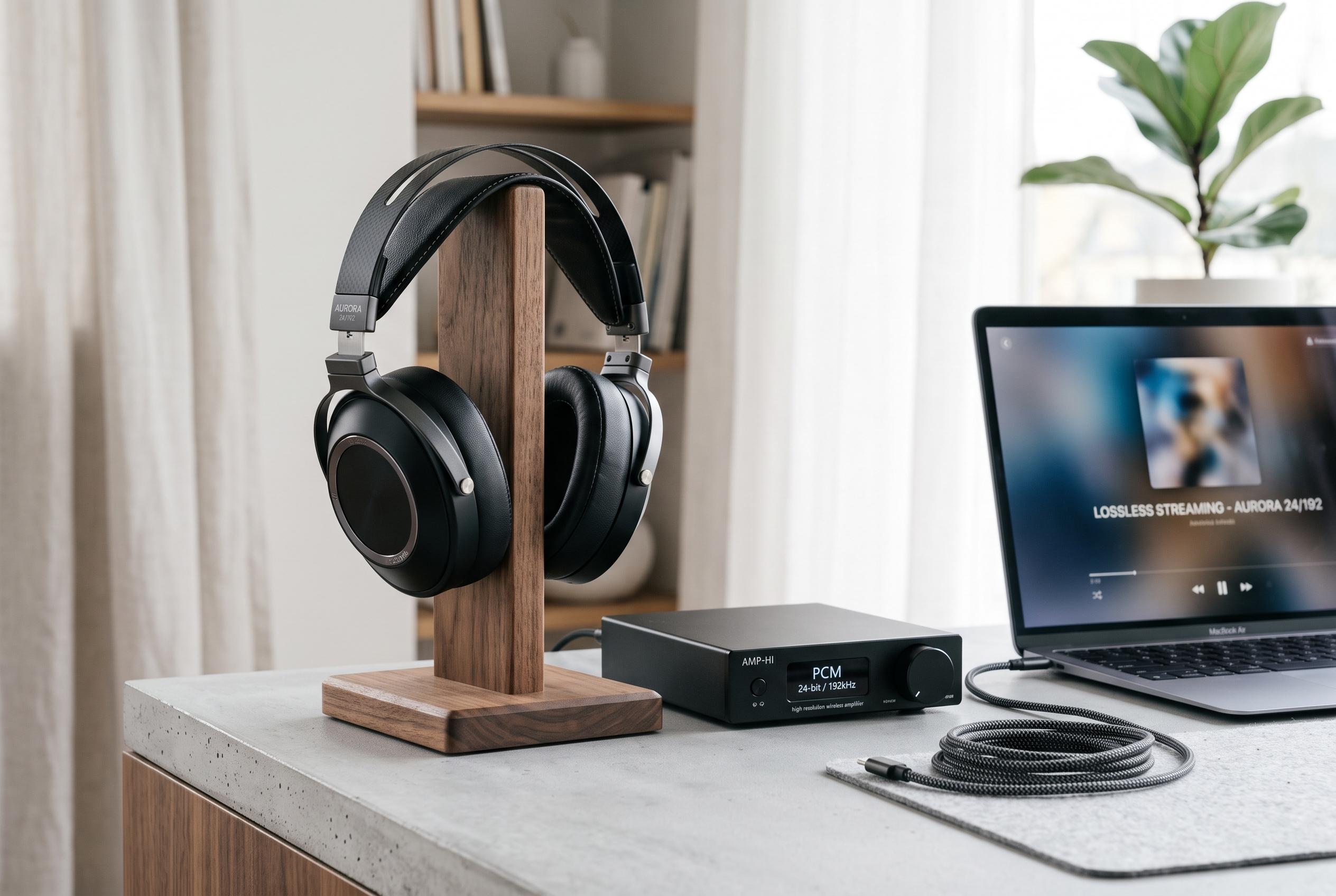

Despite promises of a major upgrade to wireless hi-res audio, industry insiders reveal that compatibility, product design, and consumer priorities continue to slow mainstream adoption of lossless 24-bit/192kHz playback, as companies explore new solutions for better sound without compromising convenience.
A year after Qualcomm said a new wave of higher-quality wireless headphones would arrive “soon”, the market still looks reluctant to move decisively towards fully scalable, lossless 24-bit/192kHz playback. What Hi-Fi?’s follow-up reporting suggests the bottleneck is not a single missing chip or codec, but a wider set of compatibility, battery and product-design trade-offs that have slowed adoption across the mainstream headphone market. Even among brands that are actively working on better wireless audio, the priority remains convenience as much as fidelity.
Christian Ern of Sennheiser’s parent company, Sonova Consumer Hearing, told What Hi-Fi? that most listeners are already content with today’s Bluetooth experience, especially when codecs such as AAC and aptX are available. Steven Hoyle of Bowers & Wilkins said the company does see some customers using wired USB connections on its headphones to reach 24-bit/96kHz playback, but he added that this sacrifices the simplicity people expect from wireless listening. Kazunori Otsu of Technics made a similar point, saying the challenge is not just improving sound but making that improvement easy to access.
The technical problem is broader than headphone drivers alone. As What Hi-Fi? explains, true lossless hi-res wireless audio needs a source capable of outputting 24-bit/192kHz, a transmission system that can carry it reliably and headphones that can decode it properly. Bluetooth remains the dominant connection method, yet it cannot deliver that level without compression, while higher-end options such as aptX HD and LDAC still involve some loss. Wi-fi can offer better stability, but it is not as universal and can be awkward when devices switch between connections.
Several companies are therefore pursuing different routes. Qualcomm’s Expanded Personal Area Network, or XPAN, is designed to adjust quality automatically to network conditions, while Lenbrook’s Airia codec follows a similar idea. Elsewhere, iFi Audio has launched the Zen Blue 3 with support for aptX Lossless and Bluetooth transmission and reception, showing that some manufacturers are already shipping hardware aimed at closing the gap between convenience and better sound. Bluesound’s 2024 NODE streamer also supports FLAC playback up to 24-bit/192kHz and two-way aptX Adaptive Bluetooth, underlining that the wider ecosystem is already moving towards hi-res support, even if that progress is not yet centred on headphones alone.
That divide helps explain why premium audio brands are more enthusiastic than mass-market players. Matt Dever of Harman Luxury Audio, which owns Mark Levinson, said the high-end segment still sees clear demand for top-tier wireless sound and is evaluating technologies including XPAN, Airia, Bluetooth, wi-fi and multiple codecs to push performance further. But he also acknowledged the same limits cited by other engineers: bandwidth constraints still force compromises. For now, the industry appears to be split between a mainstream market that values ease, comfort, active noise cancellation and battery life, and a luxury tier that still views 24-bit/192kHz wireless audio as a worthwhile goal.
Disclaimer: This content is intended for informational purposes only. Readers are advised to exercise their own judgement, conduct due diligence, or consult a qualified expert before acting on any information provided.