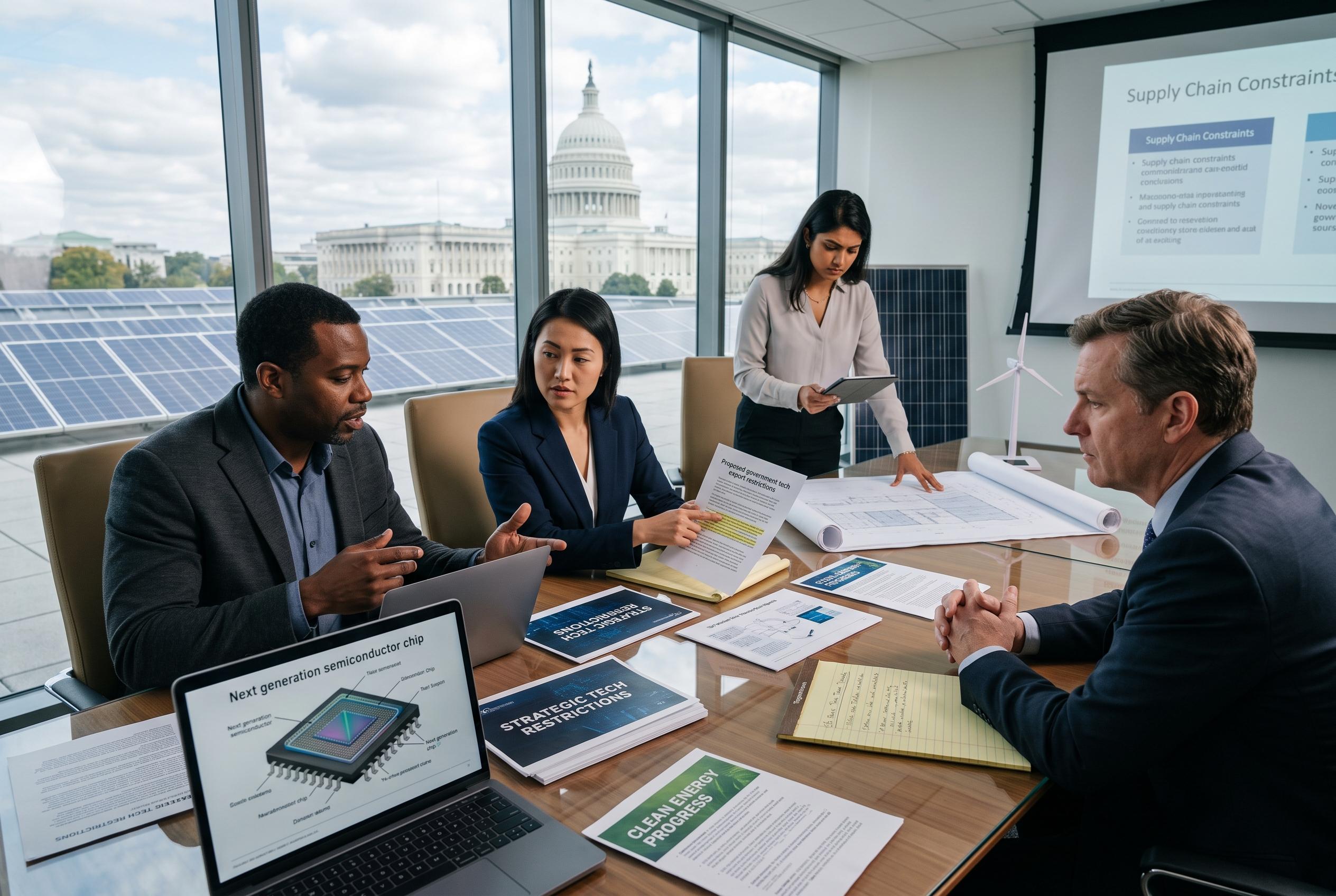

Washington’s move to limit Chinese technology imports into energy, communications, and AI sectors aims at national security but could hinder innovation and complicate supply chains just as the US invests heavily in AI infrastructure.
Washington’s effort to curb dependence on Chinese technology is moving beyond tariffs and trade rhetoric into the infrastructure of energy, communications and artificial intelligence. The policy push is aimed at sectors where Chinese firms have built large-scale manufacturing advantages, including solar materials, optical transceivers, power inverters and robotics equipment. Supporters cast the measures as a national security necessity. Critics say they amount to a costly form of industrial protectionism that could slow innovation and make supply chains less efficient.
The immediate concern is the effect on clean energy. China still dominates much of the solar manufacturing chain, and Reuters has reported that U.S. officials are weighing a minimum 15% tariff on products made from polysilicon, the refined material used in photovoltaic production. Any wider restrictions would likely raise costs for American developers already facing pressure from inflation, higher financing costs and a growing need for new generating capacity. Industry watchers say rebuilding domestic production across every stage of the solar supply chain would take years, not months.
The same pattern is emerging in data centre infrastructure. Tom’s Hardware reported that the Federal Communications Commission is considering restrictions on Chinese-made optical transceivers, which are key components for high-speed data transmission inside data centres. That matters because AI systems depend on dense networking equipment to move large volumes of data between servers, storage systems and other hardware. Analysts have warned that broad limits could disrupt supply chains, increase prices and delay build-outs just as U.S. technology companies are spending heavily on AI capacity.
That spending surge is already drawing scepticism. ITPro reported that McKinsey estimates roughly 75% of U.S. power-demand growth over the next decade could come from data centres, with the sector needing nearly 30 gigawatts of power a year. At the same time, the International Energy Agency has warned that AI is intensifying electricity demand and pushing the industry towards lower-power systems that can operate more efficiently at the edge. That shift suggests the next phase of AI may reward not just scale, but energy discipline.
The larger risk is that supply-side restrictions could arrive before American substitutes are ready. Chinese manufacturers remain deeply embedded in global electronics and robotics supply chains, and replacing that capacity would require sustained investment, skilled labour and time. The Diplomat has noted that energy availability, rare earths and talent are now central to AI competition between the two countries, while Chinese outlets have pointed to growing global adoption of lower-cost Chinese AI models. Taken together, the evidence suggests that Washington’s attempt to harden strategic industries may strengthen resilience in some areas while raising costs, slowing deployment and deepening fragmentation in others.
Disclaimer: This content is intended for informational purposes only. Readers are advised to exercise their own judgement, conduct due diligence, or consult a qualified expert before acting on any information provided.