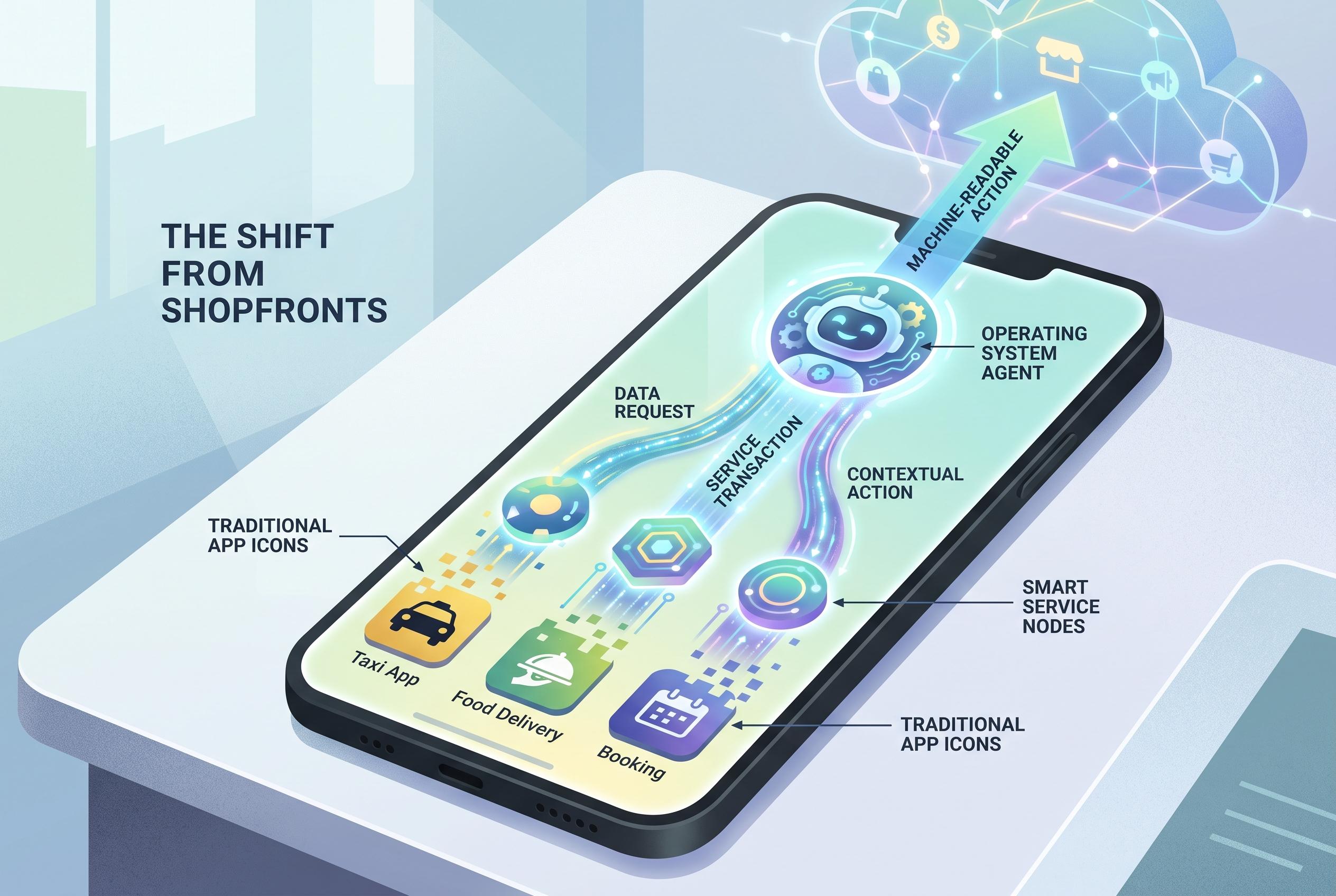

Google and Apple are redefining app interactions by enabling apps to be recognised and invoked by operating system agents, marking a shift from traditional app design towards machine-friendly contracts and actions.
For years, mobile apps were designed like digital shopfronts: polished icons, carefully arranged menus and metrics built around visits, time spent and return usage. That model is now being challenged by a new one in which software is increasingly addressed by agents rather than by people. In that world, an app is judged less by how inviting it looks and more by how clearly it can declare what it does, in what format and with what reliability.
On Android, Google’s experimental AppFunctions API is the clearest sign of that shift. According to developer documentation, it lets apps expose specific actions to on-device agents and assistants, including Gemini, by behaving in effect like a local Model Context Protocol server. The feature is available on Android 16 and later, and as of May 2026 Gemini integration was in private preview with trusted testers. Google says developers should start preparing their apps for the new model, and the presence of permissions such as EXECUTE_APP_FUNCTIONS shows how tightly the operating system intends to control access.
Apple is heading in a similar direction, though with its own terminology. The company’s App Intents framework and its App Schema domains are designed to make app actions and data visible to Apple Intelligence, Siri, Spotlight, Shortcuts and widgets. Apple’s documentation says developers can map app types to system-defined schemas so the platform can better understand content such as messages, mail, photos and documents. The practical result is that apps can become callable services inside the operating system rather than isolated destinations users must open first.
That shift has technical consequences for developers. Where the old model rewarded attractive navigation and broad engagement, the new model rewards clear contracts, typed interfaces and well documented actions that can be discovered and invoked by a machine. Apple’s framework is built around compile-time enforcement, which means missing capabilities can be caught during development rather than after release. On Android, the ability to list exposed functions from the command line makes the same point in a different way: if an action cannot be described cleanly, it will be harder for an agent to use it at all.
For app makers, the near-term lesson is not to rebuild everything around agents. Both systems remain early, and neither should be treated as mature enough to justify a wholesale product rewrite. The more durable move is to identify the actions that already matter most and make them available through stable, typed entry points that are not tied to a screen. If agents become the front door, the app that wins will be the one that can answer the request precisely, quickly and without friction.
Disclaimer: This content is intended for informational purposes only. Readers are advised to exercise their own judgement, conduct due diligence, or consult a qualified expert before acting on any information provided.