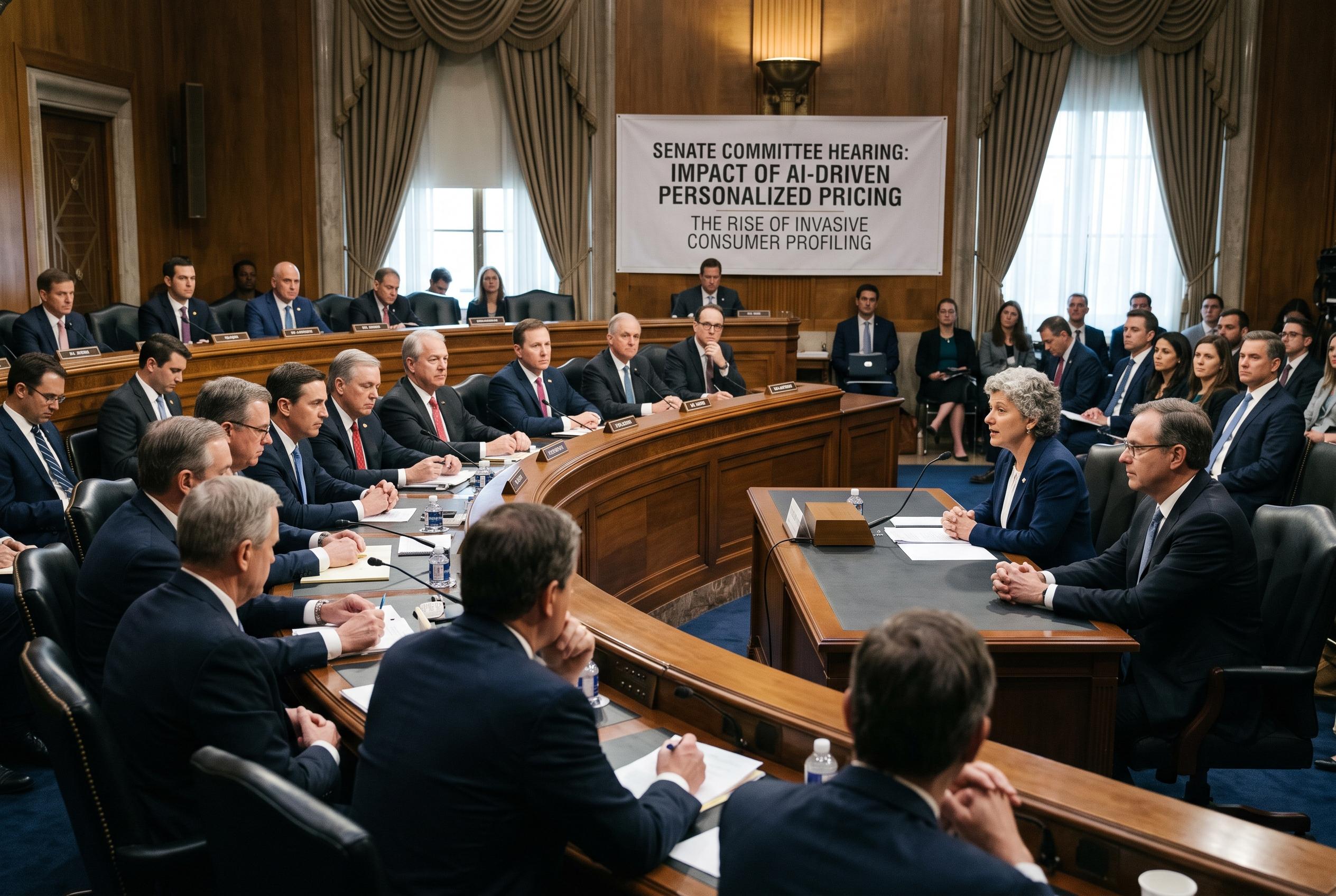

A landmark Senate hearing exposes the rapid shift towards AI-enabled personalised pricing, raising concerns over consumer fairness, data privacy, and potential exploitation as lawmakers grapple with regulatory gaps.
Congress’s first dedicated hearing on surveillance pricing on August 4 exposed how quickly personalised pricing has moved from a theoretical concern to a live consumer protection issue. Lawmakers from both parties described the practice as deceptive and potentially exploitative, while witnesses warned that the next phase of the problem may come from agentic AI shopping assistants that can infer not just what shoppers have bought before, but how urgent, vulnerable or desperate they are in the moment. The hearing came after years of rising scrutiny from state and federal officials, including Maryland’s February testimony on grocery pricing before the state Senate and a House Oversight investigation launched in March into AI-driven price setting.
The central concern is surveillance pricing: the use of personal data to charge different customers different amounts for the same product or service. Critics say it can draw on browsing behaviour, device type, location, purchase history and inferred income to estimate how much a person will pay. That concern is not new. In March 2025, Senator Jacky Rosen urged the Federal Trade Commission to reopen its public comment process on AI-enabled pricing, and in July 2025 Senate privacy testimony again put personalised pricing under the spotlight as part of the broader debate over data collection and consumer tracking.
The hearing’s sharper warning was that AI commerce tools may make pricing more invasive by operating in real time. In testimony, advocates argued that a system which can read the tone and timing of a request may be able to exploit urgency more directly than older profiling models. That concern echoes the questions raised by the House Oversight Committee, which said its inquiry would examine how companies including Booking Holdings, Expedia Group, Uber, Lyft and Instacart use AI and personal data to determine willingness to pay. It also reflects the reasoning behind Maryland’s proposed grocery pricing restrictions, where the Centre for Democracy and Technology told state lawmakers that “bespoke pricing” raises fairness and discrimination concerns.
Federal policy is still fragmented. The Senate hearing took place against a backdrop of growing legislative activity, but no nationwide rule yet squarely governs what an AI agent may infer from a live consumer interaction. That leaves states to fill the gap, while regulators and lawmakers continue to test whether existing privacy, competition and consumer protection laws are adequate. The broader trajectory is clear: as AI moves from passive tracking to active negotiation, the legal question is shifting from what data firms may collect to what they may do with a shopper’s intent, urgency and attention.
Disclaimer: This content is intended for informational purposes only. Readers are advised to exercise their own judgement, conduct due diligence, or consult a qualified expert before acting on any information provided.