
An in-depth look at how artists should evaluate drawing tablets beyond specifications, emphasising the importance of pen feel, display options, and workflow compatibility over raw numbers.
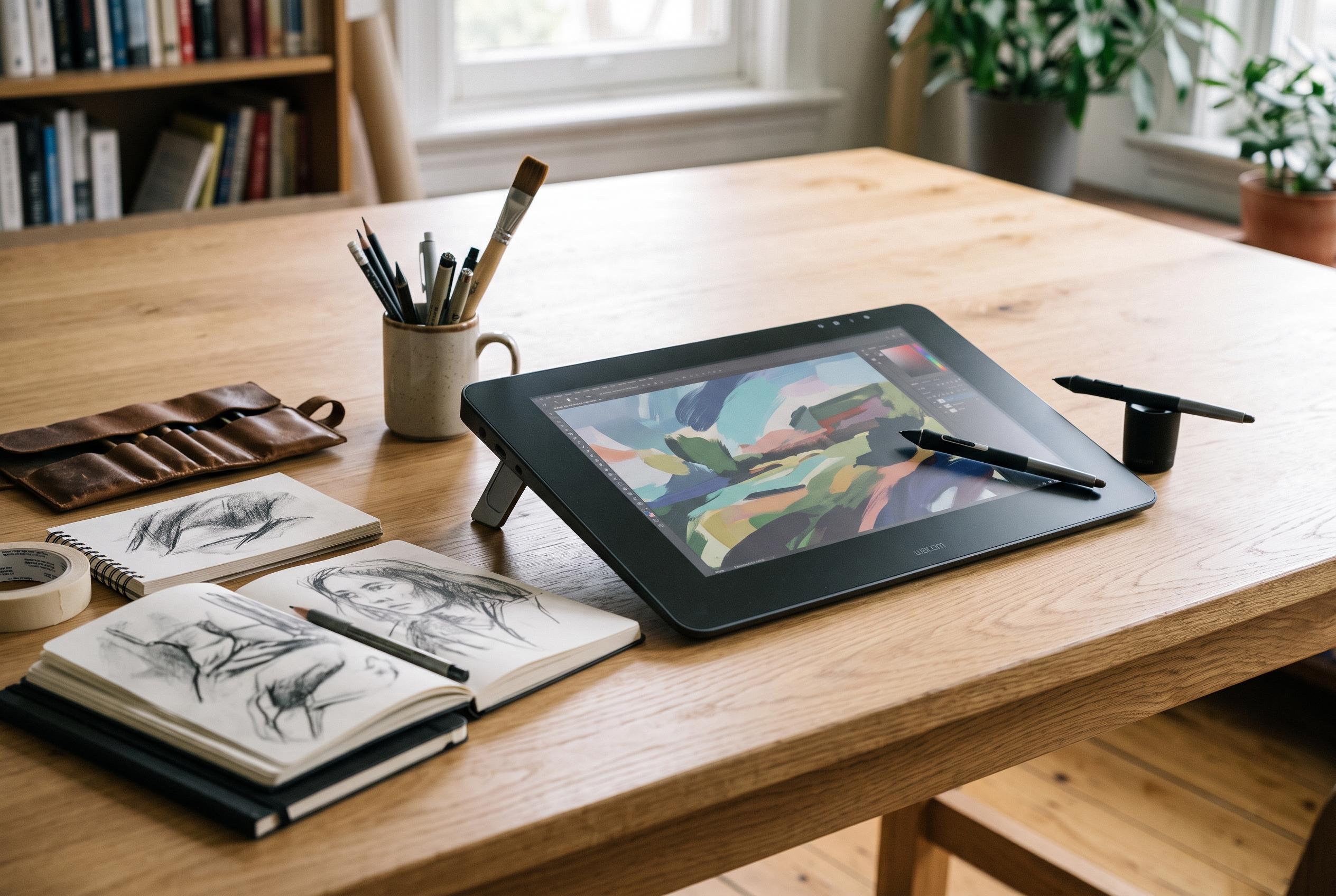
Choosing a drawing tablet is less about chasing the biggest numbers on a spec sheet than about matching the device to the way an artist actually works. Creative Bloq argues that buyers first need to separate the main categories: screenless pen tablets that connect to a computer, pen displays with built-in screens that still depend on a host machine, and standalone tablets that run creative software on their own. TechRadar makes the same point, noting that portability, budget and workflow should drive the decision before any attention is paid to pressure levels or colour claims.
Pressure sensitivity remains one of the most heavily marketed figures, but it is also one of the least decisive once a tablet is competent. Creative Bloq says 8,192 levels is now a sensible baseline for digital art, while lower figures are usually enough for note-taking. Third-party guides from Simbans, Texitech and XP-Pen echo that view, describing pressure sensitivity as the feature that lets artists vary line weight, opacity and shading, but also warning that the practical difference between higher-end counts is often slight compared with responsiveness and pen feel.
That is why pen technology matters more than the branding attached to it. Creative Bloq notes that manufacturers market their styluses under different names, yet much of the underlying electronics remains based on similar electromagnetic principles. The real test is how the pen behaves in the hand: whether it feels balanced, tracks stably, supports tilt cleanly and offers a nib surface that suits the artist’s grip. Wacom’s Pro Pen 3, Huion’s newer PenTech and XPPen’s proprietary systems may all look different on paper, but the experience is shaped more by implementation than by the label on the box.
Other technical specifications deserve attention, but mainly because they affect accuracy rather than appearance. Creative Bloq says lines-per-inch figures are best treated as a measure of spatial resolution, though modern tablets already exceed what most users can notice. More important are cursor drift, edge performance and calibration, especially on larger pen displays. The same logic applies to quoted accuracy figures such as ±0.3mm: the number is useful, but only as a rough guide. In practice, a tablet that places marks exactly where the pen tip lands will usually feel better than one that advertises a higher specification but behaves less predictably.
Display features also matter, but for different reasons. According to Creative Bloq, colour gamut should be chosen according to the intended workflow: sRGB is adequate for most web and general digital work, Adobe RGB is more useful for print and DCI-P3 is increasingly common in video and Apple-oriented ecosystems. A laminated screen reduces parallax by closing the gap between glass and panel, which makes the cursor feel closer to the nib. Etched or textured glass changes the physical sensation of drawing, adding resistance that some artists prefer because it resembles paper, while others will favour a smoother surface.
The remaining features are mostly about comfort and control. Tilt support is useful for artists who shade or paint with brush behaviour that mimics traditional media, but only if the software actually supports it. Shortcut keys, dials and touch rings are highly personal, with some artists relying on them to keep hands off the keyboard and others ignoring them entirely. Active area is also easy to misunderstand, because brand names for size are not consistent. Creative Bloq advises checking the real drawing dimensions rather than the marketing label, since the best size depends on desk space, preferred arm movement and whether the tablet is meant for precise line work or broader, more expansive composition.
Disclaimer: This content is intended for informational purposes only. Readers are advised to exercise their own judgement, conduct due diligence, or consult a qualified expert before acting on any information provided.