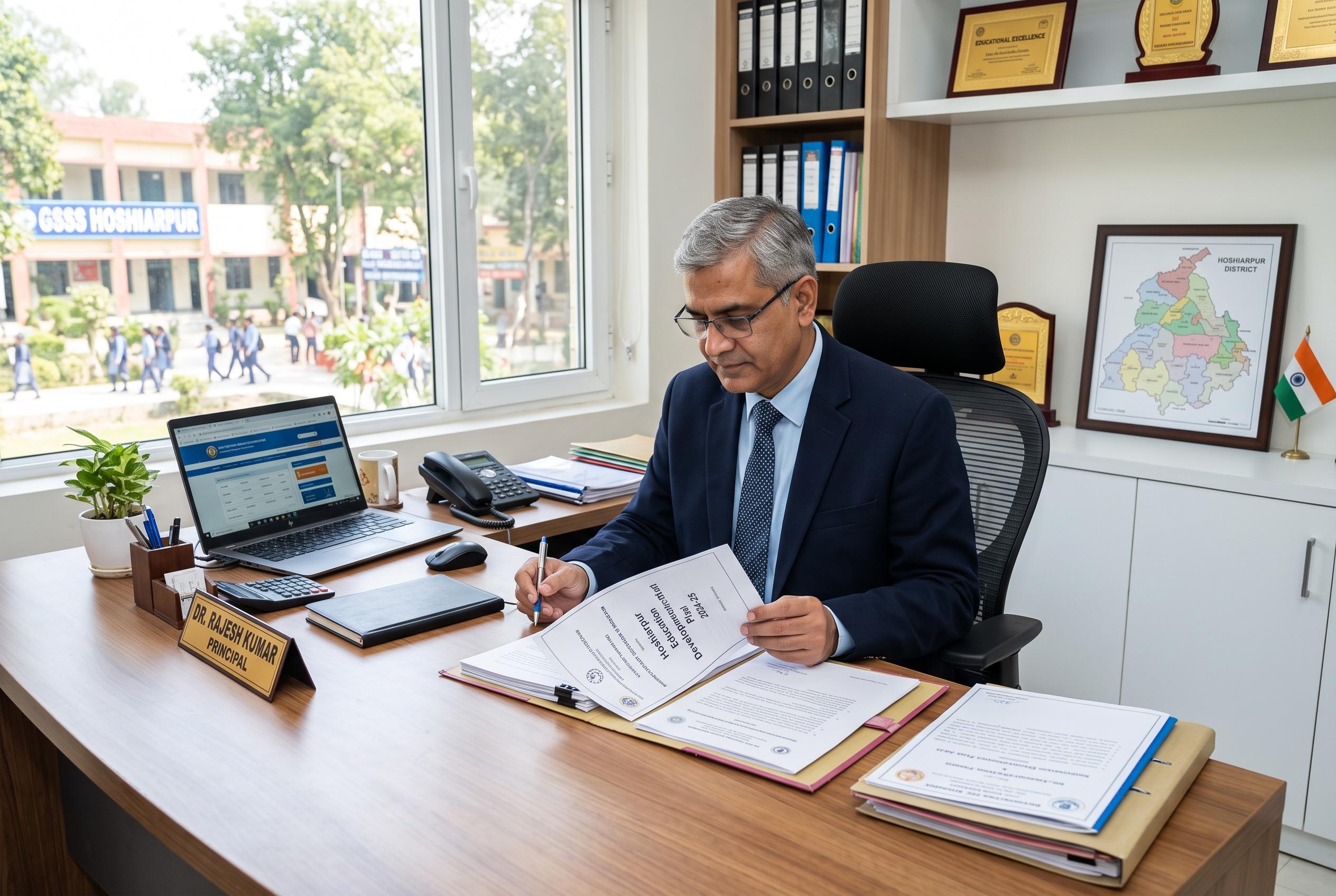

An RTI response reveals that over half of senior secondary schools in Hoshiarpur district are operating without regular principals, raising concerns over governance, teaching quality, and administrative oversight amid ongoing vacancies and staffing gaps.
An RTI response has exposed a deep staffing gap in government senior secondary schools in Hoshiarpur district, where 70 of the 130 institutions are operating without regular principals, according to The Tribune. In several cases, one principal is responsible for more than one school, a pattern that weakens academic leadership and leaves daily administration stretched. The shortage is not confined to head teachers. The report also says vacancies among classroom teachers are forcing schools to assign subjects to staff outside their specialism, adding further strain to already under-resourced institutions.
Jai Gopal Dhiman, president of the Labour Party, has called for a special recruitment drive to fill the gaps. His demand reflects a wider concern that leadership vacancies can have an immediate effect on school management, staff supervision and the consistency of teaching. In a system where principals are expected to oversee discipline, academic planning and compliance, prolonged vacancies can leave schools functioning with limited oversight.
The disclosure has also drawn attention to the role of the Right to Information Act in exposing public-sector shortfalls. Reporting by The Better India has traced how RTI has been part of a broader tradition of peaceful civic pressure in India, alongside campaigns that have pushed major policy changes in areas such as governance and land rights. In this case, the law has again served as a tool for making administrative neglect visible, especially in a district where the scale of the shortfall suggests a structural rather than temporary problem.
For families and teachers, the issue is not simply one of vacant posts. It raises questions about whether the district can maintain acceptable standards in leadership, subject delivery and school supervision while so many positions remain unfilled. Unless the shortage is addressed promptly, the burden on existing staff is likely to persist, and the quality of education in the district may continue to suffer.
Disclaimer: This content is intended for informational purposes only. Readers are advised to exercise their own judgement, conduct due diligence, or consult a qualified expert before acting on any information provided.