
Samsung’s Galaxy Z Flip8 signals a mature approach to foldables, prioritising everyday convenience with a larger cover screen and lighter build, though competitors push the innovation boundary.
Samsung’s Galaxy Z Flip8 continues the idea that a foldable can be practical rather than merely novel. It is built around the opposite philosophy to the larger Fold line: instead of replacing a tablet-like workspace, it aims to deliver a full-size smartphone experience in a body that folds down small enough for a trouser pocket. In use, that makes it one of the more mature clamshell devices Samsung has produced, with a stronger emphasis on comfort, portability and everyday convenience than on headline-grabbing gimmicks.
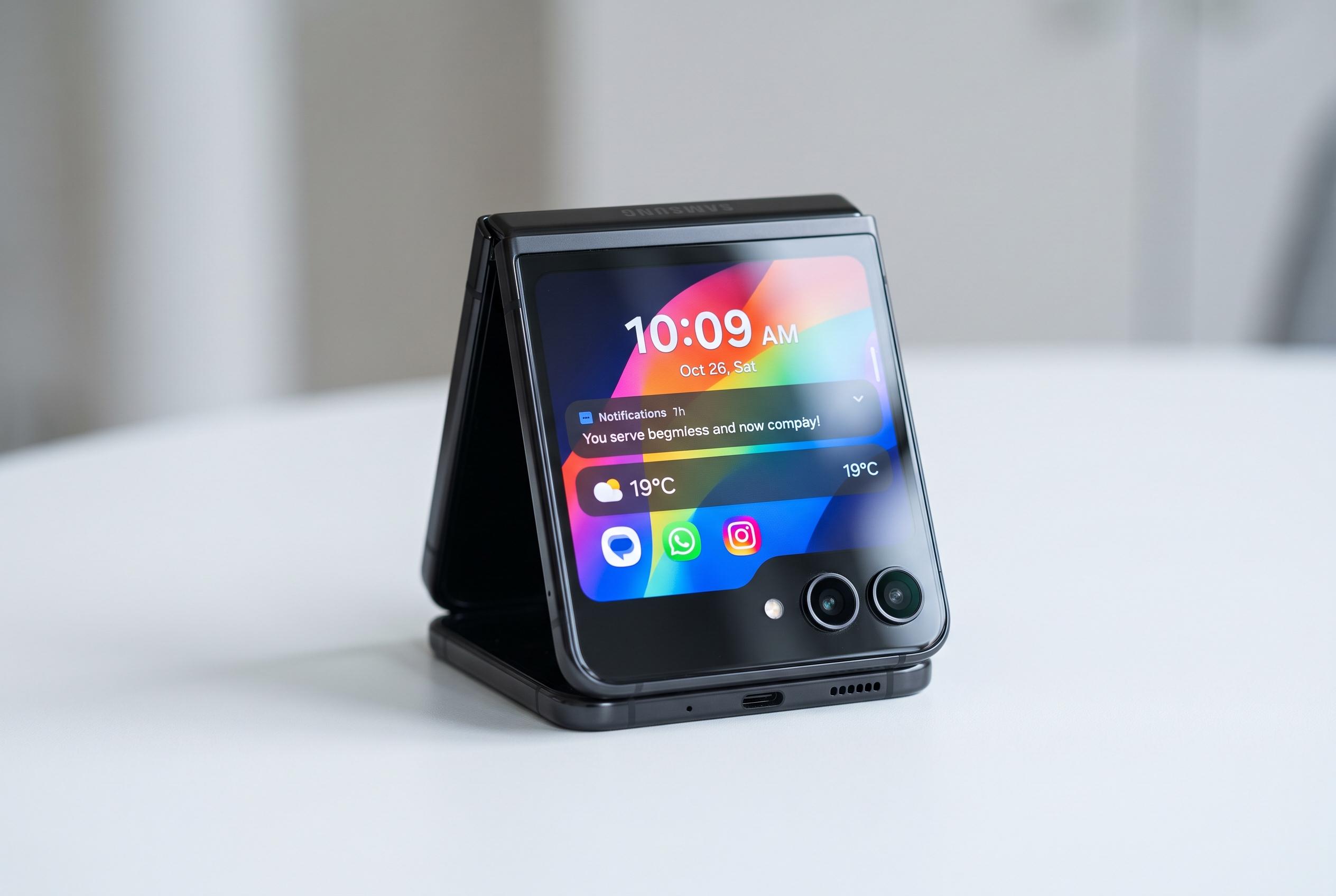
The biggest improvement is the cover screen. At 4.1 inches, the outer display is now large enough to do more than show notifications or the time. It is a 120Hz Super AMOLED panel that can handle replies, maps and camera framing without opening the phone, which reduces friction in normal use and should also limit unnecessary wear on the hinge. The main 6.9-inch Dynamic AMOLED 2X screen also runs at 120Hz and is brighter than before, while the crease is said to be less noticeable than on earlier generations. Samsung has also slimmed the device to 6.1mm when unfolded and kept the weight at 180 grams, making this its lightest foldable so far.
The main compromises remain familiar. Charging is still capped at 25W, which is modest for a phone priced above €1,299 in Spain. With a 4,300mAh battery, a full top-up still takes around an hour and 10 minutes, which is unremarkable by premium-phone standards. The camera system is centred on a 50-megapixel main sensor with up to 10x digital zoom, but there is still no dedicated telephoto lens, so zoomed-in shots will not match the flexibility of rivals that carry separate zoom hardware.
That competition is increasingly sharp. Motorola’s Razr Ultra leans on a much larger outer display, faster 68W charging and a bigger battery, while Samsung counters with lighter construction, a cleaner hinge design and longer software support, including seven years of updates. The broader market also includes compact non-folding flagships such as the Xiaomi 17, which can offer stronger camera hardware at a lower entry price. Within Samsung’s own range, the Z Fold8 and Z Fold8 Ultra sit above it for users who want a tablet-style fold, but the Flip8 remains the more accessible entry point for buyers who want a premium foldable without the bulk.
Disclaimer: This content is intended for informational purposes only. Readers are advised to exercise their own judgement, conduct due diligence, or consult a qualified expert before acting on any information provided.