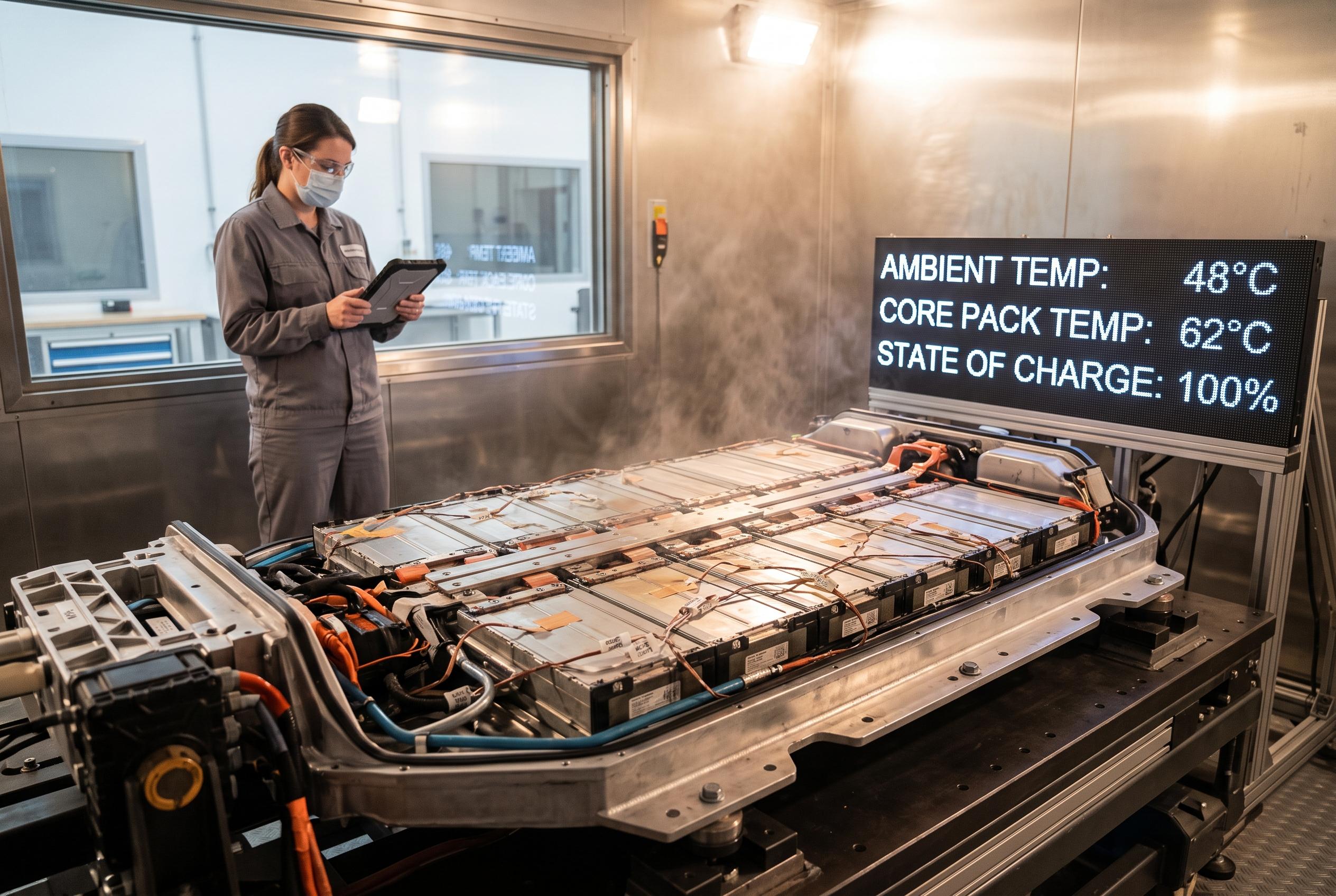

Research reveals that leaving fully charged electric car batteries in hot weather can speed up ageing due to chemical reactions, emphasising the importance of timing and temperature management for longevity.
Summer heat can quietly punish an electric car battery, but the real risk is not simply charging to 100%. The more important issue is leaving a fully charged pack sitting for hours in high temperatures. According to the Focus.de report, the combination of heat and a high state of charge speeds up battery ageing through chemical side reactions that gradually reduce capacity and raise internal resistance.
Research backs that up. A 2014 study in the Journal of Power Sources found that lithium-ion cells age faster as storage temperature rises, and that the effect becomes worse when heat is paired with a high charge level. A 2026 review in Renewable and Sustainable Energy Reviews reached a similar conclusion, saying elevated temperatures accelerate degradation by driving unwanted chemical reactions and damaging electrode materials. The broader point is straightforward: the battery does not need to be moving for heat to do harm.
Newer research also shows there is no simple one-size-fits-all rule for battery wear. A 2025 Joule study looking at 232 commercial cells over as long as 13 years found that ageing patterns vary by cell type, rather than following a neat percentage-based formula. Earlier work from Technische Universität München, published in the Journal of the Electrochemical Society in 2016, also found that degradation is not linear and depends on battery chemistry. In practice, that means the old habit of assuming every extra percentage point of charge has the same effect is too crude.
For drivers, the practical lesson is timing. Fully charging a battery is not automatically harmful if the car is used soon afterwards. The damage risk rises when a vehicle is left parked at a high charge level in hot weather, especially if it sits in direct sun for long periods. The Focus.de article notes that a short interval at 100% is far less concerning than an overnight or all-day wait in summer heat.
Manufacturers generally advise keeping daily charging below full capacity and saving 100% for longer trips. Volkswagen recommends an 80% daily target for the ID.4 Pro 4Motion, while Ford advises a 90% everyday limit for the Mustang Mach-E with an NCM battery and suggests delaying charging so the pack can cool first. Ford treats its LFP version differently, recommending regular full charges to help the battery management system estimate charge correctly, and saying long-term storage should be around 50%.
Temperature control systems help, but they do not eliminate the problem. The Focus.de report says Volkswagen’s ID.4 uses liquid channels in the battery floor to keep cells near 25C, which reduces thermal stress but does not remove it entirely. A 2017 Journal of Power Sources study found that without cooling, hot climates and aggressive driving can sharply cut battery life, while air cooling can extend it substantially. The wider research on vehicle thermal management also shows that operating conditions in warm, cold and temperate climates affect energy use, ageing and safety in different ways. The practical advice remains the same: finish charging close to departure time, park in shade or a garage where possible and avoid leaving a battery both full and hot for long stretches.
Disclaimer: This content is intended for informational purposes only. Readers are advised to exercise their own judgement, conduct due diligence, or consult a qualified expert before acting on any information provided.