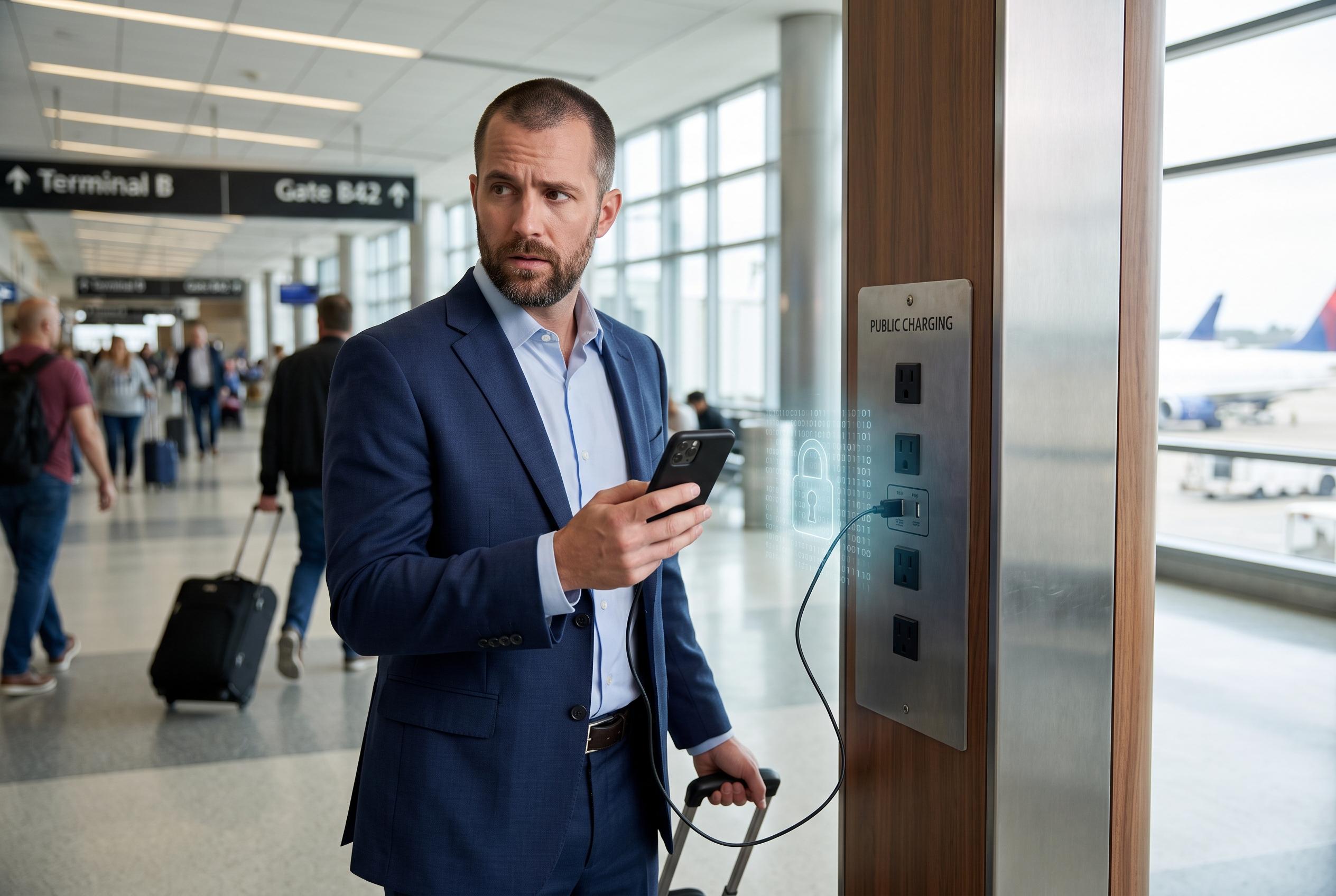

Public USB charging points at airports and transport terminals pose a growing cyber threat, with experts advising travellers to use caution and safer charging methods to prevent data theft through malicious ports or cables.
Public USB charging points at airports, bus stations, rail terminals and other busy venues have become a convenient target for cyber criminals, according to consumer warnings from the Michigan Attorney General’s office and guidance from the US Army Cyber Command. The risk is known as “juice jacking”: a method in which a compromised charging port or cable is used not only to supply power but also to move data, allowing malware to be installed or information to be stolen. Officials say attackers may seek access to contacts, passwords, bank details, one-time passcodes and other sensitive material.
The threat matters because USB-C and other modern charging standards can carry both electricity and data. That dual function creates an opening if a charging station has been altered or a fake kiosk has been set up to look legitimate. The malware may not be obvious at first. In some cases, a user sees a prompt asking whether to trust the device or allow data transfer, and a careless tap can open the door to compromise.
Security specialists quoted by TechRadar say the danger is real, although newer phones now include stronger safeguards, including default data blocking and on-screen warnings. Even so, the advice remains consistent across the sources: avoid public USB ports when possible, use your own charging cable and mains adapter, and plug into a standard AC socket rather than a shared data-enabled port. McAfee gives the same broad guidance and adds that USB data blockers can help by physically preventing the data pins from connecting.
For people who travel often, the simplest defence is to carry a power bank and keep devices updated. The Army Cyber Command also recommends two-factor authentication as an added layer of protection. Consumers who must use a public port should choose “charge only” if the option appears and should never accept a trust prompt unless they are sure the connection is safe. In practice, the best protection is to assume that a public USB socket is not just a charger but a possible data access point.
Disclaimer: This content is intended for informational purposes only. Readers are advised to exercise their own judgement, conduct due diligence, or consult a qualified expert before acting on any information provided.