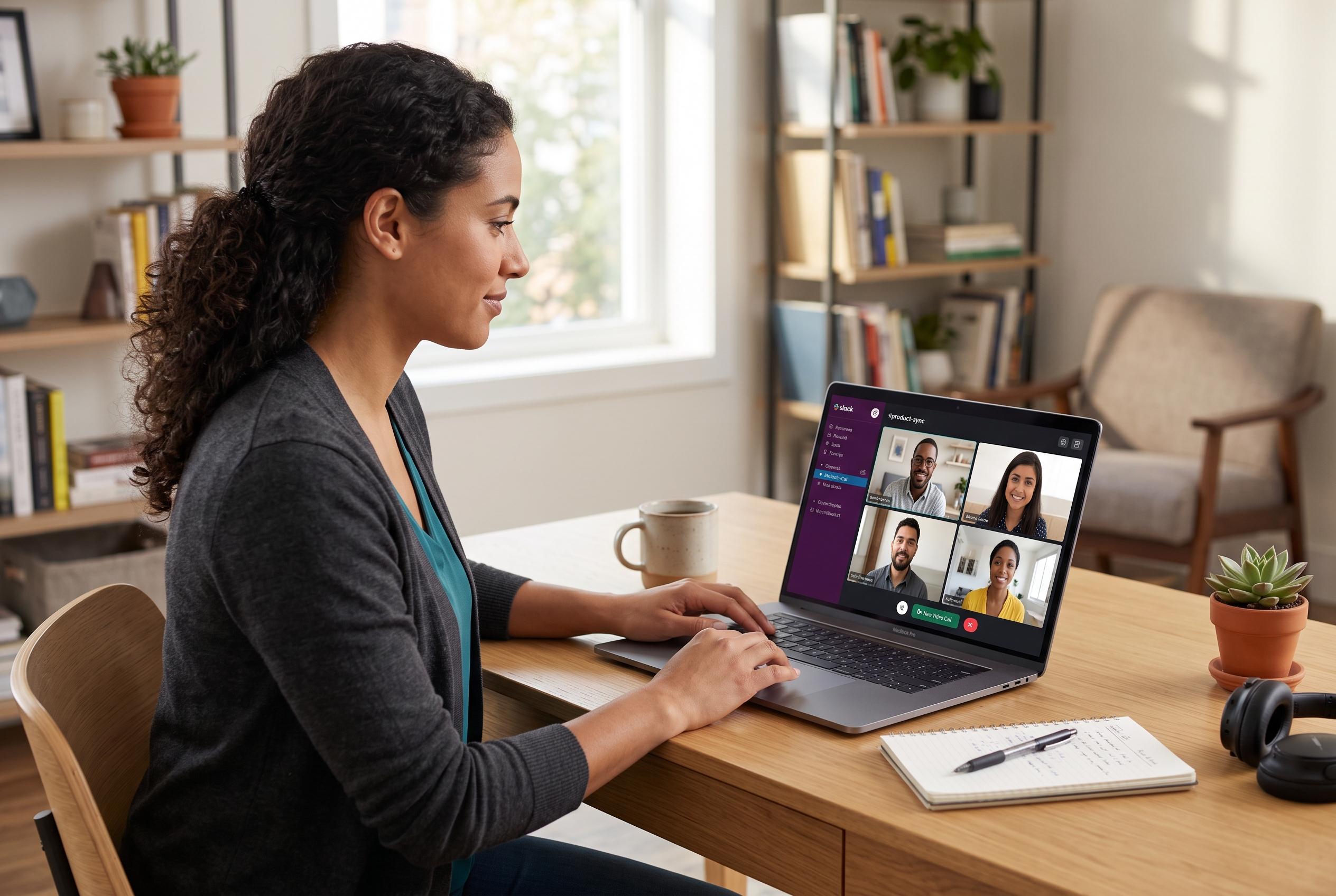

Slack’s latest update introduces integrated video calling, allowing teams to switch effortlessly from messaging to face-to-face discussion within the same platform, streamlining communication in remote and hybrid environments.
Slack can be used for video calls, and the feature is built into the platform rather than added through a separate meeting app. For many teams, that matters because it keeps conversation, files and live discussion in one place. Slack says the aim is to reduce context switching and make it easier to move from message threads into face-to-face discussion without leaving the workspace.
The service’s video tools have developed beyond basic one-to-one calling. According to Slack’s product pages, users can start calls from direct messages or channels with a simple click on the phone icon, and the feature supports group calls, screen sharing and virtual backgrounds. That makes it useful for quick check-ins, troubleshooting and short collaborative sessions, particularly in remote and hybrid work settings.
Slack’s own materials also point to a broader shift in how the company positions the product. Video calling is presented as part of a wider communication system rather than a replacement for dedicated conferencing software. In practice, that means Slack is best suited to everyday coordination and fast decision-making, while larger meetings, recorded sessions and more formal events may still call for tools such as Zoom or Google Meet.
The native option is not the only route available. Slack continues to support third-party integrations, allowing teams that rely on other conferencing systems to launch calls from within the same workspace. That flexibility is important for organisations that want Slack to remain the hub for discussion while reserving specialist platforms for webinars, town halls or meetings with more demanding controls.
For users, the main appeal is convenience. A short call can begin where the conversation already exists, in the same channel or direct message, and screen sharing helps turn an explanation into something visual and immediate. Slack’s pitch is simple: if the aim is to keep work moving without breaking the flow of communication, integrated video calls can do that well enough for many day-to-day tasks.
Disclaimer: This content is intended for informational purposes only. Readers are advised to exercise their own judgement, conduct due diligence, or consult a qualified expert before acting on any information provided.