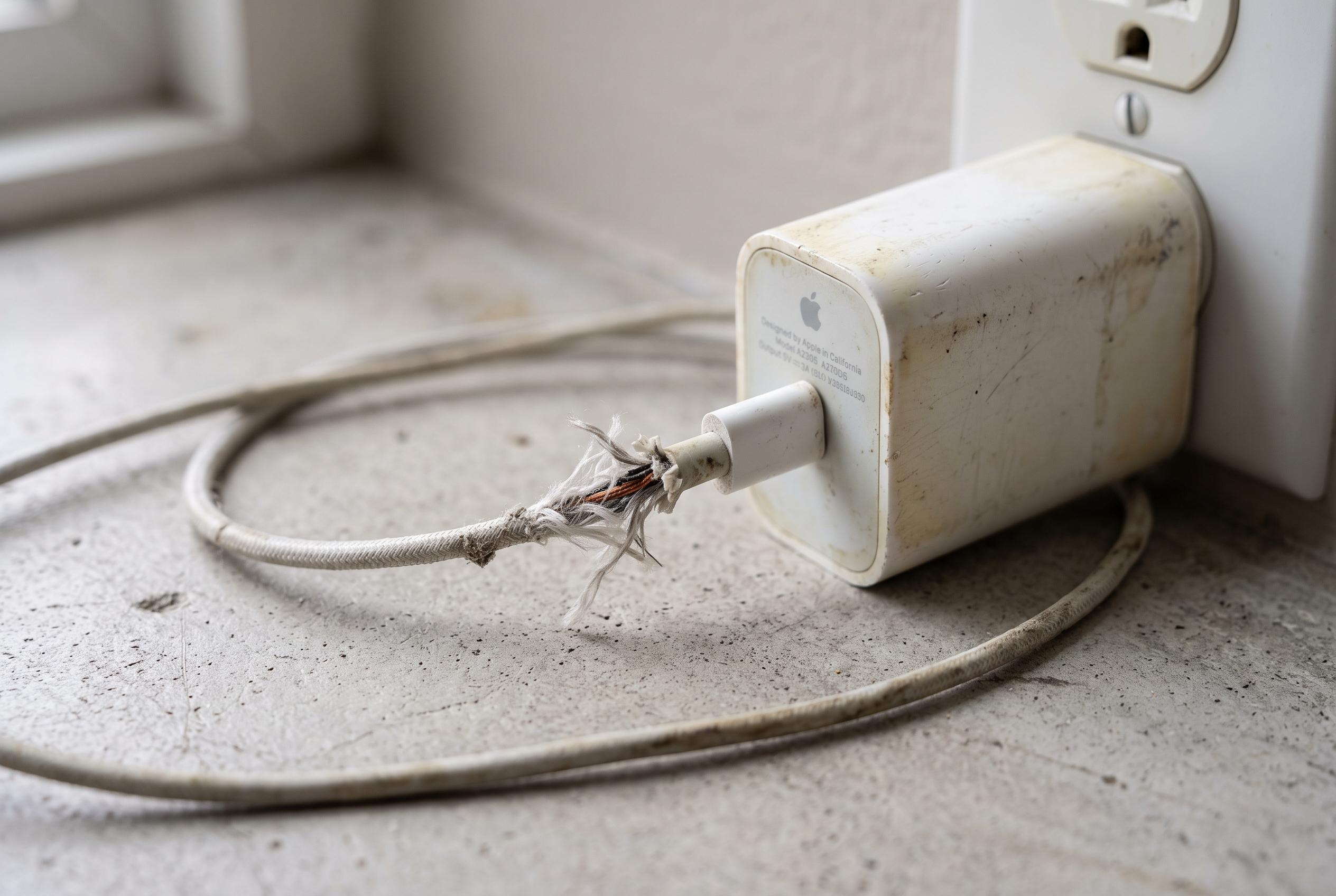

Experts warn that ignoring warning signs like overheating, physical damage, or unstable charging can pose risks to both devices and personal safety, urging users to replace faulty chargers promptly.
Many people replace a phone charger only after it stops working altogether. That is a mistake, according to BGR, which says a failing adapter or cable usually gives warning signs well before complete failure. Industry guides from charger makers and accessory suppliers point to the same pattern: slow charging, unstable power delivery, overheating and visible wear are all signals that the accessory should be retired before it damages a smartphone or creates a fire risk.
The most obvious warning is physical damage. Frayed insulation, cracked casing, exposed wires and bent connectors all indicate that the charger is no longer safe to use. Several product guides say users often try to keep damaged cables alive with tape or by bending them into position, but that only masks the fault. If a charger sparks, smokes or gives off a burning smell, it should be unplugged immediately and discarded.
Another common sign is erratic charging. A phone may show that it is connected, then stop charging without the cable being moved. The reverse can also happen, with charging restarting only when the lead is twisted or held at a certain angle. Manufacturers and accessory sellers say this usually points to a failing cable, connector or internal fault in the adapter. A charger that has become noticeably slower than before is also a strong signal that it is wearing out.
Heat is another important test. It is normal for a charger to feel slightly warm during use, but not hot enough to be uncomfortable to hold. Anker UK says excessive heating can reflect a loose connection, internal damage or poor compatibility. That matters because heat can shorten battery life, damage internal components and, in worst cases, lead to a short circuit. Chargers should never be left under pillows, blankets or on soft furnishings that trap heat.
A loose connection at the phone port is also a reason to stop using the accessory. If a cable falls out easily, needs to be held at a particular angle or only works when pressed firmly into place, the fault may be in the cable or the handset socket. Forcing the plug can damage the phone’s charging port, which is usually far more expensive to repair than replacing the charger. Guides from several manufacturers also advise choosing a certified replacement from a reputable brand, rather than the cheapest option, because unstable current and poor protection can create far greater costs later.
Disclaimer: This content is intended for informational purposes only. Readers are advised to exercise their own judgement, conduct due diligence, or consult a qualified expert before acting on any information provided.