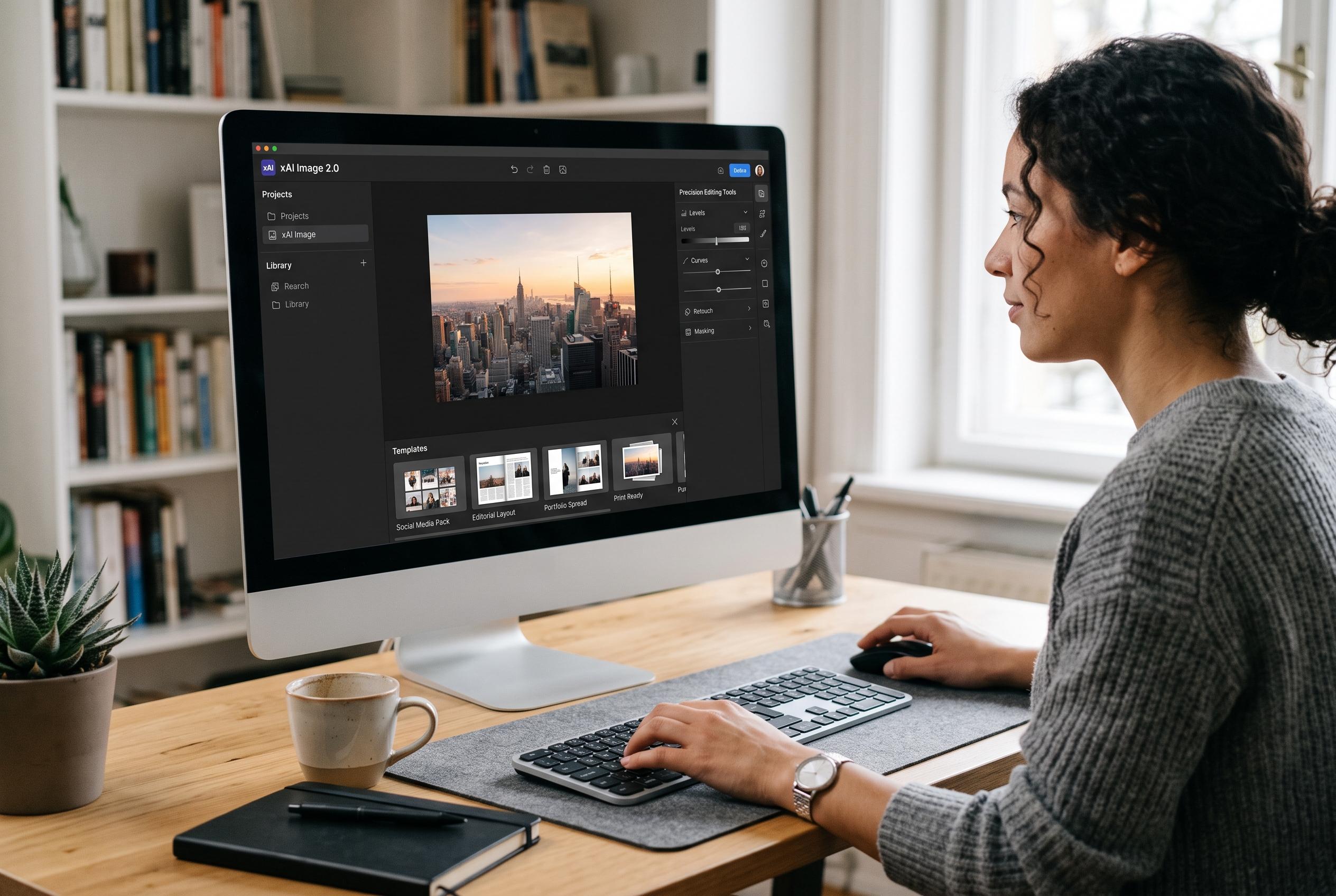

xAI introduces Image 2.0, a new image-generation and editing system designed to meet the demands of professional creative workflows with advanced precision tools and reusable templates, aiming to compete in a rapidly evolving market.
xAI has launched Image 2.0, a new image-generation and editing system that it says is built for more practical creative work rather than one-off image production. The model is now available in Quality Mode on Grok.com and through the iOS and Android apps, with the company pitching it as a tool for professional workflows that require controlled edits, cleaner layouts and more consistent output.
The release arrives in a crowded market where OpenAI, Google, Alibaba and other rivals have all pushed ahead with upgraded image tools in 2026. OpenAI’s ChatGPT Images 2.0 has been framed around stronger instruction-following, improved text rendering and tighter control over composition and aspect ratio, while broader industry comparisons continue to place a premium on visual quality, speed, commercial safety and in-image text accuracy. Against that backdrop, xAI appears to be targeting users who want more than stylised image generation.
Image 2.0’s main selling point is precision editing. The system includes a magic wand tool for changing specific parts of an image, segmentation for selecting regions more accurately, background removal for transparent exports and multi-reference editing that can use up to five input images. It also adds smart resize, which automatically adapts an image to a new aspect ratio while trying to preserve the overall composition. For marketers and designers, that matters because the same asset often has to work across different platforms and formats.
xAI has also added template-based workflows for tasks such as product shots, photo editing and game asset creation, which should reduce the amount of manual prompting needed for routine jobs. Another feature is the ability to build visually consistent worlds for video content, keeping characters, settings and props aligned across separate generations. That focus on repeatability may be important if the company wants to move Image 2.0 beyond novelty and into day-to-day production use.
The product’s broader competitiveness will depend on whether xAI follows through on API access, which would make the system more useful for developers and enterprises. Arena leaderboard data cited by the company places Image 2.0 second globally for both text-to-image generation and image editing as of August 7, 2026. Even so, adoption is likely to be decided less by benchmark claims than by whether the tool proves dependable in real design workflows, where precision, speed and consistency matter most.
Disclaimer: This content is intended for informational purposes only. Readers are advised to exercise their own judgement, conduct due diligence, or consult a qualified expert before acting on any information provided.