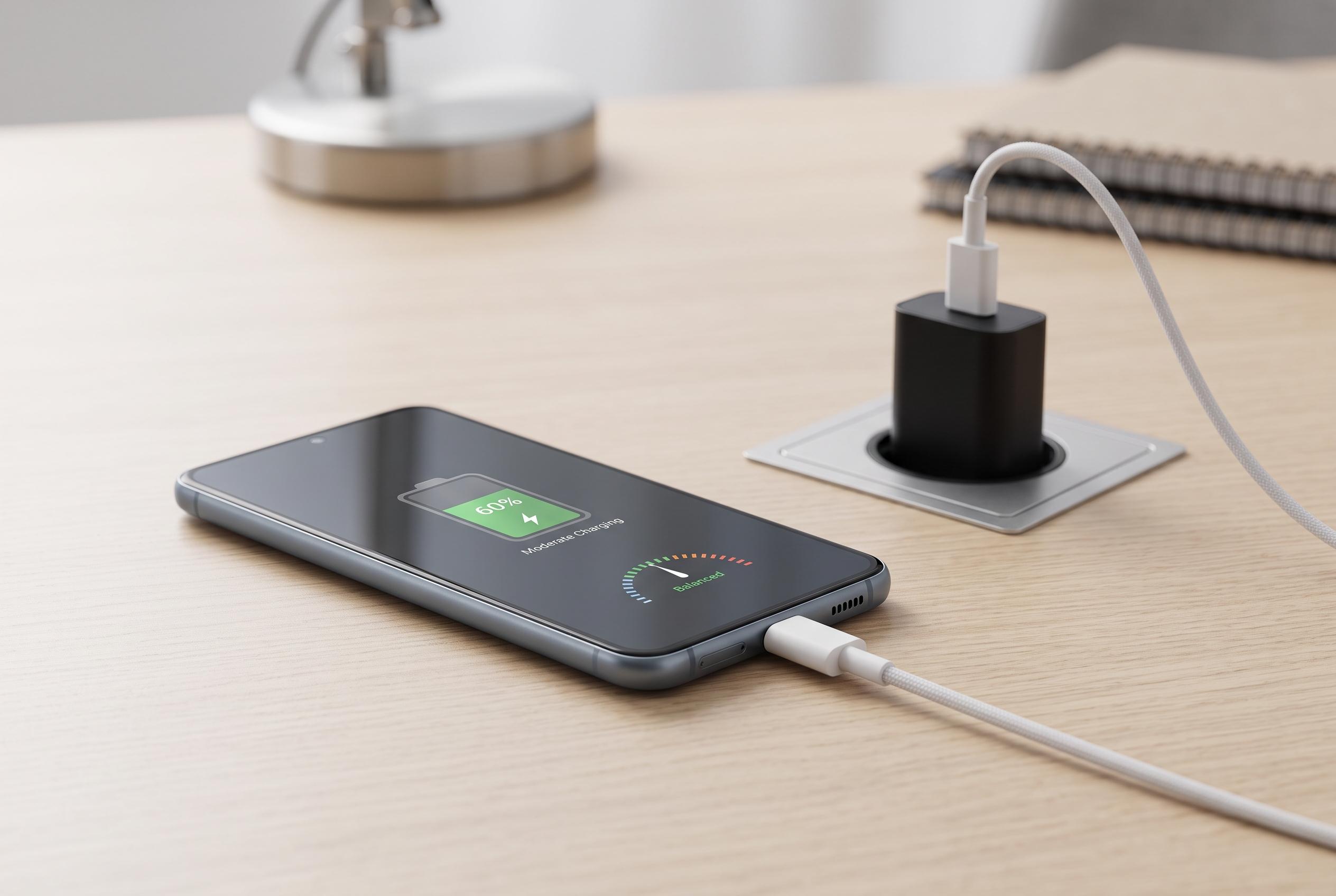

New insights from leading manufacturers and research dispel outdated rules about smartphone charging, emphasising moderate levels, temperature control, and safe use for optimal battery longevity.
Much of the advice people still repeat about smartphone charging comes from an earlier battery era, not from the lithium-ion cells used in nearly all modern phones. A review cited by ZDNet, drawing on guidance from Apple, Google and Samsung as well as battery research, found that several long-standing rules are not merely outdated but can also work against battery health.
One of the most persistent myths is that a phone should always be charged to 100%. In practice, keeping a lithium-ion battery at full charge for long periods can increase wear. That is why manufacturers now build in charging controls such as Apple’s Optimised Battery Charging and Android options that can cap charging at 80%.
The same logic applies to the idea that a phone must be drained to 0% before it is charged again. According to Google’s guidance, modern batteries do not need a full discharge cycle to retain an accurate reading of capacity. In everyday use, battery longevity is generally better when charge levels are kept roughly between 20% and 80% rather than regularly pushed to the extremes.
Night-time charging is also less of a problem than many users assume. Samsung says leaving a phone plugged in overnight does not cause the kind of overcharging that older battery types were vulnerable to, because current devices stop charging once they reach full capacity. The greater risk is heat. Charging while a handset is trapped under a pillow, blanket or other insulating surface can speed up battery degradation.
Temperature matters across the board. Apple and Samsung both recommend charging within a range of 0C to 35C, and battery specialists warn that charging in freezing conditions can cause permanent damage. High heat is equally harmful, particularly when a phone is already warm from use. The practical advice is simple: avoid charging a hot device, remove bulky cases if needed and keep the phone in open air.
Using a phone while it charges is generally safe, but it can slow the process and add more heat, especially during gaming or video streaming. The same applies to charging equipment: a reputable third-party adapter or cable can be fine, but cheap uncertified accessories may deliver unstable power, charge slowly or damage the device. The broader conclusion is that modern smartphones do not need ritualistic treatment. They do need moderate charge levels, sensible temperatures and properly made chargers.
Disclaimer: This content is intended for informational purposes only. Readers are advised to exercise their own judgement, conduct due diligence, or consult a qualified expert before acting on any information provided.