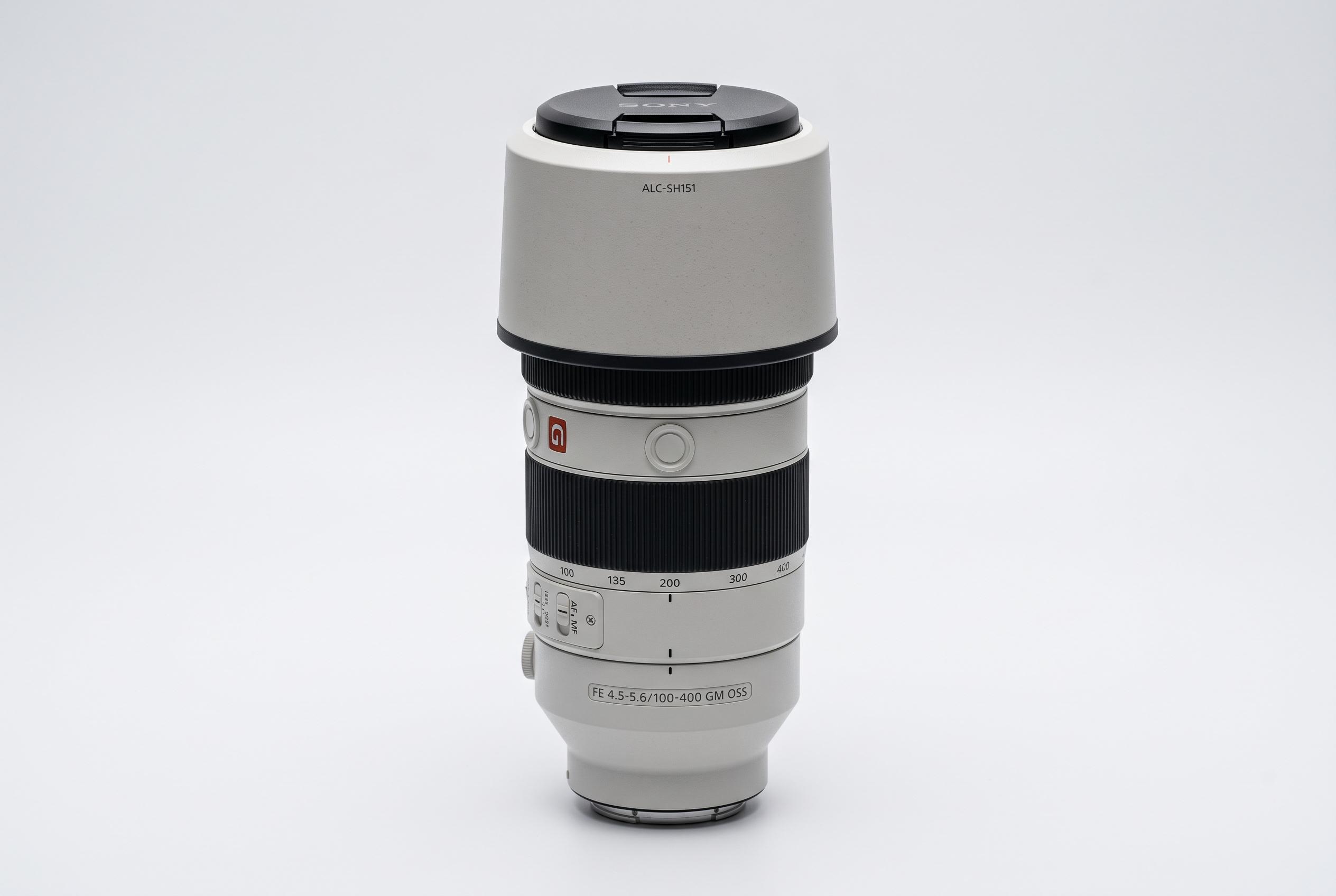

Sony has launched a compact and affordable 100-400mm lens targeting hobbyists and wildlife photographers, but its slower aperture limits performance in low light and shallow depth-of-field scenarios.
Sony’s new FE 100-400mm f/5.6-8 OSS is aimed at photographers who want reach without the bulk and price of a professional super-telephoto zoom. According to independent testing by Christopher Frost, the lens is built around a simple trade-off: it is light and relatively affordable, but it loses light quickly as it zooms, moving from f/5.6 at the short end to f/8 at 400mm. That makes it a practical option for bird and wildlife work in good light, but less convincing for shallow depth of field or indoor action.
The appeal is clear. Digital Camera World reported a price of $849 and a weight of 654g, with a compact body that makes the lens easier to carry than many longer telephotos. Sony has also given it useful real-world features, including Optical SteadyShot stabilisation, dual linear motors for autofocus, a focus hold button, a zoom lock and compatibility with the company’s 1.4x and 2x teleconverters. In theory, that extends the lens’ reach to 800mm, although the aperture becomes very narrow once converters are attached.
That slower aperture is the central compromise. Frost said the lens cannot match faster glass for background blur and becomes difficult to use for sports unless the light is strong or the camera body handles high ISO well. He tested it on the 61-megapixel Sony a7CR, which is a demanding body for any lens. His conclusion was that the lens should look better on lower-resolution cameras, where optical softness is less visible and the sensor places less strain on the optics.
Image quality is respectable rather than class-leading. Frost found the centre sharp at 100mm and better still after stopping down, while the edges remained weaker and showed some blue fringing. At 400mm, the middle of the frame held up reasonably well, with better contrast at smaller apertures, though not the kind of crispness seen in Sony’s premium G Master lens. Distortion was low, close focusing was notably good at 0.86 metres and flare resistance was strong even at full zoom.
The lens also fits into a broader market trend. Digital Camera World described it as a compact, teleconverter-friendly option for hobbyists and developing photographers, while earlier commentary suggested a lens like this could attract buyers who want a more affordable route into wildlife and sports shooting than Sony’s pricier 100-400mm G Master. The G Master model remains the brand’s flagship 100-400mm lens, with a faster aperture and a much more advanced optical and build specification, but it is aimed at a different buyer. By contrast, this new lens appears designed for practical reach first and optical luxury second.
Disclaimer: This content is intended for informational purposes only. Readers are advised to exercise their own judgement, conduct due diligence, or consult a qualified expert before acting on any information provided.